You used to do it. Now you wish you hadn’t. But you did. And everyone else knows you did too. Now one of your subordinates is doing the same thing. This is one of the most common scenarios we see when we do leadership development for public safety officials. As a supervisor in public safety or in business, this is a character test for you. What will you do? Will you allow the behavior to continue, or will you step up and do what needs to be done?
Is it Hypocritical or Wise to Correct Something You Used to Do?
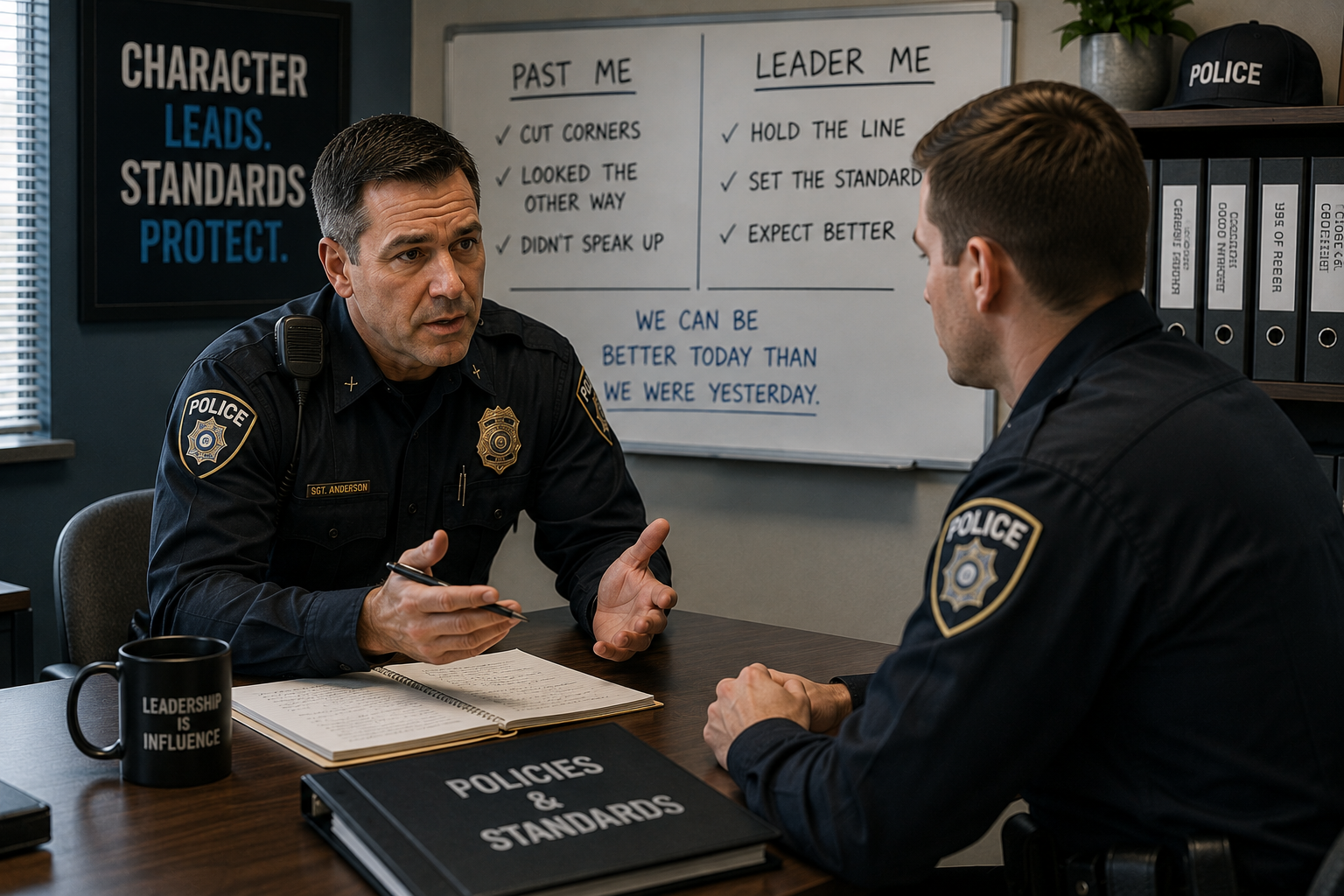
Your supervisors should have told you ten years ago. Whenever you cut a corner on paperwork, lie to your supervisors, or cover for a teammate that really screwed up, you make your job a lot harder when you earn a promotion. How? Because as soon as you get that promotion, your past choices will test your future choices as a supervisor.
Historically, a lot of supervisors avoid correcting poor behaviors because they used to do it too. Letting poor behavior continue is a failure of character for a leader. Just because we used to do it does not mean we should continue to allow it to happen!
Some people call that being hypocritical. Actually, it is called wisdom. Wise people learn from past mistakes. They correct their own behaviors and then prevent those behaviors in others. This type of wisdom requires us to exercise Courage, Humility, Integrity, and Duty all at once.
What Does Wisdom Sound Like?
I know. I did that too. Sometimes I even did it with you. But, we both knew we shouldn’t have done it. I was wrong then. We were wrong then. And we would both be wrong now to continue doing it like we used to do it. We are trying to be better than we were in 2016. The growth of this team is now my Duty, but I need you to help me with making this change happen.
Courage: Acting despite perceived or actual risk.
People may call you out and call you a hypocrite in these moments. Exercising the Courage to speak up no matter what others say is where a lot of people fail.
Humility: Believing and acting like “it’s not about me.”
As a leader, people will pay attention if you are willing to own your old faults or poor behaviors. Don’t ignore them. Face them. Own them. And then ask everyone to commit to doing better in the future.
Integrity: Doing what is good, right, and proper even at personal cost.
Your Integrity is at stake when you claim to have standards and then are tempted to ignore a violation of those standards. Standards test your Integrity. Just because you used to break those standards yourself back in the day does not now make those standards optional. It just makes your job harder.
But let’s face it. You did it to yourself. So will you continue down the path of least resistance and let things continue to slide? Or will you decide that you will not let your failure in Integrity in the past make you fail again in the present?
Duty: Taking action based on your assigned tasks and moral obligations.
Yes. One of your assigned tasks is to uphold policies and standards. But since your promotion, you now have a moral obligation to make the team better. By letting the old ways continue, are you fulfilling your moral obligation to make your team better? Leaders lead growth. Managers manage the status quo. Which are you? A leader or a manager?
The Impact When You Lead with Character
What impact do you want to have on your team while you are in this position? Will you make things better than they have been? Or are you just a placeholder until the next supervisor comes in?
Don’t let your past missteps prevent you from doing what you are called to do now. You are better than you used to be. Show yourself and show them by being strong enough to maintain standards even though you didn’t do that in your past.
Question:
- How will you help future leaders to avoid this same pitfall?
- What is the standard you know you’ve allowed to slip?