Are you dealing with a wise person or a fool?
Screw-ups happen. Whether you are leading in law enforcement, the fire service, or in business, somebody on your team at some point is going to screw up. The problem is when that person makes the same bad choice twice…three times. What is the appropriate response from a leader?
When someone on your team makes a mistake, coaching is usually the right first response. But when the same behavior continues after clear feedback, leaders must decide whether they are dealing with a wise person who will grow, a foolish person who needs consequences, or a bad egg that requires you to get outside help. The leader’s job is to match the response to the person and the pattern.
How Should Leaders Respond to Repeated Performance Problems?
Some leaders put their heads in the sand and hope it goes away – Wrong! Some leaders coach and coach and coach, even when the behaviors don’t change – Wrong! Some leaders bring out the hammer and threaten the person with consequences – Wrong! Doing nothing is always wrong. Coaching or establishing consequences can be wrong as well.
What should your response be when somebody on your team needs to change their behaviors?
It depends on the individual you are coaching. Who are they? Are they a wise person, a fool, or a bad egg? Taking the time to identify who you are dealing with is important. Let me paraphrase Henry Cloud, from his book Necessary Endings. This framework is adapted from Dr. Henry Cloud’s book Necessary Endings, where he explains the importance of discerning who can change, who will not change without consequences, and who may require stronger intervention, including separation.
How Do You Know Whether to Coach or Discipline?
Start by asking three questions:
- Did they receive clear expectations?
- Have they received honest feedback and a chance to change?
- How did they respond to the feedback?
If they own the issue and try to improve, coach them. If they excuse, blame, or repeat the behavior, establish consequences. If they intend to harm the team, deceive others, or undermine the mission, get help from HR or the leaders above you.
When to Coach a Wise Employee
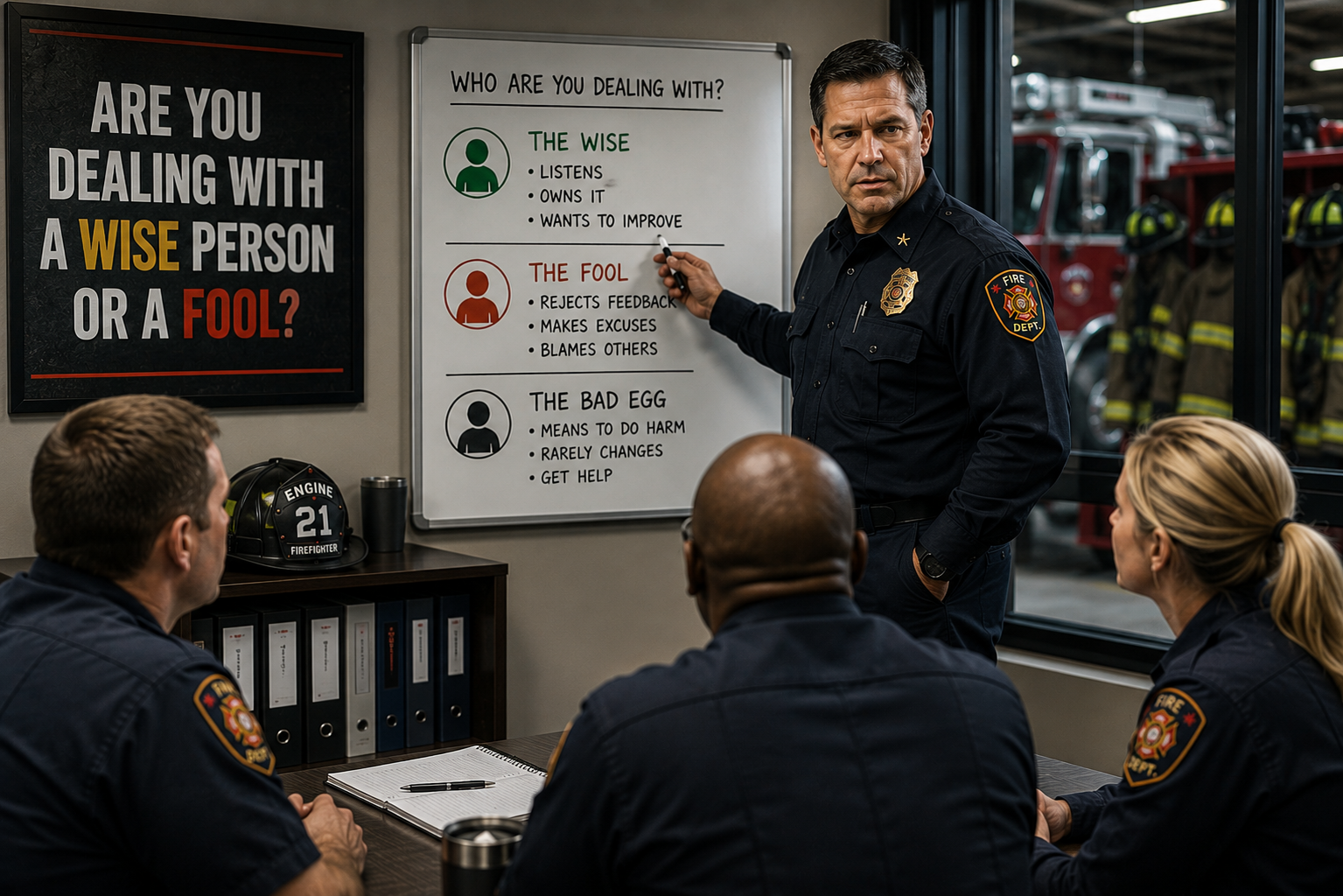
The Wise: They listen to feedback. In fact, the wise person appreciates the feedback; they own it, internalize it, and make an effort to change. The talking and the coaching helps because they have the Humility to hear it and the Courage to try something new as a result.
What do you do with The Wise: You talk to them. You coach them. You explain “The Why” behind their need to change. When you see positive signs of change, you encourage them (Positivity). When they need another course correction, you provide it (Duty). These are the people you have hope for. You have seen them respond to coaching before and therefore expecting change is reasonable.
When to Discipline a Foolish Employee
The Fool: They do the opposite. Their first reaction is to reject the feedback and try to explain it away. They try to adjust the truth so they don’t have to adjust to it. Excuses run rampant. They externalize it and try to make you understand that you are mistaken or maybe you’re the problem in the scenario. For them, pride and/or fear drive their choices.
What do you do with The Fool: You stop talking. You’ve probably felt like Bill Murray in Groundhog Day. You’ve had the conversation again and again, but the pattern of behavior is the same. In this case, if you aren’t asking them to do something illegal, immoral, or unethical, then this person is being a fool. With these people, you must set up some consequences for their behavior. These people will only get it if it costs them something. Give them clear guidelines and expectations for their behavior, establish the consequences, inspect what you expect, and hold them accountable for their actions if changes aren’t made (Duty).
When to Get Help With a Bad Egg
The Bad Egg: These people mean to do harm. They are well beyond the fool. Actually, Henry Cloud calls these people – The Evil. Unfortunately, there are some people in this world who decide to do harm to you or the team. The Fool may do harm to you or the team, but they do it unintentionally. The Bad Egg’s behaviors may be similar to The Fool. But their motives are different. Fortunately, there are fewer Bad Eggs than there are Fools.
What do you do with The Bad Egg: You get help. Bring in HR professionals early. Inform the leaders above you. And listen to their advice (Humility). The Bad Eggs rarely change. Their path is set, and now you must do your best to protect the team, the organization, and ourselves from the impact of their behaviors (Selflessness). Do not do this alone. ASK FOR HELP.
The Habits of Character Leaders Need When Coaching or Disciplining
As a supervisor, the majority of people will be part of the Wise category. Hallelujah and Amen! Life is good when you have a team full of Wise people. You’re able to lead and you will probably experience a lot of joy while leading that team. But eventually, a Fool or a Bad Egg will appear. The Fool and the Bad Egg are the ones that give us headaches. They are the ones that test our character even as their own character fails them. Specifically, choosing discipline when it’s appropriate will test the following Habits of Character in you as the leader.
Courage: Acting despite perceived or actual risk.
Humility: Believing and acting like “it’s not about me.”
Selflessness: Putting the needs of others before my own needs, desires or convenience.
Duty: Taking actions based on our assigned tasks and our moral obligations.
Who is the Real Leader of the Team?
When you have The Fool or The Bad Egg, your character will be tested. As a supervisor, do you have the Courage, Humility, Selflessness, and Duty to handle the issue? Or is this going to be another case of a supervisor allowing a Fool or the Bad Egg to linger? When these people linger, they end up having influence over people that you are called to lead. Whoever has the most influence is actually the true leader of that team.
We hope it will be you who steps forward and leads instead of them. But it will require you to exercise character.
Question:
- Who are your Wise, Fools, and Bad Eggs?
- What choices will you make in leading them from now on?