How Fear Limits Your Ability to Lead

When we do nothing, fear has won the day, and we have lost our opportunity to grow. Courage or Cowardice? It is the leader’s choice. There is no middle ground. Fear limits your ability to lead. Leaders are constantly confronted with choices that will expose us as a coward or a courageous Leader of Character. Our choices when we face our fears define who we are as a leader. What do we do when we are faced with uncertainty? What do we do when we are faced with a situation that makes us uncomfortable? What do we do when we are faced with saying what someone wants to hear versus something they need to hear? The choices we make when fear raises its ugly head determines the impact we will have on those we lead. These are not easy choices, but they are the choices we all face as leaders. Everyone has fears. The difference is the choices we make when we face those fears. The Easy Choice – Do Nothing We can choose the easy route. The easy thing to do in many cases is to let our fears make our decisions for us. “I don’t know how he will react.” “I trust very few people.” “I’m just not good at confrontation.” “I’m too young to say anything.” “I don’t know how it will turn out.” “I’ve never done this before.” “I don’t know him.” “She never reacts well in these situations.” “I might lose my job.” “I might lose my friend.” Nobody else is doing anything about it.” Therefore, we do nothing. Fear has won the day. We have lost an opportunity to grow and do the right thing. And our fear limits our ability to lead. Andersons’ 12 word (or less) Definition of Courage Acting despite perceived or actual risk. The Hard Choice – Acting with Courage Leaders of Character will have a lot of the same reservations as those who make the easier choice. But instead they decide to exercise Courage. Courage is the fulcrum that defines a leader’s character. Without Courage, Integrity is impossible. If we only do the right thing when it is easy or there is no risk involved, that is not Integrity, that is pragmatism. The Courage to make the hard choices leaders are faced with determines whether we are a Leader of Character. Without Courage, Selflessness is impossible. To be selfless, we must be willing to give up our desires or comfort for the good of someone else. We must have the Courage to have a hard conversation with an employee, spouse, or child. If fear prevents us from speaking up, then fear has convinced us our own comfort is more important than the other person. The Bottom Line: Few of us picture ourselves as cowards. But what are we if we let fear make our choices for us? Leaders of Character do not have a magic pill or some special power that helps them make those hard choices. They just have more practice at making those choices. Practice Courage in the small things and your character will be prepared when you need Courage in the big things in life. All of us can develop the habit of Courage by making the hard choices instead of the easier choices. The more we make a choice, the easier it is to make that same choice again. That is how all habits are formed – one choice at a time. Each time we choose to act with Courage the easier it is to make the same choice again. Conversely, each time we choose to let fear make our decisions, it makes it easier to do that again as well. Leaders must have the Courage to make hard choices whether it is at work or at home. Developing the Habit of Character called Courage will do more to impact your ability to lead than any MBA course ever will. Question: When a leader chooses fear would you follow them? Would you follow you? Here is a quick assessment that will take you 5 minutes to figure it out. Nobody will ever see your results but you. Warning: If you are not going to be honest with yourself this is a worthless assessment. To take the assessment use the QR code above or go to www.MYCHARACTERTEST.com
Keys to a Positive Culture in the Fire Services or Anywhere
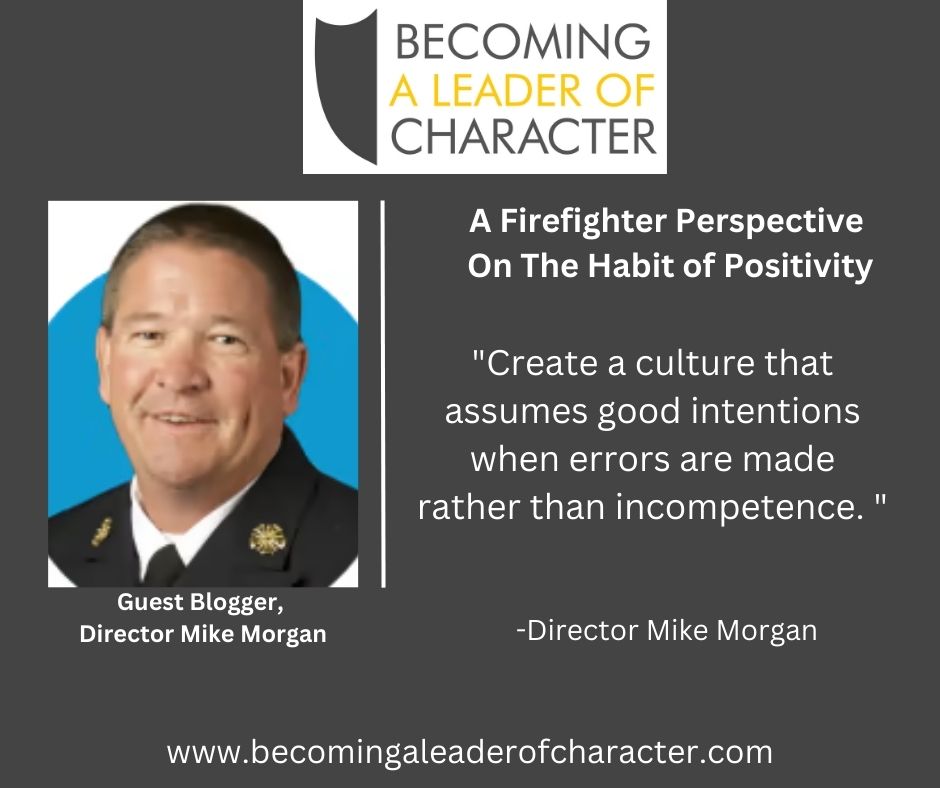
Create a culture that assumes good intentions when errors are made rather than incompetence. “Life is 10 percent of what happens to me, and 90 percent how I react to it”. Most of us have heard this famous life quote over the years, but do we truly apply it into our daily leadership practices and routines? We have all worked with or for someone who is continually complaining about how hard it is to be successful; how things are unfair; the continual excuses on why things are just not working. We have seen how a negative attitude left unchecked creates a toxicity where nobody thrives. A positive attitude is contagious but not always easy to maintain. As leaders, we continually face setbacks and challenges which make it hard to see the glass as half full. The good news, a positive attitude is your choice! The bad news is negativity is also contagious and is also a choice. Creating the environment for Positivity is not easy but nobody ever said that leadership is easy? As a leader it is your responsibility to do so. The overwhelming majority of the people you lead want to be a part of success and to see how their contributions are making the difference. There is only a very small percentage of people who do not fit into that category and you must deal with them swiftly, but separately. Treat them individually and not as the entire team. Praise in public, coach in private. Create a culture that assumes good intentions when errors are made rather than incompetence. When there is a “failure”, encourage a positive approach and make sure that it is a “fail forward” by learning from the undesired outcome. Create a culture where there can be conflicts with processes or ideas but not with people. Promote creative thinking and innovation and proactively build relationships by looking out for one another. Create an environment that fosters a culture that when a team member sees something going wrong, they are expected to speak up regardless of rank or tenure. Push decision making to information, not to authority. Knowledge is limited power, shared knowledge is a force for success. Lastly, and most importantly, hire the heart and train the hands. We often get so focused on skills on a resume that we overlook the critical nature of heart and desire to succeed and being part of a successful team. I will take the team member who is capable, trainable, and displays Positivity that wants to be part of a winning team over the most skilled applicant that wants a “job” every time. You are the leader. Your organization and your team will develop a culture. You have a choice in whether to allow the culture to develop on its own or to create an intentional culture. Choose the latter, watch the team flourish and succeed, and share the success. Wherever you lead, whether it is in the fire services like Mike or anywhere else, the leader is responsible for the culture of the organization. As Mike said, culture is going to happen. The question is whether the culture is a positive one or a negative one. No matter which culture is evident, it is a reflection of the leader’s intentionality towards Positivity. I (Dave) first met Mike Morgan at a leadership conference for leaders in the fire services in the state of Colorado. I quickly realized that Mike’s positive attitude is contagious. People want to be around him because he brings out the best in others – me included. He is the leader of the Department of Fire Protection and Control for the state of Colorado. His department is on the frontlines fighting wildfires within their state. They are men and women who never shy away from doing hard things and they do those hard things with Positivity. That attitude emanates from their leader. Mike Morgan, is currently the Director of Fire Prevention and Control of the State of Colorado. He leads a team of over 400 dedicated professionals. He has spent 30 years serving his community and the Colorado fire service. Mike served for over 10 years on the Colorado State Fire Chiefs’ Board of Directors (including two terms as President). He is a recipient of the coveted John M. Buckman III Leadership Award, presented by the International Association of Fire Chief’s. Learn more about Mike Morgan here: Director Morgan Here is a quick assessment that will take you 5 minutes to figure it out. Nobody will ever see your results but you. Warning: If you are not going to be honest with yourself this is a worthless assessment. To take the assessment use the QR code above or go to www.MYCHARACTERTEST.com
Memorial Day Tribute to Donnie – KIA Operation Desert Storm
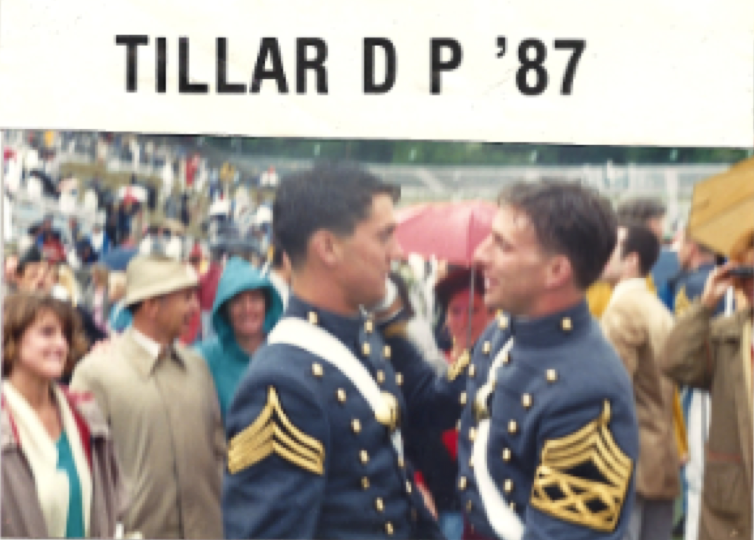
My best friend, Donnie Tillar, was the one who convinced me to go to West Point. Donnie was a year older than I was. Thanks to his persuasiveness, I joined my childhood friend at West Point as part of the Corps of Cadets. We both served in Operation Desert Storm. Every year, as Memorial Day approaches, I think about him. Because of his influence in my life, I want to share my Memorial Day tribute to Donnie. A Memorial Day Tribute Donnie’s Blackhawk helicopter was tragically shot down during the last hours of Operation Desert Storm. In February of 1991, Donnie passed away. Yet, it would not be until several weeks later that I received word, as we did not have the luxury email back then. My father, The General, was the one to let me know what had happened to Donnie. I kept a journal while I served in Operation Desert Storm. Below is an entry from my journal which I wrote on March 14th, 1991—the day I found out about Donnie. I was a young, brash and broken 25-year-old 1st Lieutenant in the Field Artillery when I wrote it. I shared this same journal entry at a memorial service I organized with some high school friends, back in May of 1991. I now share it every Memorial Day Weekend here. Memorial Day is a day reserved for our men and women who have died in service to our country. It is a day to thank those men and women and their families who have sacrificed so much so you and I have the freedoms we enjoy. In honor of Donnie and the other brave men and women of our country who died in the line of service, I want to share the following with you: Day 151 In Country 14 March 1991 Today, I cried. I screamed. I shook and a part of me died. I got a letter from Dad telling me Donnie Tillar had been killed when his Blackhawk was shot down over Iraq. The details are sketchy as to when and what mission he was doing. I’m just so shook up by the whole incident. Donnie and I go back to 7th grade. We were inseparable. He’s the closest I ever came to having a brother. Dad said he learned in Vietnam it was always the best ones who got hurt. Now, I know firsthand the true cost of war. In a way, I idolized Donnie. He could accomplish anything he wanted to. He was the best athlete I ever knew. He could play any sport. He was smart. He made the Dean’s List constantly at West Point without really seeming to try. He could dance. Man, could he dance. The ladies loved him. I loved him. I still do. When I heard the news, I couldn’t stop sobbing. I grabbed my Walkman and walked about 2 KMs. Then, for about an hour and a half, I just walked in circles. I yelled, I cried and I sang. I listened to the Rolling Stones Hot Rocks. Donnie loved The Stones. I sang at the top of my lungs, by myself in the middle of the Arabian Desert. I talked to Donnie as if he was there. After a while, my mind turned to our adventures together. I began to smile. Then, I found myself laughing and crying at the same time—if that is possible. I returned to my vehicle in a state of numbness. But, I began to tell everyone and anyone, Donnie and Dave stories. They just flowed out of me. There was the time when Donnie and I got his parent’s car stuck in the snow ON TOP OF THE SKI SLOPE. Then there was the time Donnie and I drove away on his motorcycle with a case of champagne after work at the Hotel Thayer. Donnie and me made trips to Stowe skiing and I thought of the hell we put his Dad through. And then, there was the story about how every time we’d go out together, Mrs. Tillar would roll her eyes when she found out he would be with me, while my mother did the same when she knew I’d be with him. Now the beat goes on. I will tell people about my best friend, Donnie Tillar, for the rest of my life. My first son will be named after a true hero and a true friend—Donaldson Preston Tillar III. I am going to have a party for him. In his honor, I want to gather his old friends and old loves together for a big blowout. He’d love to be there. But, he’ll be in a much better place. All we can do is raise our glasses and drink a couple for a man who touched all of us. A man with a penchant for fun. A man we will all miss. A man I will fondly remember as the brother I never had. Today, I have a 26-year-old son named: James Donaldson Anderson. He and his twin sister were born 6 years to the day (March 14, 1997) after I originally wrote this journal entry. In November 2012, Donnie’s younger sister Lani got married. I had the honor of officiating her wedding and being with her whole family. Donnie was there too. We all felt him. Remember our fallen heroes and their families. Not just on Memorial Day, but every day in your prayers.
Positivity – From Army Officer, To Cancer Survivor, To Doctor
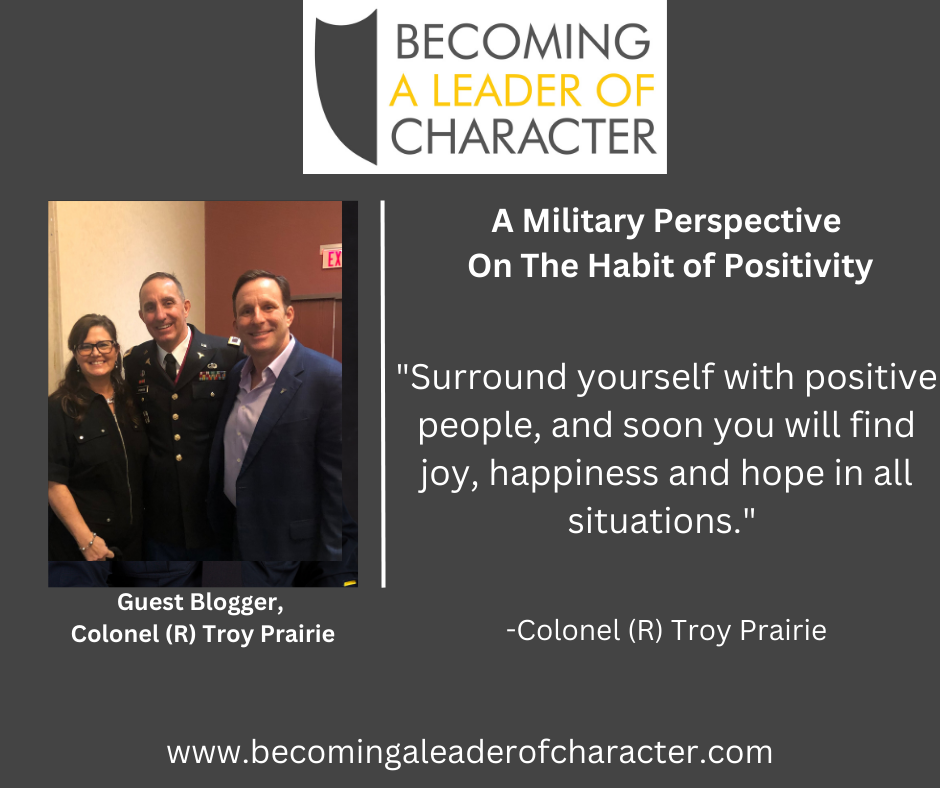
Surround yourself with positive people, and soon you will find joy, happiness and hope in all situations. – COL (R) Troy Prairie, MD “It will never work.” “I really don’t think it’s possible.” “Never going to happen my friend.” Or would you rather surround yourself with…… “It can be done.” “It’s not going to be easy, but we’ll figure it out.” “Yes Sir, we are on it.” George Washington at the Delaware, Eisenhower on D-day, or even Patton’s famous 100 mile march to Bastogne signify the power of Positivity. Character is not defined by our actions in times of peace and tranquility; rather, it is the result of our efforts when everything seems hopeless. In the darkest hours, true leaders rise up like a beacon of light and inspire others to follow and succeed. There is a saying in military medicine that we have to “figure out a way to get to ‘yes’”. When dealing with a Code Blue or soldier Bleeding-Out on a battlefield, no one – but especially the patient – wants to hear why the plan will not work. Adversity is everywhere. Obstacles block all paths forward. There is a story of a medic who found himself on the battlefield with a soldier gasping his last breath of life secondary to a traumatic pneumothorax. Several folks watched helplessly without the proper equipment to decompress the trapped air in the lung. Focusing on what can be done, the veteran medic pulled out his pen, jabbed it through the rib cage, and pulled out the guts of the pen leaving the surrounding tube to relieve the air. Positive thinking — Life saved! As a Doctor for many years, I have to impart bad news all too often. Experience has taught me that patients want the truth, and they certainly do not want me to sugar coat it. However, no matter how grim there is always a way to focus on the things we can do. “Here is our plan moving forward”, “this is what we can do to treat the pain”, and “what does your faith say about these times.” Recovery from Stage IV melanoma or ALS is statistically not in our favor – though focusing on what can and should be done with your remaining time is the way a positive thinker moves forward. Many of the greatest people throughout history understood the importance of being positive. Thomas Edison was once asked by a reporter, “How did it feel to fail 1,000 times?” Edison replied, “I didn’t fail 1,000 times. The light bulb was an invention with 1,000 steps.” Abraham Lincoln famously failed countless times in business, politics and life; however, his endless positive nature propelled him to keep trying in the face of endless adversity. In fact, our 16th President was once quoted as saying, “Success is going from failure to failure without losing your enthusiasm.” Surround yourself with negativity, and soon you will think and act in a hopeless manner. Surround yourself with positive people, and soon you will find joy, happiness and hope in all situations. Troy Prairie is the epitome of Positivity in life. He kept me (Dave) smiling through four hard years at West Point. Later in life, he successfully battled cancer. Inspired by his physicians, he decided to become a military doctor after already serving his five year commitment in the combat arms. He deployed to Iraq as an Army doctor and served another 20 plus years caring for our men and women in uniform. Troy understands the definition of Positivity – displaying a positive attitude and “can do” attitude in all circumstances. His honest yet positive words to me while my mom was dying, were the salve I needed at that critical moment in my life. He is one of my best friends and someone everyone can count on to lift them up – in all circumstances! Colonel (retired) Troy Prairie is a West Point graduate and decorated veteran of the War on Terror. But, what he is most passionate about is his wife, Shannon and the life they have with their four boys. Oh yeah…he’s also a fan of the Minnesota Vikings.
What Young Leaders Get To Do and What They Must Do

The things we get to do are most often the ones we prioritize. Whereas the things we must do are sometimes the harder tasks that we procrastinate doing. Over the course of the last several years I have had the opportunity to lead multiple teams of very different geographies, people, and areas of focus – but all with one mission: to serve our customers, be successful in meeting our goals and being our best every day. Being a young leader in today’s workplace does come with challenges as you lack years of experience compared to some of your peers. It is so vitally important to constantly have the mindset of being a sponge in every situation as you tackle the duties and responsibilities that come your way. I was personally able to gain a strong foundational knowledge of leadership early on as a college intern working alongside Dave as he facilitated workshops for leaders in our community through his courses around competence and character. In his book – Becoming a Leader of Character – one of the core concepts he dives into is what the Duty of a leader is. Upon reflecting on this concept, one thing I have learned in my short time as a people leader is there are things we get to do and things we must do as our Duty in leadership. The things we get to do are most often the ones we prioritize first, enjoy the most, and put at the front of our to-do list. Whereas the things we must do are sometimes the harder tasks that we procrastinate and over analyze. For the things we get to do, I think of the comparison of running. In elementary school we were forced to run a timed mile for evaluations of health for whatever reason (in third grade I thought this was a death sentence). Now as an adult, I enjoy running long distance races and have completed several marathons and various distance triathlons. I don’t see it as a must do – mandatory objective – rather as an opportunity to better myself and enjoy the outdoors. In leadership, there are many things we get to do that might very well be a big part of the reason we sought the job opportunity itself in the first place. These tasks are also part of our Duty as leaders, but we might not necessarily view them that way because we enjoy them. In my role, the enjoyable tasks – get to do tasks – are what truly takes up the majority of my day. And that’s how it should be – if we see our roles as a constant need to ‘check a box’ – must do tasks – then we are not in the right place. Duty: Taking aciton based on my assigned tasks and my moral obligations. One specific example that I have thought deeply about over the last few years of leading people is the Duty I have as a coach to always make sure my team is growing and getting better – that is the moral obligation of a leader. However, this sometimes comes with the challenge of delivering difficult feedback and coaching in a candid, caring, and honest way that may not always be wanted from the recipient. This must do is not always easy. But at the end of the day, if I am not upholding my end of the bargain as a leader and making others better, then I would be letting my team down. In the same way, I expect my leader to do the same for me – even if I don’t want to hear it or the feedback might be difficult. That is their Duty to help me be the best I can be. There may be moments where you question your ability to handle certain tasks or situations, and you must remind yourself that you were chosen and placed in the role for a reason. Someone believed in you and saw the potential for you to do great things. Once in that role, doing both the things we get to do and also the things we must do means we are doing our Duty. That is the path we all must travel as young leaders to become the leaders other people will want to follow. Wow! I (Dave) love how Carly sees her role as a young leader. Too many leaders, who have much more experience, avoid the harder aspects of their jobs like delivering difficult feedback to those they are called to lead. But Carly sets and example for all of us no matter our age or experience level. She understands that our Duty involves both the things we like (get to’s) and the things that are not always enjoyable (must do’s). Carly Stephens is a rising star in the business world. She one awards early in her career that set her up to be promoted to lead multiple sales team. I was blessed to work with her and recognized she was someone who I would have hired in a heartbeat as a sales leader myself. To learn more about Carly click here: Here is a quick assessment that will take you 5 minutes to figure it out. Nobody will ever see your results but you. Warning: If you are not going to be honest with yourself this is a worthless assessment. To take the assessment use the QR code above or go to www.MYCHARACTERTEST.com
Our Duty to Our People, Our Business, and Ourselves
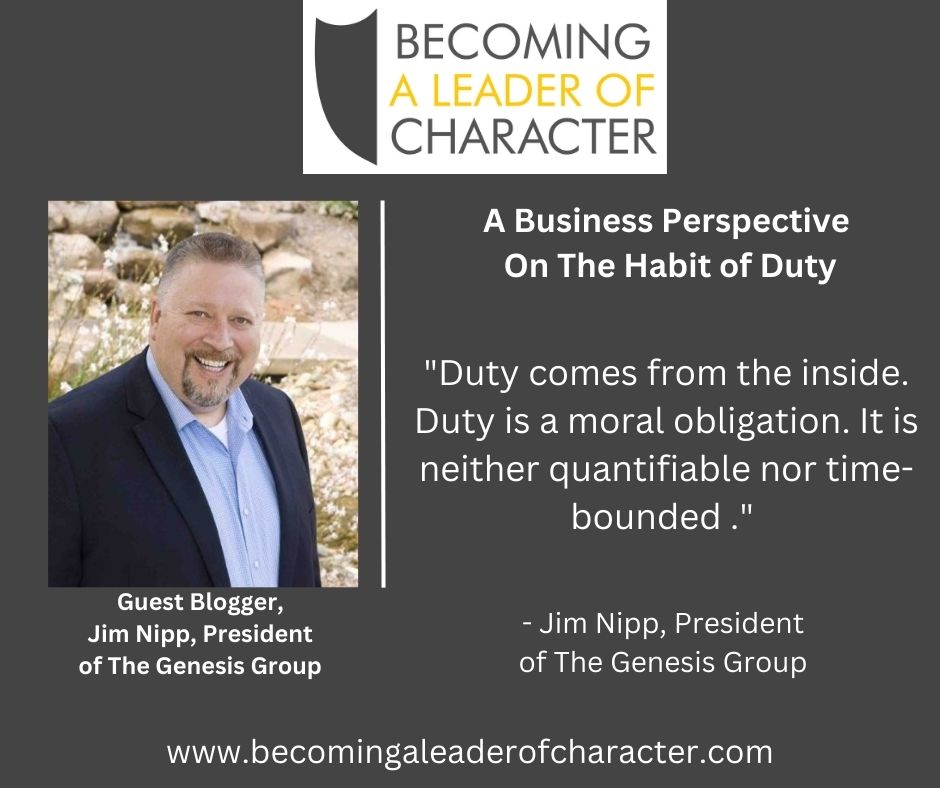
Duty comes from the inside. Duty is a moral obligation. It is neither quantifiable nor time-bounded. A strong sense of Duty is one of the elements that separates successful business leaders from everyone else. As business leaders, we all have a seemingly endless list of responsibilities. Let’s take a couple of minutes to learn the difference between the responsibilities we all execute and the actions we initiate out of a sense of Duty. Dave Anderon’s book, Becoming a Leader of Character defines Duty as: Taking action based on my assigned tasks and moral obligations. For leaders, a responsibility is something you “owe” to your board, investors, lenders, employer, customers, or employees. Responsibilities might include a list of roles or tasks in your job description. Responsibilities are both measurable and quantifiable. Responsibilities come from the outside. Responsibilities are the assigned tasks described in the definition of Duty above. You might think of responsibilities as transactional – you perform this task or set of tasks, and you get that positive rating, bonus, or promotion in return. Duty comes from the inside. Duty is a moral obligation. It is neither quantifiable nor time-bounded. Duty isn’t transactional – duties are often performed without any opportunity for reward or chance of recognition. A clear sense of Duty supersedes any sense of responsibility to others. A sense of Duty pushes you to go beyond the expectations of others because you alone measure your success or failure in displaying a sense of Duty. It would help if you viewed duties as a privilege, not something for you to drudge through daily. Remember, you aren’t performing duties because you have to do them; you are doing them with passion and excellence because it is part of the higher moral code to which you hold yourself. Duty is part of your character. This attitude also fosters another Habit of Character – Positivity. You’ll discover that most employees you encounter in your career will not display a strong sense of Duty. When you find someone that does exercise this character trait, you should hold onto them! Also, we have a responsibility as leaders to avoid abusing employees that display a strong sense of Duty. Knowing someone is morally compelled to help/work/struggle without seeking glory obviously makes them an easy target for corporate mistreatment. A strong sense of Duty should be recognized, and above-level work rewarded. People with a strong sense of Duty towards their work don’t look for a lot of external validation, but it doesn’t mean they don’t deserve it. As a leader, you have a Duty to make sure they know how much you recognize their value to you as a leader and on behalf of your company. We all have a Duty to do more than just take care of our responsibilities (assigned tasks) and exercise our moral obligations. When we do, we become people who lead organizations to follow our example. And leading by example is another moral obligation! Jim Nipp is a Leader of Character who leads a Company of Character. I (Dave) have consulted with the leadership team of The Genesis Group since 2014 and seen the impact their focus on character has had on their culture and their business results. In fact, Jim tells the story of The Genesis Group’s cultural shift to a culture based on character in the early pages of our book – Becoming a Leader of Character. Jim has become a good friend and someone I rely upon to advise me as both a friend and a businessman. He is a model in his community for corporate philanthropy. He sees that as his moral obligation – his Duty. To learn more about Jim click Here is a quick assessment that will take you 5 minutes to figure it out. Nobody will ever see your results but you. Warning: If you are not going to be honest with yourself this is a worthless assessment. To take the assessment use the QR code above or go to www.MYCHARACTERTEST.com
Trust Comes From Doing Your Duty in the Military, in Business, or as a Child
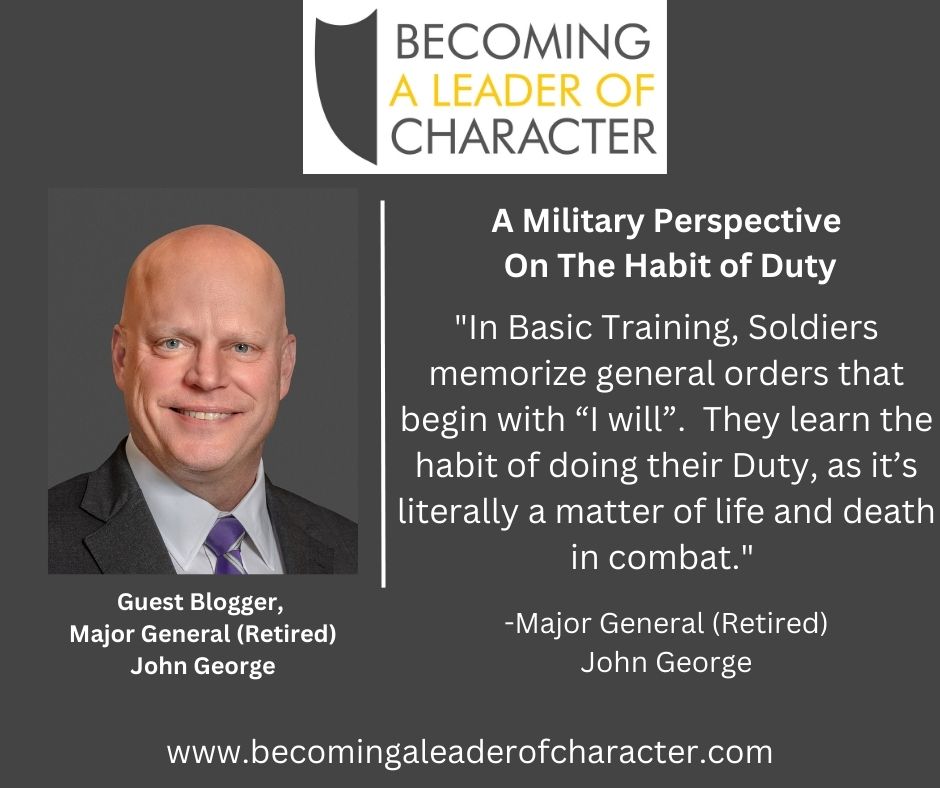
In Basic Training, Soldiers memorize general orders that begin with “I will”. They learn the habit of doing their Duty, as it’s literally a matter of life and death in combat. Duty: A foundation of trust As a Boy Scout, I learned in my oath “to do my best to do my duty to God and country”. Little did I know that those simple words aimed at molding a child would become a recurring theme throughout my career as a Soldier. The Boy Scouts knew that training was necessary for me to learn to do my Duty in the little things so that as an adult, where consequences are more significant, I would habitually deliver. When I was a child, I spoke like a child, I thought like a child, I reasoned like a child. When I became a man, I gave up childish ways. (1 Corinthians 13:11) As a leader, I learned to trust those who have a habit of delivering. In Basic Training, Soldiers memorize general orders that begin with “I will”. They learn the habit of doing their Duty, as it’s literally a matter of life and death in combat. Importance of Duty is emphasized: – As one of the Army’s values – Duty is fulfilling your obligations with an emphasis of being a good teammate and not taking shortcuts. – In The United States Military Academy at West Point’s motto: “Duty, Honor, Country”. – In the Soldier’s Creed – it’s made clear that a Soldier’s Duty is founded on moral obligations to be ready and trained, placing the mission and those who serve alongside you above yourself. Duty is also embedded in the Warriors ethos, the NCO Creed, the Ranger Creed and the Oath of Office that every leader in the Army takes swearing that they “will well and faithfully discharge the duties of the office on which I am about to enter. So help me God.” In the Army, Soldiers rely on each other to shoot their weapon accurately, at the right time and often aiming in front of another Soldier’s position. Soldiers trust their buddies to protect them when they cannot protect themselves, while they may be accomplishing another important task for their unit. It’s a trust that’s earned through repetitive drills and training exercises where habits are formed. It becomes clear who you can trust to execute their duties; in good times when it’s easy and in challenging conditions where it takes extra effort and personal sacrifice. For me, Duty comes down to delivering on what you sign up for with your job, your family, and your personal behavior in the form of creeds, oaths, mottos, contracts, and promises. In business, when you say you will do something, your delivery becomes your credibility. Your customers trust that you’ll do it without taking shortcuts that undermine the final product’s integrity. Your track record of delivering is a proof point for your next contract proposal and becomes an important competitive advantage. Will you deliver what you were contracted for on time and at cost? Will what you deliver be what you promised? Trust starts with an individual’s habits and builds over time collectively in an organization leading to culture – and a culture of delivering – of doing one’s Duty – supports a winning company. I, (Dave) was fortunate enough to have John George as my roommate during Plebe (Freshman) year at West Point. John could always be counted on to do his Duty. As he rose to the rank of Major General, his understanding of Duty built him the same reputation that I recognized when we were nineteen years old. In our book, Becoming a Leader of Character, we define Duty as – “taking action based on both our assigned tasks and moral obligations.” As John points out, a leader and an organization that can be relied upon to exercise Duty in the small and large moments, builds trust with everyone they encounter. Don’t wait for the big moments! The small moments that test your sense of Duty will set you up to be that reliable leader that others will follow. I will follow MG(R) John George anywhere, at any time! MG(R) John George is a West Point graduate and an Army Ranger and served our country with distinction for more than 33 years. He is now Vice President and Army Strategic Account Executive at Leidos. More importantly to him, he is a husband, father, and a grandfather multiple times over! Here is a quick assessment that will take you 5 minutes to figure it out. Nobody will ever see your results but you. Warning: If you are not going to be honest with yourself this is a worthless assessment. To take the assessment use the QR code above or go to www.MYCHARACTERTEST.com
You’re in Your Twenties, Working, Married, & A Parent – What Comes First?

Your work will always be there, but those around you won’t always be. When I (Dave) asked for a person in their twenties to share a lesson about exercising Selflessness as a young professional, I honestly didn’t expect a lesson about living our lives well at home. But in just a few sentences, Skyler Hefley shares just that. As young professionals, we take on large workloads to impress leadership and expedite our career growth. I did, but I quickly realized my passion for work was both a gift and a curse. Creating boundaries for a healthy work-life balance has allowed me more opportunities and time to be selfless, which has benefited my wife, daughter, and my mental health. It’s not easy to do. We always want to do and accomplish more, but know your career will always be there, but those around you won’t always be. Be selfless. Skyler makes a great point. The world always pushes us towards MORE. ● Do MORE. ● Get MORE. ● Spend MORE. But the only place that MORE will truly give us any lasting satisfaction is MORE time with those we love. When I was starting out in my corporate career, I wish I had understood this principle. I was always chasing more of the wrong things! Joy – ours or the people we love – does not come from doing, getting, or spending MORE. I understand – finally – that joy comes from giving up MORE of those things in order to have MORE time with my family. To exercise Selflessness means we must sacrifice something. Often times, it means we must sacrifice something that could provide short term benefits to ourselves for the longer term benefit of others. Selflessness defined: Putting the needs of others before your own needs, desires, or convenience. Skyler has figured it out. If you are in your twenties and these competing priorities are weighing on your shoulders, know that your time is most valuable to the people you care about the most. Putting their needs first, will give you MORE and give them MORE than anything else in your life. P.S. Those of us who are more “chronologically superior” should pay attention to Skyler as well! Skyler Hefley, is a Social Media Branding specialist for the Tyler Independent School District and also runs his own company – Namestruck Creative. He is a devoted husband and a proud father. Check him out at https://www.skylerhefley.com/ Here is a quick assessment that will take you 5 minutes to figure it out. Nobody will ever see your results but you. Warning: If you are not going to be honest with yourself this is a worthless assessment. To take the assessment use the QR code above or go to www.MYCHARACTERTEST.com
Young Professionals – What preparation have you gotten in order to become leaders?
*If you are not aged 20-35 please share this with those who are. If you are in the early stages of your career or soon to start one, we need your insights. We are doing research to understand how schools and workplaces are preparing 20 – 35 year olds to lead. Please take 5 minutes to fill out this survey: Click Here: 20s Survey Also, would you please share this survey with other young professionals? We hope to use the results in our book that will be focused on developing leaders while they are in their twenties. Character Counts! Dave P.S. This is not a gimmick to collect email addresses. If you decide to share your email address at the end of the survey, that is up to you. We appreciate you helping us with our research. Here is a quick assessment that will take you 5 minutes to figure it out. Nobody will ever see your results but you. Warning: If you are not going to be honest with yourself this is a worthless assessment. To take the assessment use the QR code above or go to www.MYCHARACTERTEST.com
My 90 year old Vietnam Veteran Father Remembers One Pilot’s Selflessness

This is a combat memory from a “chronologically superior” Army Ranger. When you turn 90 years old, you tend to reflect on the people in your life that set an example for you. What follows is a combat memory from a “chronologically superior” Army Ranger. On the battlefield during my two tours in Vietnam, I witnessed many acts of Selflessness. One in particular occurred in late May 1970. I was a battalion commander, and our Area of Operation was in Cambodia. The attack into Cambodia was designed to stop the flow of North Vietnamese supplies along the now famous Ho Chi Minh Trail. As the lead American unit during this offensive, we sent our scout platoon on a reconnaissance mission to verify intelligence on an enemy cache site. The platoon got into a firefight with the enemy, and the scout platoon leader was seriously wounded. While in my command-and-control helicopter checking on our four rifle companies, the call came over the radio for a medevac helicopter to pick up the wounded lieutenant. I heard the operations officer say, “The medevac has gone to refuel and will be at your location in about one hour.” “We cannot wait for an hour,” the medic responded. “I am having difficulty stopping the bleeding, and he may be dead in an hour.” I got on the intercom to the pilot and asked him if we could land and pick up our wounded officer. This helicopter had top-secret electronics equipment and the pilots were responsible for the security of that equipment. So it was the pilot’s call to take the risk, not mine. He had the option of saying, “Sir, we cannot afford to have the enemy capture this equipment. I am responsible for it.” Instead he simply said, “Sir, I am at your command. If you tell me that you want me to land this helicopter down there, I will do my best to put it where you need it to be.” At that point I called the operations officer and told him that we were in the area and we were coming in to pick up the wounded scout platoon leader. The pilot put the helicopter down in the only place clear of trees. It was on the side of a steep hill where he could get only one skid on solid ground. I jumped out on the left side of the helicopter. When I hit the ground, I spotted a North Vietnamese soldier come out of the woods about fifty yards away. He was carrying a rocket propelled grenade launcher (RPG). He went to one knee, aiming the RPG at the helicopter as I pulled the trigger of my M16. Unfortunately, he fired the RPG right before the M16 rounds hit him. It looked like the missile was flying right at me. However, it passed just to my left, went under the tail boom of the helicopter, and exploded. I immediately lost my hearing, and for a period of three days my men had to write me messages if they had information I needed to know. A few small pieces of shrapnel punctured the tail boom. The pilot checked the chopper for any serious damages. Finding none, we loaded up the wounded officer, took off, and delivered him to the nearest aid station across the border in South Vietnam. The gravely wounded platoon leader survived, thanks to the selfless decisions of that pilot. In our book, Becoming a Leader of Character, my son (David) and I define Selflessness as “putting the needs of others before your own needs, desires, or convenience.” That pilot did not have to agree to land his chopper on the side of a hill under fire. He had every right to protect himself and the top-secret equipment he was responsible for. He performed a selfless act because he believed it was his Duty to help save that platoon leader, even at the cost of his own life. It may not have been his job to act as an evacuation chopper, but he recognized that he had a moral obligation to try to help save the life of a fellow soldier. Notice, he did not worry about the consequences if that vehicle he was responsible for had been destroyed or captured. He recognized that he was not bigger than the situation. He saw that the needs of another human being outweighed his own. His act of Selflessness took Courage and a sense of Duty that we should try to emulate as Leaders of Character. It was one of the greatest honors of my (Dave) life to write Becoming a Leader of Character with my father, General (R) James L. Anderson. The lessons I speak about and continue to write about I first learned from him. Last week was his 90th birthday. Over 100 people came to a party we held for him. Some of those people traveled from across the country to honor him and thank him. The words they used to describe my father included wisdom, Humility, Integrity, and kindness. It was a great celebration for a Leader of Character. In each chapter of Becoming a Leader of Character, my father tells a story about combat in Vietnam and I tell a story about combat in the business world. Those stories always relate back to exercising one of the Six Habits of Character. This story was adapted from the chapter on Selflessness. General (R) James L. Anderson served 42 years on active duty in the Army. He graduated from West Point with the Class of 1956. He was the honor graduate from his Army Ranger School class and later became an instructor there. He served two tours in Vietnam. His final 24 years on active duty were spent as the Head of the Department of Physical Education at West Point. He earned a Silver Star, 2 Bronze Stars for Valor, and a Purple Heart. Watch a video about The General here: https://www.becomingaleaderofcharacter.com/about Here is a quick assessment
Eisenhower on Integrity in Business – No Integrity Means No Leadership
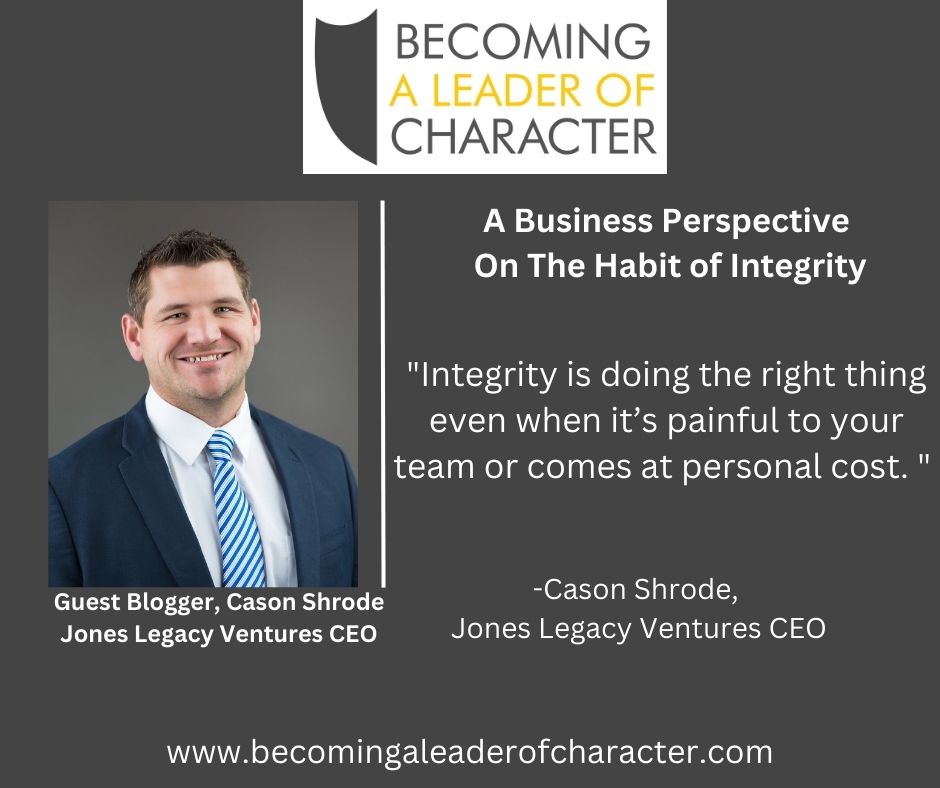
Integrity is doing the right thing even when it’s painful to your team or comes at personal cost. – Guest Blogger Cason Shrode, Jones Legacy Ventures CEO While I was a cadet at West Point, I read a famous quote by Dwight D Eisenhower that stated “The supreme quality for leadership is unquestionably integrity. Without it, no real success is possible, no matter whether it is on a section gang, a football field, in an army, or in an office. “ As a 19-year-old student at the time, I did not realize how profound of a statement that really was. But now, after serving as an Army Officer and currently leading in the business world, having faced my fair share of character defining decision points, I realize just how powerful the meaning of those words truly are. In today’s society, the value of Integrity has too easily transitioned into one of those buzzwords that everyone uses because it checks the box. It projects well when speaking to a potential customer or employee. It looks great stated on a website highlighting business values. However, truly living a life of Integrity can be difficult. It can be very uncomfortable. It will require you to take accountability and force you to make personal sacrifices. In the 1990’s, there was a very successful company in America called Enron, who’s stated values were Integrity, Communication, Respect and Excellence. When describing their value of Integrity, they went on to say “We work with customers and prospects openly, honestly, and sincerely. When we say we will do something, we will do it; when we say we cannot or will not do something, then we won’t do it.” Sounds very admirable right? That is, until it was discovered that Enron’s success was all based on hiding massive trading losses, forging fraudulent profits, and executing deceiving accounting tricks. I’m sure when the company was founded, they didn’t set out to break the rules. However, when the leadership at Enron began to struggle and face personal costs, they chose the easier wrong over the harder right. See that’s the thing about Integrity. Integrity is not something you verbalize or demonstrate to others. In fact, it’s just the opposite. Integrity is the choices you make when no one else is looking. It’s doing the right thing even when it’s painful to your team or comes at a personal cost. So, when Eisenhower states that the supreme quality for leadership is Integrity, well it’s because without it, leadership really can’t exist. And without leadership, any sustainable success will be nearly impossible. As I (Dave) read Cason’s blog, I realized that we used Enron as a classic example of poor character in our book Becoming a Leader of Character. Today the more recent examples are Theranos and FTX. Each business is very different and the problems happened years apart. But the root cause remains the same. It was not a lack of competency – skills, talents, or knowing what to do and how to do it. It was a lack of Integrity that caused a massive failure in leadership at each company. Enron, Theranos, and FTX were all celebrated for their massive profits and returns for shareholders – initially. But, as Cason says, without leadership, any sustainable success will be nearly impossible. Cason Shrode is the CEO of Jones Legacy Ventures, a multi-million dollar business, which includes four affiliated companies that all operate in the construction marketplace. Cason is a West Point graduate and served in combat during the Global War on Terror. He also earned an MBA from Southern Methodist University. To learn more: https://www.linkedin.com/in/cason-shrode-46157225/ Here is a quick assessment that will take you 5 minutes to figure it out. Nobody will ever see your results but you. Warning: If you are not going to be honest with yourself this is a worthless assessment. To take the assessment use the QR code above or go to www.MYCHARACTERTEST.com
Leading in the U.S. Fire Service – Unwavering Integrity
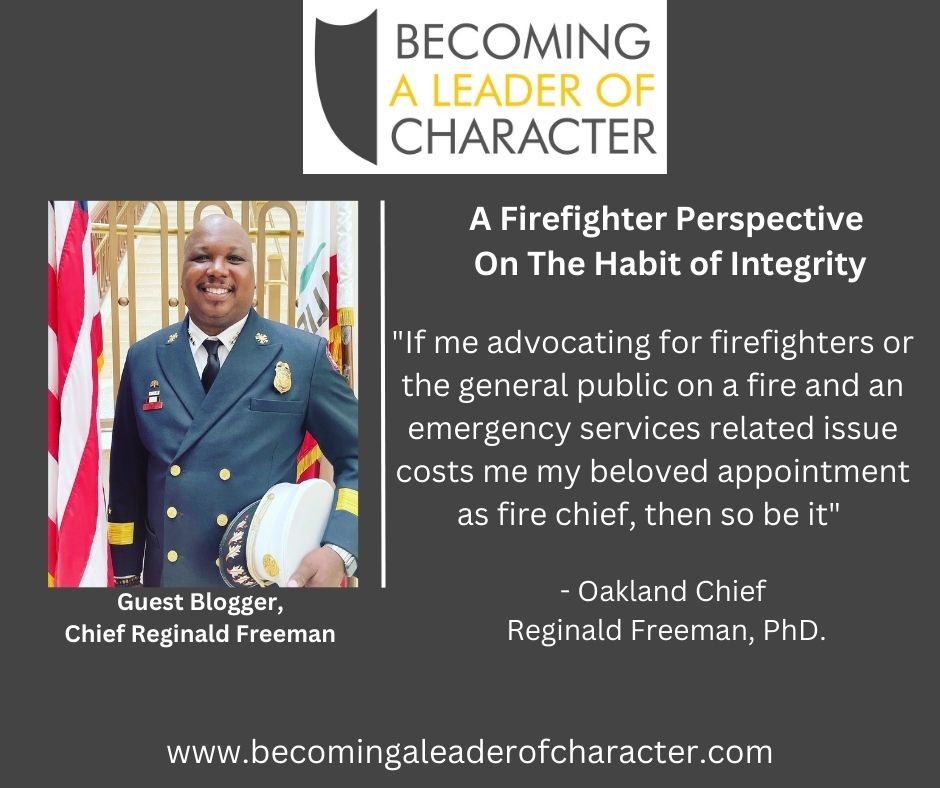
“If me advocating for firefighters or the general public on a fire and an emergency services related issue costs me my beloved appointment as fire chief, then so be it.” – Oakland Chief Reginald D. Freeman, PhD. As someone who has been a fire chief for 15 years, I can tell you that one thing that I have never compromised and will never compromise is my Integrity. Some fire chiefs struggle with some aspects of decision making outside of emergency scenarios because of the conflicting interests. There is self-actualization and job security that may compete with advocating for your membership. Simply put, what do you do when doing the right thing may cost you your job? I have never struggled with this question because Integrity is non-negotiable. If me advocating for firefighters or the general public on a fire and an emergency services related issue costs me my beloved appointment as fire chief, then so be it. I recall one particular scenario where my Integrity was directly challenged. It involved a discussion that I had with my boss going back to when I was being interviewed for the fire chief position. The individual asked me a lot of questions and at the very end of the interview asked me did I have any questions for them? I responded, “Yes. I only have one. Are you looking to lay off firefighters or close any companies because I don’t do that.” The person responded back with, “No, no, no. I’m just looking for someone to lead the fire department and restore its reputation.” I was delighted and relieved to hear this and humbly accepted the position. Literally after being on the job for 3 weeks, the same individual summons me to their office and says, “Chief, we are not in a good disposition fiscally and we have to close 2 companies.” I was shocked to say the least. I respectfully informed my boss that we could not close any companies, for it would be a public safety issue and a safety issue to the membership. I also reminded them of our previous conversation prior to me officially being appointed and presented the objective reasons for my pushback. When you can present facts that reinforce your ask or defense of a position, it is not your opinion but a matter of fact. Removing emotion from these sorts of discussions is critically important to achieving the outcome you are pursuing. However, the outcome was not guaranteed by my logical reasoning. I knew that I was risking my “job” by professionally saying, “no”. But, my Integrity was and is more important to me than any title or position that I may hold. When your Integrity is unwavering, your character is reinforced and undisputable. After presenting objective data that reinforced my position as the Chief, the efforts to close two companies went away and my Integrity was still intact. Integrity is rarely the easy way to go, but it is always the right way to go. The American fire service has been revered and honored since its inception in Philadelphia, PA. Ben Franklin established the first volunteer fire service to help protect the many buildings and investments that he owned. Fast forward to today, the fire service still enjoys a high approval rating from residents, bureaucrats and elected officials alike. This is in large part due to Firefighters having “servant’s hearts” and anytime that we respond to an incident, we are always there to help without any threat of prosecution or detainment. The Maltese Cross is the international symbol of the fire service’s willingness to make great sacrifices in order to protect others from fire. There are 8 points on the Maltese Cross, and each has a different meaning. These 8 points are identified as Gallantry, Perseverance, Loyalty, Dexterity, Explicitness, Observation, Tact, and Sympathy. As with any honorable profession, Integrity plays a critical role in meeting objectives and maximizing organizational effectiveness. I (Dave) encountered situations more than once where exercising Integrity could put my job at risk. Unfortunately, I failed some of those tests in my younger years. Chief Freeman’s statement that his Integrity is more important than any title or position he may hold is a perspective we should all have. The word Integrity comes from the root word Integer. Integer means “whole or pure”. If we only exercise Integrity when it can’t cost us anything, that is not Integrity. Chief Freeman gives us all a great example of that! Chief Reginald Freeman is currently the Fire Chief in Oakland California. Prior to the City of Oakland, he served as the Fire Chief for the City of Hartford from 2016-2021 and was the Fire Chief for Lockheed Martin and served as a civilian Fire Chief in Iraq for the U.S. Department of Defense from 2004-2008. He has also earned a Masters and Doctoral degree. Learn more here: https://www.linkedin.com/in/reginald-freeman/ Here is a quick assessment that will take you 5 minutes to figure it out. Nobody will ever see your results but you. Warning: If you are not going to be honest with yourself this is a worthless assessment. To take the assessment use the QR code above or go to www.MYCHARACTERTEST.com
A Police Chief’s Choice: The Statue or The People

“Serve the people first and our honorable work will always have meaning.” – Guest Blogger Police Chief (Retired) Chris Blue One of the toughest times in my career came on the heels of one of the easiest decisions I ever made. As in many communities in the South, a confederate monument had stood at the doorstep of our local University for close to 100 years when, on the first day of the fall semester, August 20, 2018, anti-monument demonstrators successfully pulled the monument down. I’ve heard it said that Integrity is doing the right thing when nobody’s watching. But my preferred definition says that Integrity is the practice of being honest and showing a consistent and uncompromising adherence to strong moral and ethical principles and values. I will add that Integrity is best revealed (or discovered) in the face of personal challenge. August 20, 2018 was a challenge for me both personally and professionally. In the weeks leading up to that day, we had seen flyers suggesting that something was going to happen that night. While it certainly wasn’t clear that an attempt to take the monument down would occur, the social media traffic and the flyers that were popping up around town suggested that we could expect a large event. So, we did a large-scale callback, incident plan, and set up for what we imagined would be a long night. Around 7PM, many hundreds of people marched down our main street then onto the University campus, encircling the monument, and began working to loosen the monument so it could be pulled down a short time later. The group was extremely well-prepared and organized and the police officers were severely outnumbered. On the night “Silent Sam” fell, I was sitting in the command post next to our University’s police chief. We saw that, as the crowd grew and as their intent became increasingly clear, that keeping them from defacing or otherwise damaging the monument meant employing tactics that would likely injure the demonstrators (and possibly our officers) who were gathered around the base of the statue. We immediately agreed that protecting people must be our focus. Therefore, when it became clear that the size of the crowd was such that we could no longer keep them back, we pulled our officers away from the monument. “Silent Sam” fell minutes later. Not surprisingly, our decision was met with an intense response from both sides of the issue. In the weeks and months after “Silent Sam” fell, many reports were commissioned and presented to numerous stakeholders either condemning or praising our tactical decision to pull back. The following months of subsequent demonstrations took an immense toll on our teams as the intensity of the demonstrations heated up. We encountered protestors and counter-protestors who repeatedly clashed in the middle of our downtown until it was decided that the monument would not return. Despite the intensity of those months, I stand by our decision. No persons there that night, no officers, no anti-monument nor pro-monument participants received so much as a scratch. So how is this story relevant to the concept of Integrity? As noted above, my preferred definition says that Integrity is the practice of being honest and showing a consistent and uncompromising adherence to strong moral and ethical principles and values. To me, policing is fundamentally about people. Although we swear an oath to protect objects and property, we do not swear an oath of service to them. We do, however, swear an oath to our communities and the people in them. For folks entering our profession or for those who have served for years, an occasional reminder can be useful to all of us. Without the people we serve, our proud and noble profession need not exist. Serve the people first and our honorable work will always have meaning. What do you do when you know your decisions will upset somebody no matter which choice you choose? You have to know what you stand for and exercise the Courage to maintain your Integrity. In a polarizing set of circumstances, Chief Chris Blue knew what he needed to do. He prioritized the people over the statue. Was everyone happy with that decision? No. But when we exercise Integrity, we will rarely make everyone happy. That may be why it is so rare these days. Thank you Chief Blue for sharing how to exercise Integrity when it is hard. I (Dave) admire the men and women in law enforcement who serve our communities with Integrity like Chris. Chief Chris Blue is currently the interim City Manager in Chapel Hill, North Carolina. Prior to that, he spent over 26 years as a member of the Chapel Hill Police Department. His final 12 years he was the Chief of Police. For more information: https://www.linkedin.com/in/chris-blue-ba4bb48/ Here is a quick assessment that will take you 5 minutes to figure it out. Nobody will ever see your results but you. Warning: If you are not going to be honest with yourself this is a worthless assessment. To take the assessment use the QR code above or go to www.MYCHARACTERTEST.com
The Band of Brothers Descendants – Two LT’s Exercise Integrity During the Battle of Ramadi
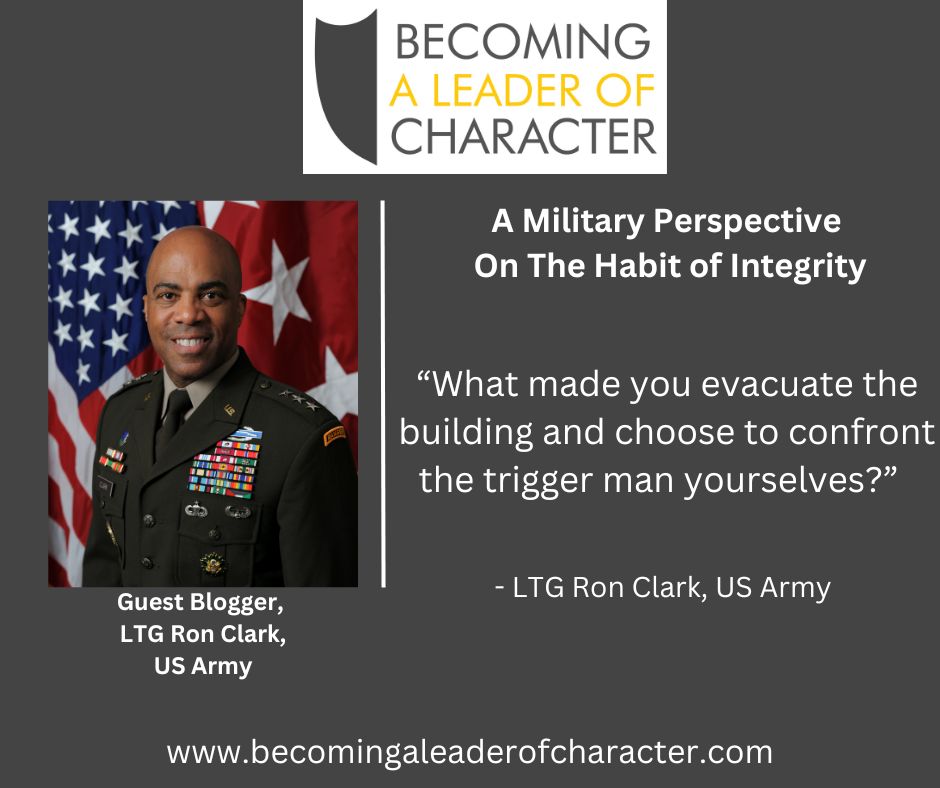
“What made you evacuate the building and choose to confront the trigger man yourselves?” – Guest Blogger LTG Ron Clark, US Army It was the honor of my professional life to command 1st Battalion, 506th Infantry Regiment and to lead the Soldiers, Sailors, Airmen and Marines of “Task Force Red Currahee,” the descendants of famed World War II Band of Brothers, during combat operations in Ramadi, Iraq in 2005-2006. I believe that Integrity is absolutely essential to the establishment of trust between leaders and those they lead – especially for those privileged to lead Soldiers in combat. This is a story about two young officers who exercised that sort of Integrity. Our service during “the Battle of Ramadi” as it became known, was characterized as one of the most violent and deadly environments where US Service Members were forward deployed during the Global War on Terror. Consequently, on the night of 13 March 2006, one of our patrols in downtown Ramadi was struck by an improvised explosive device (IED) that resulted in the death of one of our comrades, with several other Soldiers wounded. After evacuating our fallen, a Soldier identified and traced the wire that initiated the IED to a peep hole in the wall of an adjacent building. Upon investigating the hole in the wall, he encountered the “trigger man” of the IED! The leaders on the ground, two young lieutenants, made the bold decision to lead their Soldiers into the building to capture the trigger man. They found the assailant’s hiding spot behind a false wall to conceal his location. The Soldiers proceeded to tear down the wall, but were stopped by the lieutenants before they had an opportunity to secure the man. The young leaders assessed the situation and decided to evacuate their Soldiers from building and to contend with the trigger man themselves. As they expected, the man made desperate, yet unsuccessful attempts to stab or slash the lieutenants with a large knife. They reacted swiftly to disarm the man and take him into custody without the use of lethal force, despite having clear authority to do so. I arrived upon the scene shortly after they secured the man, so I asked the lieutenants, “What made you evacuate the building and choose to confront the trigger man yourselves?” They responded that their Soldiers were emotionally charged after the death of their teammate at the hands of this man. They assessed the man would likely choose to fight or die by initiating a suicide vest or grenades. The lieutenants believed that exposing themselves to the risk posed by the assailant, safeguarded their Soldiers from potential injury or death. Additionally, they asserted that the unnecessary use of lethal force would set the wrong example for their subordinates and not align with my intent that Task Force Red Currahee always serves with honor. Their efforts to capture the trigger man resulted in him later providing valuable information on enemy locations, tactics and networks that facilitated our future mission success and saved lives in combat. A clear understanding of the commander’s intent, reinforced by training and education that emphasized character-based decision making and mitigated ethical ambiguity, contributed to these young leaders demonstrating Integrity in the crucible of combat. They discerned the right action to take, despite great personal risk, thus living up to the value of Integrity. I (Dave) want to thank another friend, hero, and West Point classmate for sharing a story that probably did not get news coverage. But there is no doubt that these lieutenants set the example for not just their soldiers, but for their commanding officer as well! The two lieutenants exercising Integrity – doing what is good, right, and proper even at personal cost, provides us all with a vivid living and personal example. They did not let their circumstances or emotions control their decisions. They had a clear understanding of what they should do because they not only had an understanding of their Commander’s Intent, but they were also unwilling to devalue their own Integrity in a situation that others might have rationalized away their Integrity. LTG Ron Clark is currently the Senior Military Assistant to the Secretary of Defense. He most recently commanded US Army Central and the Third Army. He is a graduate of West Point and a Ranger. Ron has served multiple combat deployments commanding soldiers and leading from the front as Rangers always do. To learn more: https://www.linkedin.com/in/ron-clark-14177b24/ Here is a quick assessment that will take you 5 minutes to figure it out. Nobody will ever see your results but you. Warning: If you are not going to be honest with yourself this is a worthless assessment. To take the assessment use the QR code above or go to www.MYCHARACTERTEST.com
Young Professionals – Don’t Get Offended When Someone Shows You a Different Way

When a helpful teammate wanted to steer me back on track, rather than be grateful for their advice – I took offense. – Guest Blogger: Chandler Batts, Young Professional I will never forget my first professional lesson in Humility – I was a brand new college graduate, and I had just started my career in corporate sales. My very first sales meeting had me sitting at a large conference table with 15 or so other professionals, and I had a nervous excitement as I opened my laptop to prepare to take notes. I wanted to make a strong first impression, and I had always heard that by taking notes in meetings, you show that you respect the speaker or presenter. Except, in this room of 15, mine was the only laptop open. In fact, I noticed rather quickly that I was getting sideways glances from my peers and more senior professionals in the room. As I clacked away taking notes, the staccato clicks of my keyboard seemed deafeningly loud by the relative silence around me. I looked around and saw that to a person, no one else had a laptop, but a pen and a paper notepad. One of my colleagues eventually leaned over and quietly said “Hey Chandler, I’d close the laptop if I were you. Take a sheet from my notepad instead, and next time leave the laptop back at your desk.” In that moment, I felt a pang of pride – “Who was this person to tell me how to take notes? Didn’t they know that in college, everyone takes notes on a laptop? The pen and paper method is inefficient, your notes are hard to reference later, and it’s just so antiquated.” What I didn’t understand is that the senior leader who was leading the meeting had very strong opinions on laptops in meetings, and felt that they presented more of a distraction and opportunity for wandering attention than they gave benefit. In fact, they had a rule that in any meeting they led, laptops were to be left in your bag or at your desk. Once I understood that, I never brought a laptop to a sales meeting again. And the funny thing is – I took better, more attentive notes, showed honor to senior leadership, and wound up being a strong performer on that sales team. Laptop not required. Years later, I still remember this story. Not because it changed my thinking on laptops and notetaking (I still stand by my preference for typing over hand writing), but because it changed my thinking on Humility in a professional setting. I thought that I knew how to best show respect to my leadership, when in fact I was showing just the opposite by unknowingly defying their rule. And when a helpful teammate wanted to steer me back on track, rather than be grateful for their advice – I took offense. That’s the thing with pride – when we think we know what’s best, we ignore those around us to our detriment. Humility means “believing and acting like ‘it’s not about me.’” It means not insisting on things going your own way, but rather asking others for their perspective, and then flexing your preferences to show them honor. Building this habit early in your career will take you far – much further than thinking you always know best. Through the last few years, I (Dave) have watched Chandler grow into a young Leader of Character in the workplace and at home. He never backs down from his values, but he is flexible in his approach. He is a great model for me – in my 50’s – and young professionals – in their 20’s – like Chandler. Young professionals face many challenges at this point in their careers. Chandler’s Humility, willingness to be coached, and his desire to do the right thing, makes him one of the young leaders I would follow. Chandler Batts graduated from Texas A&M University in 2015. Since then, he has been setting records in every company in which he worked. He’s led by example in local companies and in some of the world’s largest corporations. He is currently a Talent Acquisition Partner at Pacific Life. Chandler is a proud husband and father. Learn more: https://www.linkedin.com/in/chandlerbatts/ Here is a quick assessment that will take you 5 minutes to figure it out. Nobody will ever see your results but you. Warning: If you are not going to be honest with yourself this is a worthless assessment. To take the assessment use the QR code above or go to www.MYCHARACTERTEST.com