
Moral Drift – How Did I Get Here?
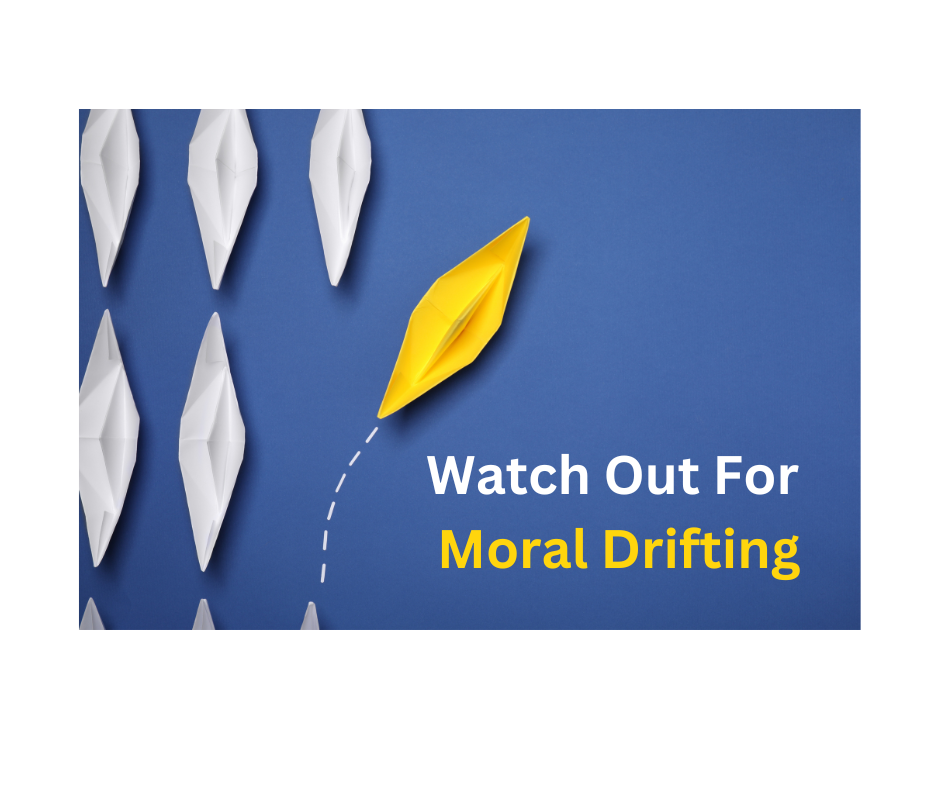
The first step to solving a problem is admitting you have one. In the early 2000s, I realized I was not the person I wanted to be. If you asked me in my younger years, I would have told you my goal was to be a good leader, a good husband, and a good father. By 2000, I was in a leadership position in a Fortune 50 company, I was married, and I had two kids. But I was failing in all three of those roles. I didn’t choose failure. I drifted into it. At 32 years old I was asking myself “How did I get here?” I now know that answer. It is called Moral Drift. Few of us set out to be poor leaders, spouses, or parents. But many of us drift into that. Understanding Moral Drift helps me do better now. That understanding also allows me to warn others and give them a blueprint on how to avoid it in their own lives. Avoiding Moral Drift requires intentionality. Nobody drifts into success in life. But we do drift into those moral failures that can bring us all down. We drift into becoming the leader we wouldn’t want to follow. We drift into being the spouse we never intended to be. We drift into being the parent that our kids shouldn’t emulate. Many people know the type of person they should be. Our family, schools, churches, and communities reminded us of what truly makes somebody into a good person. In my case, my parents instilled in me the ideas of being kind, truthful and loyal with the ones you love. At West Point, we had the motto: Duty, Honor, Country and four years of character training and development. I was blessed to have that background. But I still drifted. How did I drift? The same two ways we all drift. Inattention: When we stop paying attention to our character, I promise you, we are setting ourselves up for moral failure. When a muscle is ignored and not exercised, it gets weaker. We may not notice it at first. But at a certain point that muscle will fail us, and we will suffer pain and injury. The problem is, when our character fails, others feel the pain as much or more than we do. Rationalization: So often, when we have the choice between the harder right choice versus the easier wrong choice, we begin to rationalize away our character. We tell ourselves it’s not a big deal, or it’s just this one time, or it’s how things get done. Therefore we settle for something easier and compromise who we always thought we wanted to be. Rationalization gets easier the more you do it. Each time we make a choice, it makes it easier to make that same choice again. How do you avoid the Moral Drift that overtook my life? Pay Attention: Look in the mirror and decide today whom you want to be. We talk about Six Habits of Character – Courage, Humility, Integrity, Selflessness, Duty, and Positivity. Do you want to be that type of person? If you do, then you need to keep your eyes on the goal. Fill your mind with things that reinforce those habits. Talk with others about what it means to be a Leader of Character who exercises those Six Habits of Character. Then start making daily choices to exercise those muscles – to strengthen them and prepare them for the character tests in your future. Quit Rationalizing: Exercising character just like physical exercise is never easy. Knowing who we want to become and what parts of our character we need to exercise, cuts down on our opportunities to rationalize. If you know what you stand for and who you want to become, and commit to being that person, no amount of rationalization will cause you to drift away from that goal. Yes! This is easier said than done. I get it. But, the first step in solving a problem is to admit that you have one. Now the work begins. Don’t drift into the character failures that so many of us, including myself, have drifted into. Stop and pay attention. Then quit rationalizing and choose the harder right. When you begin to make these choices, you will reinforce or create those Habits of Character that will lead you to become the leader, the spouse, and the parent you want to be and everyone else wants you to be as well. Questions: Where has Moral Drift occurred in your past? What can you do to prevent that from happening again? Here is a quick assessment that will take you 5 minutes to figure it out. Nobody will ever see your results but you. Warning: If you are not going to be honest with yourself this is a worthless assessment. To take the assessment use the QR code above or go to www.MYCHARACTERTEST.com
Building Relationships of Value
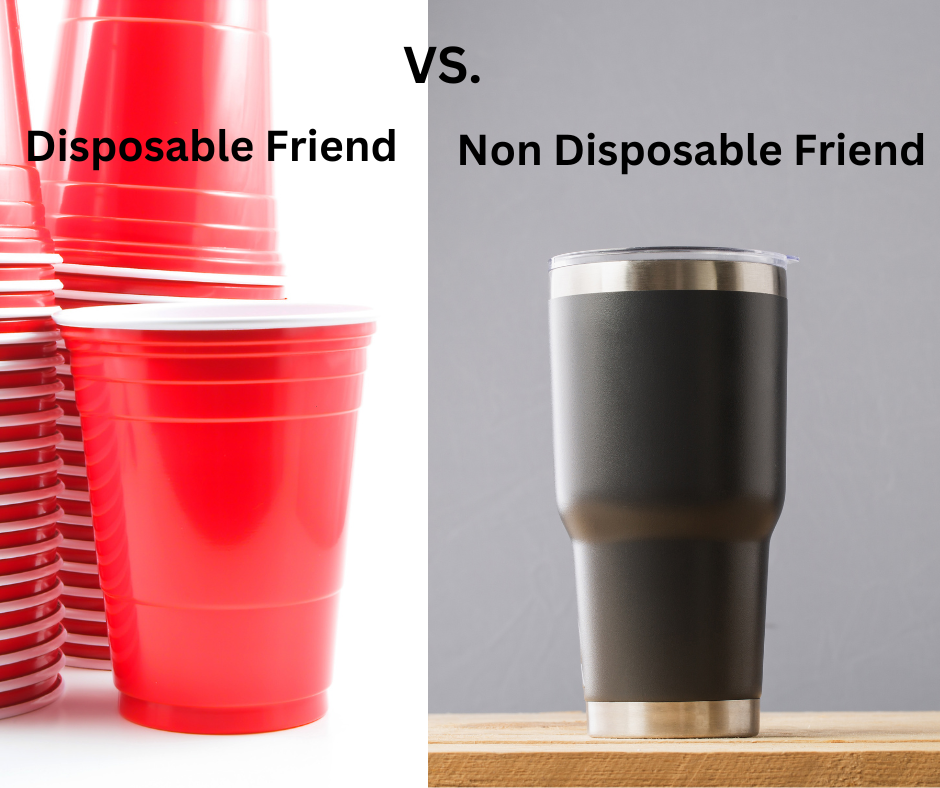
If we value something, we are intentional with it. I love my Yeti! My Yeti keeps my cold drinks cold and my hot drinks hot! I paid extra for my Yeti. If I can’t find it, I will search my home, my truck, and retrace my steps in order to find out what happened to it. There are plenty of other options in my house for me to use, but I do not value them like I do my Yeti. The other options are disposable, like a red Solo Cup. Many people treat relationships like they are Red Solo cups. They will use them when offered, and then leave them behind without a second thought. At the end of a party, there are often empty or half full Red Solo Cups scattered around. Nobody is connected to them, and they get discarded. That doesn’t happen to a Yeti. If I leave a party without my Yeti, I will call the host and ask if my Yeti is there. I will track it down. Then I will drive back the next day and get it because it is valuable to me. If we value something, we don’t leave it behind to be thrown away. We demonstrate its value by looking for it when it is not around. We are intentional with it. We care for it. To build relationships of value at work and in life, we need to have a Yeti mentality about people not a Solo Cup mentality. It’s ironic that sometimes people will put more effort into staying in contact with their Yeti than they do the people with whom they should be building relationships. Our character is on display with how we handle our relationships with people. What does that look like in practice? Humility – We pay attention to them when we are with them. Selflessness – We treat them like something we want long term, not as something we use and then move on. Duty – If they go missing, we make an effort to find out where they are and how they are doing. We don’t give up if they are hard to find. We pursue them and follow up, because we value them. This may seem like a trite analogy to some people. But, how often do we treat the possessions in our lives with more value than the people? How often do we care more about the utility of a relationship in the short term than valuing the long term benefits of that relationship? How often have we let a relationship with someone fade because we lacked the intentionality it takes to maintain that relationship? I know that Toby Keith sang: “Red Solo Cup, you fill me up….” but disposable relationships can not and will not do that for us in work or in life. The Yeti we love so much, should be the model we use for the people we meet in our lives. When we do that, our lives and the relationships in our lives will truly be the thing that fills us up. Question: What relationships do you need to value more? How are you going to re-engage those people and show them they are not disposable? Here is a quick assessment that will take you 5 minutes to figure it out. Nobody will ever see your results but you. Warning: If you are not going to be honest with yourself this is a worthless assessment. To take the assessment use the QR code above or go to www.MYCHARACTERTEST.com
Three Character Traits of People Who Persist
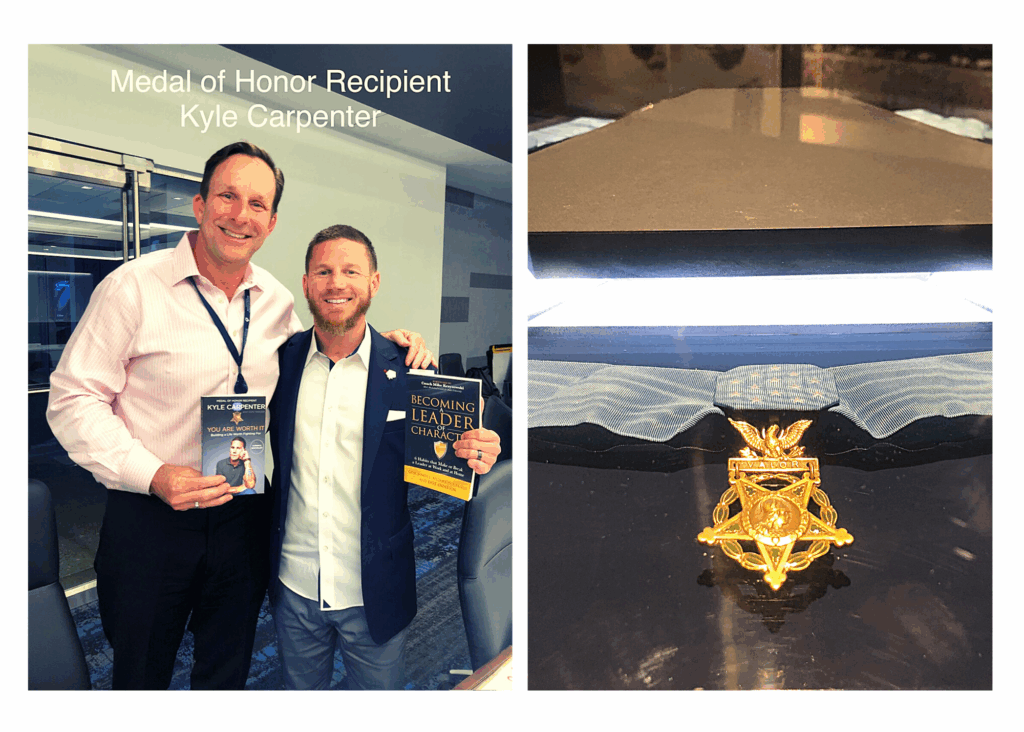
“The smallest of steps complete the grandest of journeys.” – Kyle Carpenter Imagine if your whole life radically changed in a split second. You lose your eyesight, your ability to walk, and even your ability to eat a bowl of cereal without help. Imagine that the doctors explain that your life moving forward will be full of years of surgeries, rehabilitation, pain, and mental and emotional hardships. Imagine what it would be like to make a decision to persist and to live your best life despite every circumstance you face. That is Kyle Carpenter, the youngest recipient of the National Medal of Honor in United States history. Without thinking, he threw himself on a grenade to save his friend while serving in Afghanistan. I’ve met Kyle and I have read his moving book – You Are Worth It. When I heard his story and read his book, one thing jumped out at me – persistence. Where did his ability to persist come from? This is a short blog, his life can not be summed up here in 500 words. But the persistence that Kyle shows every day, comes down to the choices he makes and the lessons he now teaches others. Here are three quotes from Kyle that summarize how he persists: Courage: “Growth and comfort can not coexist.” Humility: “We should never compare our struggles or victories to others – someone’s will always be better or worse.” Positivity: “What has happened has happened. All we can do is learn from it and move forward.” Persistence comes from a combination of Courage, Humility and Positivity. As Kyle points out, we need Courage to overcome the pain and/or discomfort we face in order to grow. We need Humility in order to move away from focusing on our own situation and see we have it better than others. We need Positivity to see our circumstances as opportunities to learn and get better. Kyle talks about the slow progress that he made. He talks about his persistent failures and his ultimate victories in the face of those failures. His small failures did not stop him. They drove him to keep going and make it through each day. He pushed himself forward with Courage, Humility, and Positivity. The persistence Kyle demonstrates daily flows from his choices to exercise these three Habits of Character. But what happens when we face failures? Few people reading this can claim circumstances to rival Kyle’s. But we will face failures of our own making and circumstances out of our control. What can we learn from him? To stick with it and make it through whatever difficulties or failures we face, Courage, Humility and Positivity will get us through the dark moments so we can emerge and be better than we were. We need the Courage to keep going. We need Humility to be able to accept short term failures in order to learn and move forward. We need Positivity to not take ourselves too seriously and recommit after an embarrassing mistake. We all have daily opportunities to exercise each of these Habits of Character. As Kyle says – “The smallest of steps complete the grandest of journeys.” Questions: How do the quotes from Kyle inspire you? Who can you encourage with these quotes? Here is a quick assessment that will take you 5 minutes to figure it out. Nobody will ever see your results but you. Warning: If you are not going to be honest with yourself this is a worthless assessment. To take the assessment use the QR code above or go to www.MYCHARACTERTEST.com
Exercising Character Even When You Get Demoted
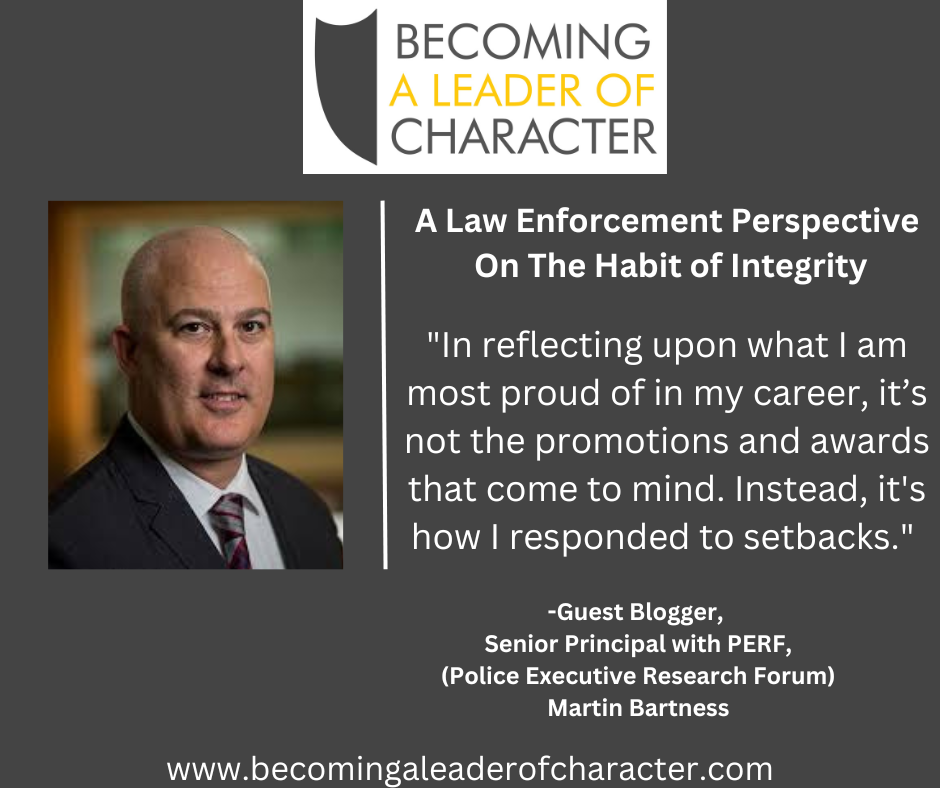
Just over a year ago, I retired from the Baltimore Police Department, where I had served as a police officer for 25 years. In reflecting upon what I am most proud of in my career, it’s not the promotions and awards that come to mind. Instead, it’s how I responded to setbacks—times when my commitment to Courage, Integrity, Duty, Humility, Positivity, and Selflessness was put to its greatest test. Two crucibles of my commitment to the Six Habits of Character spelled out in Dave Anderson’s book Becoming a Leader of Character readily come to mind. Six months after becoming a sergeant, my district commander selected me to supervise an operations team. This was a coveted assignment—a position that often served as a springboard to even better opportunities in the department. I was excited to test my management and leadership skills with a team of hard-charging officers tasked with solving some of the most vexing crime problems in one of Baltimore’s most violent neighborhoods. But the opportunity didn’t last; within a few weeks, my lieutenant ousted me from the position. The lieutenant wanted me to remove an officer from my squad under the pretense of “unsatisfactory performance.” But the officer’s previous supervisors had rated his performance as “excellent,” so I told the lieutenant I wouldn’t agree to remove the officer without first giving him a chance to meet the newly established performance expectations. Providing the officer with this reasonable opportunity was consistent with everything I had learned about management and leadership; transferring him out of the unit because the lieutenant didn’t like him or wanted to “pick [his] own people” was contrary to my workplace ethics and management principles. In taking this stance, I was worried about ruining my good reputation. But I couldn’t have looked at myself in the mirror if I had acted on my lieutenant’s wishes. Thus, even though he pushed me out of my preferred assignment, I was proud of having the Courage and Selflessness to subordinate my personal fears and professional ambitions to do the right thing for those I supervised. My Duty was to the welfare of my officers, not to my career aspirations. Far more was at stake when my character was again challenged over a decade later. By 2018, I had served as a commander (captain or major) for seven years when the newly appointed police commissioner demoted me two ranks to lieutenant. “I am going in a different direction,” he told me. It was a devastating blow. Personal animus and/or internal politics were clearly at the root of the demotion—not disciplinary action, deficient performance, or other just cause. I had served as the chief of staff to the previous police commissioner and as the executive officer to three prior deputy commissioners; my personnel record held leadership awards from local, state, and national organizations. Those things didn’t matter. In the days leading up to my demotion, the new administration turned off my departmental cell phone, restricted my access to the headquarters building, and removed my computer. It was their way of telling me—and everyone else in the organization—I wasn’t part of their plans. And although they had the right to move forward with their new plans, the way the new administration treated me was humiliating. How did I respond? It was a common practice among demoted commanders to take medical leave until their retirement or to obtain a doctor’s note that restricted them to administrative duties. But I didn’t want to be associated with a practice that lacked Integrity and betrayed the oath of office. So, after a humbling trip to the department’s quartermaster to swap my major’s uniform for a lieutenant’s, I reported to my new assignment as a patrol shift commander. When I arrived, I made it a point not to discuss with anyone the circumstances of my demotion or the executives who had orchestrated it. The officers who worked for me deserved better than a leader steeped in bitterness and negativity—traits that destroy platoon morale and mission performance. And frankly, I doubt they cared about my situation beyond fodder for locker room gossip. They had a job to do, and so did I. I intentionally committed myself to a spirit of Humility and Positivity: I gave my best to every assignment, emanated good cheer, and walked in the quiet confidence that I would rise above the obstacles before me and end my career on a trajectory of success. Everything worked out in the end. Within four months, the police commissioner who demoted me stepped down as part of a criminal investigation. And within 18 months, a new commissioner restored me to the rank of major and later elevated me to lieutenant colonel. I don’t pretend to have responded to all of life’s challenges in a manner that reflects the Habits of Character, but I am proud of how I handled these two tests of my moral fabric. More than any award, promotion, or other recognition for a job well done, they are the moments I treasure the most. In my (Dave’s) work with law enforcement across the country I am privileged to meet a lot of people. Martin is a Leader of Character who is always willing to provide insights and guidance in our efforts to bring our Officers of Character curriculum to agencies across the country. He is a person I would want in my foxhole with me and I am honored to call him a friend. Martin Bartness is a Senior Principal with the Police Executive Research Forum (PERF), a research and policy organization providing management services, technical assistance, and executive-level education to support law enforcement agencies. Prior to joining PERF, Martin served 25 years with the Baltimore Police Department, where he retired as the Deputy Chief of Patrol. He is a graduate of the 73rd Session of the Senior Management Institute for Police, and he holds a BA from Creighton University, MA from the University of Nebraska-Omaha, MCJ from Boston University, and MPH from the Johns
Strong Leaders Expose Their Weaknesses

Ironically, leaders become stronger when they share their weaknesses. Some leaders would rather eat a bug than admit to others they made a mistake or had a weakness. Exposing your own failures is not a sign of weakness. Hiding your failures is. There is not a single person we lead who believes we are perfect. In fact, when we own up to our own weaknesses, we are rarely telling them anything they don’t already know. It is counter-cultural among leaders to point out their own short-comings. We seem to feel if someone sees a weakness in us, then they will think less of us. Or, they might not trust us because we have exposed our soft white underbelly to others. The decision to not expose our past mistakes and current short-comings actually accomplishes exactly what we are trying to avoid. When we hide our frailties to people who already know what they are, we lose our chance of gaining the respect, the trust, and the allegiance of the people we are supposed to be leading. When we admit our frailties to people who already know what those frailties are, what we gain is respect. We gain trust. We gain allies. Why Do Leaders Hide Their Failures Why do we avoid exposing our failures to others? There is only one real answer – PRIDE. When you never admit to your failures or weaknesses, you absolve yourself of any responsibility for growing beyond the person you already are. A leader who is not growing is a leader who is losing ground and will eventually lose the people she desires to have following her. An interesting thing happens when you swallow your pride and begin to expose your weaknesses and failures to others – you begin to take ownership of them. You begin to grow and gain from others what you were afraid of losing – respect, trust, and allegiance. The Bottom Line Breaking the cycle of pride and developing the Habit of Character called Humility takes practice. Humility is like a muscle, you have to exercise it regularly or it will never gain strength. On the other hand, if you exercise pride, it will become a dominant habit in your character. What are some simple exercises a leader can do to develop Humility to the point it is stronger than our pride? Here are a few for your consideration. Humility Exercises Report your failures to your supervisor, your employees, your spouse, or your children. Don’t wait for them to discover them. Tell your team you are not good at something, and ask someone to help you. Apologize after losing your temper at work or at home. If you screw up, admit it and share with others how you are going to fix it. Laugh when you do something embarrassing instead of hiding it, running from it, or getting angry about it. By exposing our failures and weaknesses to others, we strengthen our character. We strengthen our Humility. We strengthen the bonds of respect, trust, and allegiance that both the leader and the led want and need desperately. Question: What else does exposing our failures and weaknesses do for us? Here is a quick assessment that will take you 5 minutes to figure it out. Nobody will ever see your results but you. Warning: If you are not going to be honest with yourself this is a worthless assessment. To take the assessment use the QR code above or go to www.MYCHARACTERTEST.com
Integrity is a Hard Path for Leaders
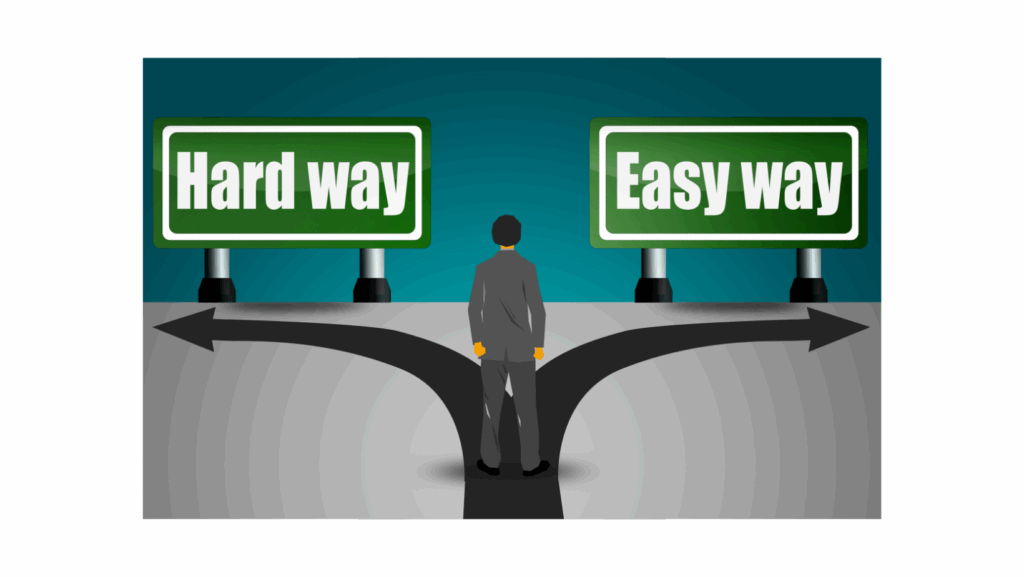
When we choose the path of most resistance, we are choosing to be the type of leaders people at our work, our spouses, and our children WANT to follow. The path of least resistance is often the road to hypocrisy. The smooth and easy paths in life rarely lead us to living a life of Integrity. That is why Integrity is so darn hard! I am not a saint. I have chosen the path of least resistance during my lifetime. When I look back on those choices, I often sacrificed my Integrity at the altar of pragmatism. Less Resistance Versus More Resistance Here are some choices we all are faced with: Less Resistance Staying quiet when the boss asks what happened. Ignoring an employee’s bad attitude because they are producing a lot. Promising to punish my child yet not following through because I am tired. Making an excuse for not keeping a commitment I made. More Resistance Being the first to speak up Correcting the bad attitude and expecting an immediate change. Getting up from my chair and fulfilling my promise of consequences. Following through on every commitment no matter the circumstances. Each one of the examples in the left column is a lot easier than the example in the right column. In fact, you could change the left column’s heading to Hypocrisy and the right column’s heading to Integrity. The Easy Way Out The easy way out is often the most comfortable thing to do. We don’t risk someone being angry. We don’t risk having to exert ourselves. We don’t risk messing up the status quo. We don’t risk having to take responsibility for the outcome. But if we are a leader, at work or at home, the easy way out is almost always the short sighted choice. If we choose the easy way out, we are setting ourselves up and setting up those we lead for long term consequences. The Bottom Line: None of us want to be led by a hypocrite and none of us want to be considered a hypocrite. But when we choose the path of least resistance over our Integrity, that is exactly who we are becoming – a Hypocrite. Being a Leader of Character is not complicated, but it is hard. When we choose the harder right instead of the easier wrong, we are choosing the path of most resistance over the path of least resistance. We are choosing Integrity over Hypocrisy. We are choosing our Character over our comfort. In fact, when we choose the path of most resistance, we are choosing to be the type of leaders people at our work, our spouses, and our children WANT to follow. Question: What other times is the path of least resistance the wrong path? Here is a quick assessment that will take you 5 minutes to figure it out. Nobody will ever see your results but you. Warning: If you are not going to be honest with yourself this is a worthless assessment. To take the assessment use the QR code above or go to www.MYCHARACTERTEST.com
The Difference Between Winners and Losers in Life

Excuses hold many people with talent and great opportunities back, while others with fewer gifts and the deck stacked against them, move forward and succeed. What is that secret sauce that creates a winner? Why do some incredibly talented people fail to launch, while some more average people become huge successes? Let’s face it, some people are winning in life and some people are losing. Winning or losing in life is not determined by inherent talent or an alignment of circumstances. What often separates the winners from the losers? Excuses. While excuses hold many people with talent and great opportunities back, others with fewer gifts and the deck stacked against them, move forward and succeed. Success or failure has less to do with talent and circumstances than an individual’s refusal to make or accept excuses for himself. Who Does and Does Not Make Excuses? We all have excuses ready and waiting. ● The children of divorce and the children of successful marriages. ● The children from the “wrong side” of town and the children from the “right side” of town. ● The 5’9” boy on the basketball court and the 6’9” boy on the basketball court. ● The sales person in a contracting marketplace and the sales person in the growing marketplace. Excuses are inside all of us, waiting to get out – if we let them out. Most of us can think of someone who won and someone who lost in each of these situations no matter their advantages or disadvantages. The Winners and The Losers ● I know children of horrific divorces that have great marriages and a joyful life. I also know children of happy homes who are miserable, have multiple marriages, and refuse to be accountable for their lives. ● We can watch the news and find a rags to riches story about a homeless young man with drug addicted parents making it through Harvard. Then, the next day hear of a local country club kid blaming his parents for him dropping out of college. ● We see a story on ESPN in the morning about a 5’ 9” overachiever who plays Division 1 basketball. While that night, we watch the sad story of a 6’ 9” basketball prodigy going to jail. ● I once led a saleswoman who grew her business 15% in a marketplace that contracted 10%. And, I led another salesman who had an expanding market, but blamed increased competition for his lack of growth. The Bottom Line: Somewhere deep inside, we all have excuses ready to go. They are our safety net in case we fail. It does not matter where we come from or what gifts God has granted us, we can always find an excuse for losing. The winners in life I described above are winners because they refused to make excuses. They owned their limitations and advantages and decided growth was their responsibility. Excuses are used to deflect the blame away from ourselves, and therefore absolve us from any responsibility to learn from our failures. When we eliminate excuses, we gain an edge over the rest of the world. Without excuses, we are forced to look at ourselves critically, to adapt and to get better. When we ignore excuses, we eliminate the option of quitting. We go beyond Plan A and B. Without excuses, suddenly we are thinking of Plans C, D, E, F…. That is often the difference between winning and losing. Some folks have more obstacles set in front of them than others yet they win. Some folks have fewer obstacles and they lose. What causes one to win and the other to lose? Excuses. Question: What excuse do you hear from others the most often? From yourself? Here is a quick assessment that will take you 5 minutes to figure it out. Nobody will ever see your results but you. Warning: If you are not going to be honest with yourself this is a worthless assessment. To take the assessment use the QR code above or go to www.MYCHARACTERTEST.com
Leaders – Are You a Warrior or a Worrier?

The only way a Worrier becomes a Warrior is by facing his/her fears. Some people stress out and stay put. Others face their fears and move forward. Some people fear the unknown and hold others back. Other people embrace uncertainty and lead others through it. One person is a Worrier. The other person is a Warrior. In today’s world, timid leaders are all too common. I see it over and over again when I am working with corporations, non-profits, and even in my work with first responders. In each of the areas, too many leaders lack the Moral Courage to act. Moral Courage is needed: ● When someone needs to confront a difficult employee. ● When someone needs to tell the supervisor she is wrong. ● When someone needs to inform a customer their timeline is unrealistic. Unfortunately, instead of stepping up and speaking up, that person gets consumed by worry. They wring their hands and wonder: ● What if this employee makes the conversation difficult? ● What if my boss thinks I am a negative influence on the team? ● What if our customer walks away from the deal? Are these scenarios possible? Yes! The difference is a Warrior sees these negative scenarios as possible. While the Worrier sees the same scenarios as probable. The Possible Versus The Probable When a Warrior recognizes these as possibilities, she dwells on solutions, creates strategies, and gets to work. When a Worrier sees these as probabilities, he dwells on the negative outcomes, formulates excuses, and waits to see what happens. Courage The definition of Courage in twelve words or less so a 12 year old can understand: Acting despite perceived or actual risk. Worriers tend to spend more time focused on perceived risks than they spend on finding solutions. The amount of time and energy expended on the “What if’s…” that consume a Worrier is far greater than the time and energy a Warrior expends on facing those fears and developing solutions. Warriors do not take a special pill or drink a magic potion that allows them to exercise Moral Courage. They just have a lot more practice at facing their fears than Worriers do. Warriors face their fears instead of avoiding them. The Bottom Line: The only way a Worrier becomes a Warrior is by facing his fears. Courage takes practice. It is a Habit of Character. The more you choose to act despite the perceived or actual risks you face, the more likely you are to make that choice again. It is not easy to turn and face your fears head on, if you are not in the habit of doing it. But each time you make that choice, I guarantee you it will make it easier to make that same choice again. Soon the people you work with will see you displaying the Moral Courage of a Warrior. And perhaps more importantly, the people you live with will see you practicing the Moral Courage of a Warrior at home as well. Whether we are a Warrior or a Worrier, our choices influence the choices of the people with whom we spend the most time. The question is who do you want them to become as a result of your influence? Question: How do you want the people at work or at home to see you? As a Warrior or a Worrier? Here is a quick assessment that will take you 5 minutes to figure it out. Nobody will ever see your results but you. Warning: If you are not going to be honest with yourself this is a worthless assessment. To take the assessment use the QR code above or go to www.MYCHARACTERTEST.com
3 Steps to Take After Failure
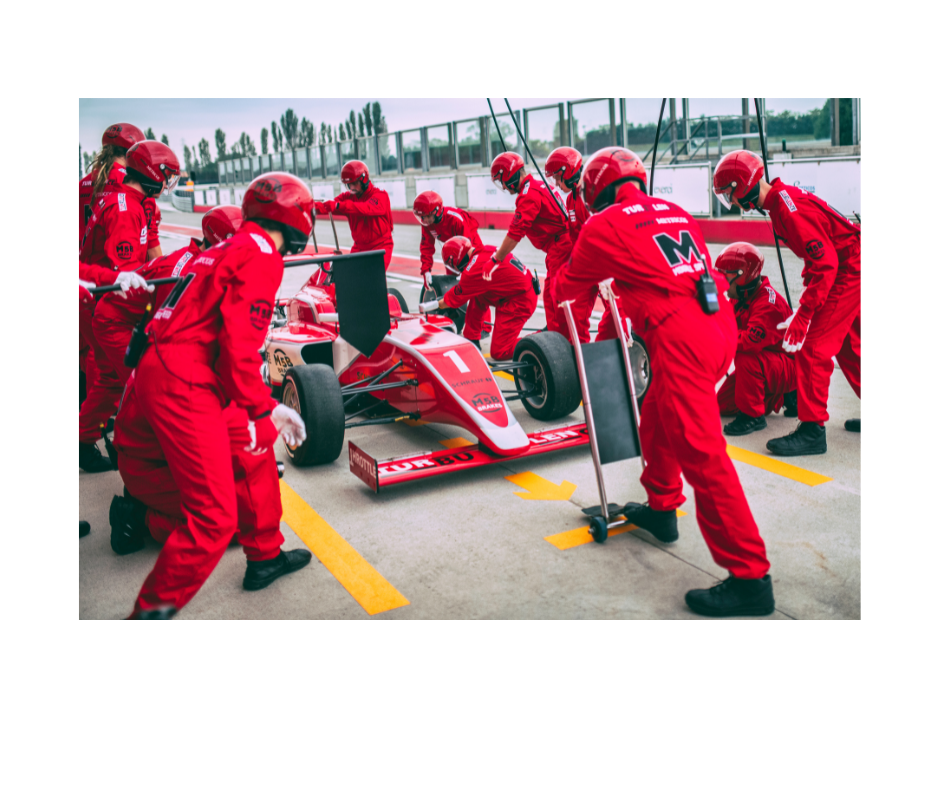
Failure is only a pit stop. The race is still going on! So Plan A didn’t work! What are you going to do? Failure is not the end of the road. It is just a pit stop on the way to success. But, what should you do on that pit stop? In Nascar or Formula One racing, pit stops are used to evaluate the condition of the vehicle, communicate with the pit crew, and refuel. We can do that when we fail as well. Fixing Failure First off, bravo! At least you were willing to fail! Being willing to fail takes Courage. There are far too many people who let the fear of failure keep them from trying anything outside their comfort zone. But, now you have failed. You might be dealing with a lot of emotions – disappointment, anger, or even embarrassment. Plus, those emotions may not even be coming from you. They could be coming from a boss or someone you care about at home. So what do you do now? It’s time to take advantage of the pit stop. Here are three steps we should all take when we fail: 1. Evaluate The first step we all need to take after a failure is to look in the mirror. Playing the blame game, where we focus our attention on circumstances or other people, will stunt our growth. When we avoid responsibility and shift blame, we are basically abdicating our Duty to learn from our mistakes. ● What could I have done differently? ● What did I not foresee or prepare for? ● Were there any warning signs? Why didn’t I pay attention to those signs? 2. Communicate Most of our failures do not occur in a vacuum. Other people were involved or at least observing us before things went wrong. They might even have faced similar challenges or are directly affected by the outcomes. ● Who has been in my position before? What can I learn from them? ● Did I ignore advice? To whom do I need to humble myself and ask for their counsel now? ● Who on my team (at work or at home) can help me regroup and find new strategies? 3. Refuel So Plan A didn’t work! What are we going to do now! We need to see this failure as temporary. It is an opportunity to regroup and move forward with what we just learned from the failure. Having a growth mindset, begins with the outlook that failure is necessary for growth. So the failure part is taken care of! Now it is time for the growth! ● Find new perspectives to fuel your growth. ● Find new tools to implement because your current tools didn’t work. ● Commit to Plan B. And if that doesn’t work, commit to not stopping until you hit Plan Z. The Bottom Line: If we think we can get where we want to go in life without experiencing failure, we are delusional. Everything worth having usually involves failure. Setbacks are a critical part of the learning process. Does failure cause pain and discomfort? Heck yeah! But growth is never comfortable. That’s why they are called “Growing Pains”! To run the race laid out for us and to run it well, we must be willing to take pit stops. We must be willing to Evaluate, Communicate, and Refuel. Then we must get back into the race. We can’t compete, let alone win in life, if we stay in the pit area and refuse to get back on the track. Failure is only a pit stop. The race is still going on. Making a pit stop does not determine our success. What we do with that pit stop does. Question: What else do we need to learn from failure? Here is a quick assessment that will take you 5 minutes to figure it out. Nobody will ever see your results but you. Warning: If you are not going to be honest with yourself this is a worthless assessment. To take the assessment use the QR code above or go to www.MYCHARACTERTEST.com
It Takes Guts To Be a Leader of Character

Leaders of Character make regular choices – large and small – and face their fears. Leadership if not for the wimpy. The challenges leaders face at work and at home will test your mettle. You will have to make choices of all sizes. Fear and discomfort are part of leading. Facing that fear and discomfort displays the guts it takes to be a Leader of Character. The choices leaders face come in all sizes. For simplicity I am going to break them into Small, Medium, and Large choices. Small Choices Take Guts ● Try a new food or workout routine. ● Start a conversation with a new person. ● Do something new that you are uncomfortable doing. ● Follow through on a punishment you warned your child about. ● Be honest when you are late and say, “I didn’t leave the house on time.” Medium Choices Take Guts ● Challenge a co-worker who uses inappropriate language at work. ● Coach a subordinate who is not meeting the team standards. ● Let your child fail at something instead of fixing it before he/she fails. ● Speak out against a strategy that causes people to work in the gray area. ● Accept responsibility for your own failures and the failures of your team without making excuses. Large Choices take Guts ● Stand up to your boss if he/she is demeaning to you or to others on the team. ● Fire a high performing employee who ignores the behavioral standards of the team. ● Allow your child to follow their dreams instead of doing what you believe is the sensible thing. ● Refuse to implement an unethical or immoral strategy even if you could lose your job. ● Admit to a major failure by you or your team even if you could lose a major client or even your job. Size Doesn’t Matter The size of the choice does not matter. It takes guts to be a Leader of Character whether you have to make small, medium, or large choices. The small choices prepare us for the larger choices to come. In fact, there are no small choices when dealing with our character. They are all large choices. The more often we face our fears the easier it gets in the future. Over time, in the small choices and the large choices we begin to demonstrate the guts that will make us a Leader of Character. The Bottom Line: A leader’s willingness to take action is a window into that leader’s character. The Courage of the leader is on display in all of his/her choices. It takes guts to take action, to speak out, to respond to moral challenges, to take responsibility, and to accept the possibility of failure. If a leader chooses to do something else or to do nothing at all, that leader is not a Leader of Character. That is a leader who allows fear and comfort to make the decisions. It takes guts to be a Leader of Character. The gutsy leaders, the Leaders of Character, have practiced Courage more than other leaders. They make regular choices – large and small – and face their fears. Courage takes practice. It is time to practice! Question: What are some other examples leaders face that require guts? Here is a quick assessment that will take you 5 minutes to figure it out. Nobody will ever see your results but you. Warning: If you are not going to be honest with yourself this is a worthless assessment. To take the assessment use the QR code above or go to www.MYCHARACTERTEST.com
West Point’s Answer To Loyalty versus Integrity
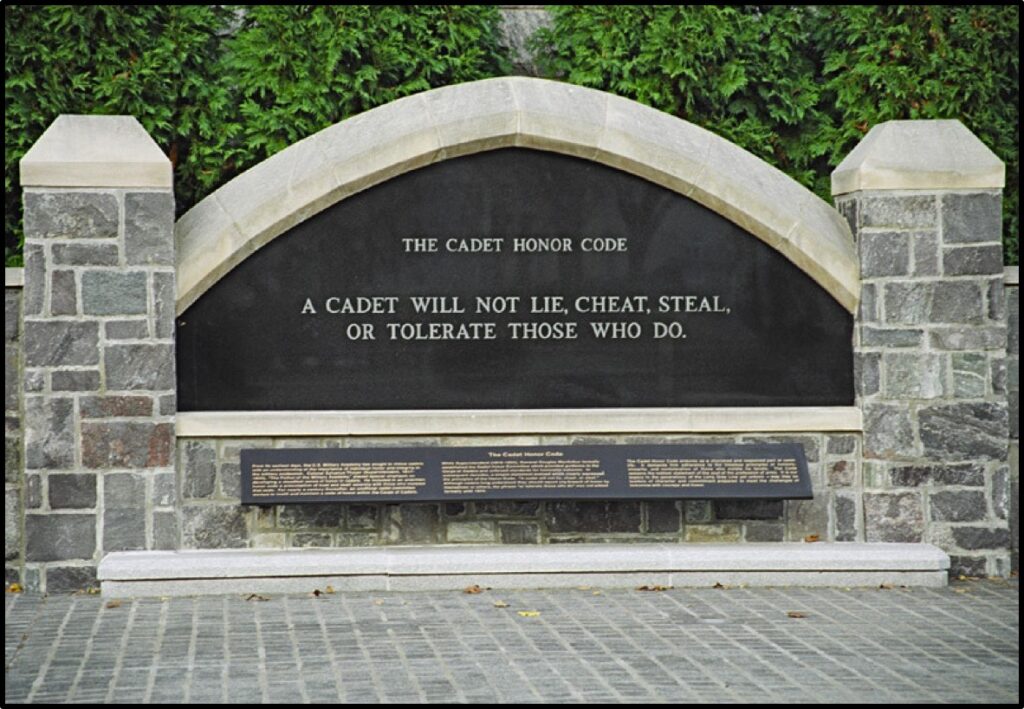
Loyalty or Integrity? We are all vulnerable to this trap. Loyalty and Integrity are two character traits I think we all desire in ourselves and in others. I like loyal people. They are friends and co-workers I know I can depend on. It does not matter how bad the situation may be. I know I can count on the loyal people in my life. I like people of Integrity as well. I like knowing I never have to question their words, actions, or motives. What you see is what you get. Their Integrity makes trusting them easy. But should loyalty ever trump Integrity? Is there a time when that is appropriate? Intellectually, most of us would argue that Integrity should always come first. Unfortunately that does not always happen. Here is a short list of when people put loyalty before Integrity: When Loyalty Has Trumped Integrity Loyalty To Individuals ● Previously honorable Germans who’s allegiance to Hitler allowed him to slaughter millions. ● Charles Colson and other aides to Richard Nixon as they manipulated the 1972 election resulting in Watergate. Loyalty To Institutions ● Politicians when they use half-truths and attack opponents in order to win public support for their policies. ● Professors, coaches and players at schools when athletes take fake classes to help GPA’s. The list above is short, and I am sure some people think I am being overly dramatic. But, let’s look at when we might be tempted to put loyalty before our Integrity. Loyalty’s Temptations ● When we see a friend cheating on a test in high school or college. ● When a work friend asks us to omit some details in a report that make him look bad. ● When our child asks us not to tell our spouse about something they did. ● When our best friend asks us to be silent about his mistress. ● When our spouse wants to avoid reporting some income to the IRS. It is easy in a blog post to say I would never succumb to any of these temptations. But, I have. Unfortunately, I am not alone. Many people have let loyalty take the lead over Integrity. Integrity Stands Above Loyalty In a world full of things we cannot control, our Integrity is one of the few things we have 100% control over. We always have a choice. The choices are not easy. But there is always a choice – Defend our Integrity or sacrifice it. The Cadet Honor Code at West Point states: A cadet will not lie, cheat or steal nor tolerate those who do. The clause on toleration is a direct reflection on how strong a pull loyalty is. At West Point, Integrity was to stand above loyalty. If I chose loyalty above Integrity, and did not turn in a friend who cheated on a test, I was just as guilty as he was. Any cadet who chooses loyalty to a friend over Integrity faced expulsion along with his cheating friend. For many cadets, this lesson was the hardest to implement. The Bottom Line: For most West Point graduates, that lesson in loyalty and toleration was a defining one in the honing of our character. It was a difficult pill to swallow then, and it still is to this day. Unfortunately, some West Point graduates, including me, have allowed loyalty to trump Integrity. The lesson in those cases is – we are all vulnerable to this trap. Integrity stands above loyalty when it comes to essential character traits for all of us. We have to recognize the damage we do to our character whenever we allow loyalty to be our #1 priority. The question we must all ask ourselves when we are tempted to put loyalty first is: “How much do I value the most important and most controllable thing in my life?” Question: Do you think there is ever a time loyalty should trump Integrity? Here is a quick assessment that will take you 5 minutes to figure it out. Nobody will ever see your results but you. Warning: If you are not going to be honest with yourself this is a worthless assessment. To take the assessment use the QR code above or go to www.MYCHARACTERTEST.com
The Moral Courage That is Lacking in Politics and Ourselves
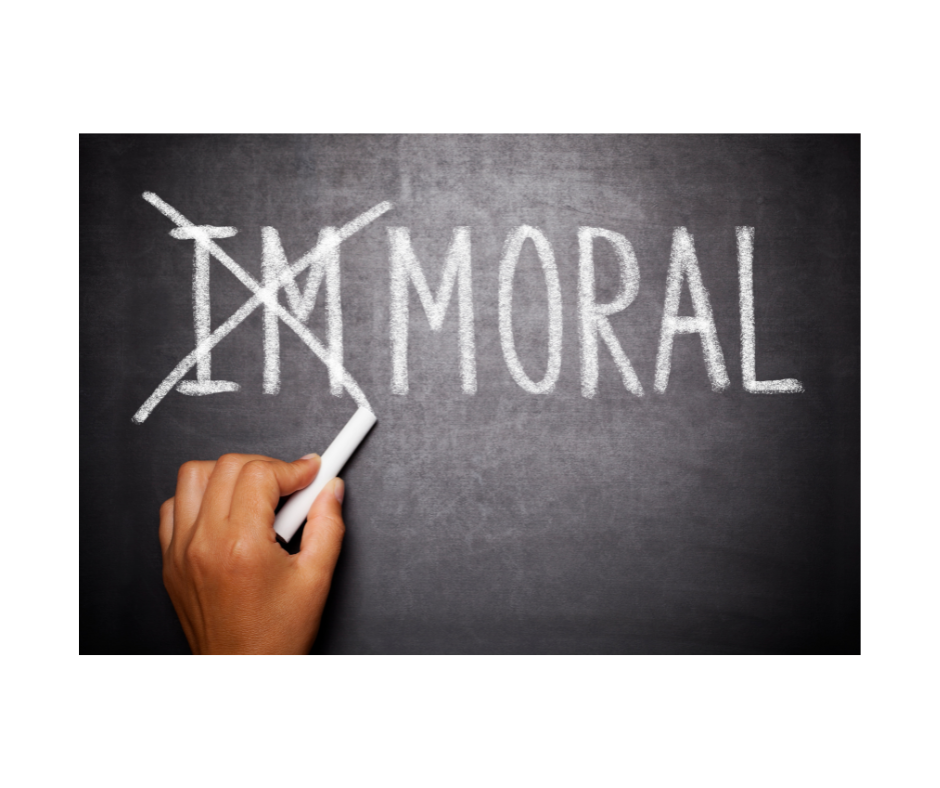
“It is curious that physical courage should be so common in the world and moral courage so rare.” – Mark Twain King Solomon once stated, “there is nothing new under the sun.” It seems the lack of moral Courage among leaders was as common in Mark Twain’s day as it is in our day. This is not a political rant. Now it may be a rant, but I am going to focus on waking up CEO’s, middle managers, parents, and any adult outside of politics. Frankly, I am tired of political rants. Physical Courage is inspiring to watch. Watching the men and women in the fire services fighting wildland fires gives me chills. The physical Courage soldiers and law enforcement officers show when bullets begin to fly makes young children want to wear a uniform and serve others. Moral Courage is another level of Courage. Rarely do acts of moral Courage make the headlines. It is more likely that acts of moral cowardice get highlighted by the media. Most of us will avoid the negative media spotlight in our lifetimes. But some recent examples of moral cowardice include: ● The manipulation of clinical data and the subsequent cover-up at Theranos. ● College athletic departments’ attempts to hide player misconduct to include battery and rape. ● The tacit approval of bad behavior by a politician because people agree with their policies. Everyday Moral Cowardice It is easy to look at the examples listed above and point fingers and shake our heads. But let’s be careful. We may not be in the news, but are we always exercising moral Courage? What about: ● Staying silent when someone at work cuts a corner. ● Staying silent when the boss asks for feedback. ● Avoiding the anger of a spouse by telling a lie. (FYI. White lies, fibs, and half truths are LIES.) ● Not challenging a peer about their behavior or attitude. ● Allowing a difficult employee’s attitude or behaviors to hurt the team. ● Not correcting a child because of the potential for a tantrum. Ouch! I can honestly say I have failed before in all six of the situations above. Everyday Moral Courage Few of us are called on regularly to exercise physical Courage. But we are all challenged to exercise moral Courageeach and every day. Courage is a habit. Each time we choose Courage or cowardice it makes it easier to make that same choice again. That is how habits are formed. To become a person who has strong moral Courage, we have to choose to exercise moral Courage consistently. We don’t get in shape by reading a fitness magazine or exercising once a month. Nor will we strengthen our moral Courage if we only read about Courage or exercise Courage periodically. The Bottom Line: Our society needs leaders of moral Courage. Yes we need them in politics, but we may need them even more in our everyday lives. We can all make choices daily that will strengthen our Courage. My rants about politicians seem empty when I stop and compare many of my choices to theirs. The only way they are different is in media coverage. The point is, if I continue to give in to moral cowardice in my daily choices, the damage to my character is similar to what happens to a politician’s character. Besides, we have absolutely no control over whether anyone else chooses moral cowardice or moral Courage. The only person whose choices we control are our own. Do we spend as much time analyzing our own choices as we do the choices of others? Question: What other challenges to our moral Courage should we all be prepared to face? Here is a quick assessment that will take you 5 minutes to figure it out. Nobody will ever see your results but you. Warning: If you are not going to be honest with yourself this is a worthless assessment. To take the assessment use the QR code above or go to www.MYCHARACTERTEST.com
West Point’s 4th of July Prayer for Leaders

Thirty-nine years ago this week, I entered the United States Military Academy at West Point. We were the Class of 1988. In our first week, we had to learn the West Point Cadet Prayer. Jump forward to today. The Class of 2027 has begun their journey as part of the “Long Gray Line” and the West Point Cadet Prayer is still an important guide for today’s cadets. In honor of Independence Day and the men and women who serve allowing us the freedom to speak and to pray as we see fit, I would like to share The West Point Cadet Prayer. Before you read it, ask yourself: “What challenge does this prayer offer me? Whether you are a person of faith or not, this challenge is open for you. Duty – Honor – Country. These three core values of West Point have stood the test of time for the last two centuries. The West Point Cadet Prayer is used by graduates as a reminder of these and other values which are meant to form the character of our nation’s future leaders. I would like to welcome you to let this prayer challenge you as you and your family reflect during our nation’s holiday. The West Point Cadet Prayer “O God, our Father, thou Searcher of human hearts, help us to draw near to Thee in sincerity and truth. May our religion be filled with gladness and may our worship of Thee be natural. Strengthen and increase our admiration for honest dealing and clean thinking, and suffer not our hatred of hypocrisy and pretense ever to diminish. Encourage us in our endeavor to live above the common level of life. Make us to choose the harder right instead of the easier wrong, and never to be content with a half-truth when the whole can be won. Endow us with courage that is born of loyalty to all that is noble and worthy, that scorns to compromise with vice and injustice and knows no fear when truth and right are in jeopardy. Guard us against flippancy and irreverence in the sacred things of life. Grant us new ties of friendship and new opportunities of service. Kindle our hearts in fellowship with those of a cheerful countenance, and soften our hearts with sympathy for those who sorrow and suffer. Help us to maintain the honor of the Corps untarnished and unsullied and to show forth in our lives the ideals of West Point in doing our duty to Thee and to our Country. All of which we ask in the name of the Great Friend and Master of all. Amen” From our team to you and your family, Happy Independence Day! Dig Deep Question: How many different character challenges does this prayer present to you, your family or your team? What portion of the prayer challenges you the most?
Leaders – Your Choices Define You

Each time we are faced with a choice, we are either moving closer to the person we want to be or further from it. Who we are as a person is determined by the choices we make in life. Courage is a choice. Humility is a choice. Integrity is a choice. Selflessness is a choice. Duty is a choice. Positivity is a choice. Our circumstances may not be in our control, but the choices we make in the midst of those circumstances are. Each time we make a choice, it makes it easier to make that same choice again. That is how our habits are formed – one choice at a time. This is true with habits like drinking, smoking or working out. It is also true with our Habits of Character. What Are My Choices? The Habits of Character we create or reinforce are the result of our choices. First the good news! If we have a weak Habit of Character, we can begin to change that by making new choices today! Now the bad news. If we are not choosing to exercise character, we are choosing to be something we would never tell our kids to be. “The only thing necessary for the triumph of evil is for good men to do nothing.” -Edmund Burke We choose Courage, or we choose Cowardice If we do not speak up or act because it might hurt us personally….then we are a coward. We choose Humility, or we choose Arrogance If we believe I don’t need to grow or won’t admit mistakes…then we are arrogant. We choose Integrity, or we choose Hypocrisy If we get mad when we are lied to by others and then tell fibs or white lies ourselves….we are hypocrites. We choose Selflessness, or we choose Selfishness If we put our needs in front of others….we are selfish. We choose Duty, or We choose to be Unreliable If we only fulfill our commitments when we feel like it….we are unreliable. We choose Positivity, or we choose to be a Joy Sucker If we consistently make people feel worse with our complaining…we are a Joy Sucker. Who we are is not determined by who we think we are or by whom we wish to be. Who we are is determined by our choices. Take this free, private, 5 minute Character Assessment to get a snapshot of where your character is today. Click on this link: www.MYCHARACTERTEST.com The Bottom Line: When it comes to our character we have a choice. Do we move closer to being the person we want to be, or do we move further from that person? Few of us believe choosing to be cowardly, arrogant, hypocritical, selfish, unreliable and a joy-sucker is appealing to others. In fact, we all believe in the need for Courage, Humility, Integrity, Selflessness, Duty, and Positivity where we work and in our homes. We want our children to display each of these habits. We can easily point out people around us who need to work on these Habits of Character. It is easy to point out what others need to work on. But what about me? I have a choice. Do I admit that I need work? Or am I going to choose to ignore the cracks in my character (see Arrogance)? It comes down to a choice. We can choose to start becoming who we want to be and who we want our kids to be. Or we can choose to move away from that person and do the thing we tell our kids not to do (see Hypocrite). It is a choice that will define us and our legacy in this world and with our families. Question: Which of these Habits of Character are most critical for you to strengthen? Here is a quick assessment that will take you 5 minutes to figure it out. Nobody will ever see your results but you. Warning: If you are not going to be honest with yourself this is a worthless assessment. To take the assessment use the QR code above or go to www.MYCHARACTERTEST.com
How Ego Limits Your Ability to Lead

Each time we beat back the beast of pride and choose Humility, we improve our ability to lead with character. Humility or arrogance? As leaders if we believe we are the most important person in any situation, our pride limits our own ability to lead. Our culture seems to celebrate the arrogance of leaders who pound their chests and promote their own accomplishments. But a Leader of Character is a counter-culture leader because a Leader of Character chooses Humility instead of arrogance. The choice is ours. Do we choose to argue with people instead of admitting we blew it? Do we choose to avoid asking for help, when we are struggling? Do we choose to formulate rebuttals instead of truly listening to another person? Do we choose to behave like we have it all figured out instead of constantly searching for ways to grow? The choice is ours. Do we choose the pride that limits our influence, or the Humility that inspires followers? The Cultural Choice – Look at me! Many people believe that Humility is a sign of weakness. They believe that people will think less of them if they choose to act with Humility. Therefore, their pride takes over and arrogance steps in. “If I make a mistake, they will think less of me.” “This isn’t arrogance, it is confidence.” “If I show a weakness, I will be less respected.” “I have been doing it this way for a long time, I am not changing now.” “I need to get my way here, or else I will look weak.” “I never questioned my leaders and neither should my people.” But that pride limits our influence on others. To be a humble Leader of Character we need to put aside our instincts, our sinful natures, and the voices of the culture and realize: As leaders – It is never about us! The Counterculture Choice – It’s not about me! Andersons’ 12 Words (or less) Definition of Humility Believing and acting like “It’s not about me. A Leader of Character does not see Humility as a sign of weakness but a quiet declaration of strength. Leaders of Character understand: It is the arrogant leader who refuses to ask for help or admit mistakes. It is the arrogant leader that needs to have the attention and win every argument. It is the arrogant leader who demands the spotlight and craves recognition. It is the arrogant leader who fears what others might think if he fails or admits a weakness. Humility is a countercultural approach to leadership. The brash and the bold leaders are constantly getting the headlines or are pounding their chests in professional sports. But, who really wants to follow an arrogant leader? The Leader of Character understands that they can be humble and confident at the same time. They know that sometimes the people doing the most self-promotion are often the most insecure. In fact, the people they are trying to lead see that as well. The Bottom Line: We all have a choice between Humility and arrogance. When we begin to make choices in order to place ourselves in the center of the story, we have become an arrogant leader whose ego limits our impact on the people we wish to lead. To be a Leader of Character, we must overcome the ugly pride that wells up inside of all of us. Each time we beat back the beast of pride and choose Humility, we improve our ability to lead with character. Pride places us right in the middle of our cultural norms and makes us just one of the ever growing crowd of people leading with ego. Humility makes us a countercultural Leader of Character. We will be the rare leader who does not need the spotlight, will admit mistakes, and be on a constant search to get better. The choice is ours. Question: Would you follow you? Here is a quick assessment that will take you 5 minutes to figure it out. Nobody will ever see your results but you. Warning: If you are not going to be honest with yourself this is a worthless assessment. To take the assessment use the QR code above or go to www.MYCHARACTERTEST.com