Leaders – Can You Laugh at Yourself?

What type of example are we setting if we react to failure with embarrassment, shame, or anger? I failed miserably in front of my entire team. I was the one who set up a teambuilding event. We participated in a leadership reaction course (LRC) much like the ones I did in the Army. I remembered how much I learned as a young cadet at West Point when I went through the LRC in the 80s. I was sure it would be great for the team even though I was sure it might be repetitive for me. But, the joke was on me. During one part of the exercise, it was obvious that I was the weak link. So I did the only thing I could at that moment. I laughed. What about you? Are you able to look at your own failures and laugh? When was the last time that everyone was watching you and you failed? What was your reaction? Embarrassment? Shame? Anger? How a leader reacts in that moment is a window into their character. An interesting thing happens as we age, or we gain promotions, we tend to start to take ourselves too seriously. Maybe we have an overinflated view of our abilities. Maybe we think that failure is unbecoming to someone in our position. Maybe we just think people at this stage shouldn’t let others see us fail. But, we are missing an opportunity if we think that way. Everyone always talks about how a leader needs to set the example. But, what type of example are we setting if we react to failure with embarrassment, shame, or anger? How will the people watching us at work and at home react to failure when it comes their way? Having the Humility and the Courage to laugh at our failures has an impact on the people around us. When a leader can put their failures into perspective and chuckle, that sets up an environment where others feel safe to fail. When people feel safe to fail, they begin to try new things because they are less afraid of a negative outcome. When they try new things, they learn new lessons, find new solutions to old problems, and they embrace learning. The entire team, the work team and the home team, becomes a team dominated by the Courage to try, the Humility to learn, and the Positivity to not take themselves too seriously. Failure sucks because failure is an assault on my pride. Sometimes I decide to avoid new things because my pride prevents me from facing the possibility of failure – especially when that failure could happen in front of others. But a leader who is willing to try, fail, laugh, and then learn inspires a culture that will inspire others to grow and have fun while doing it. Who wouldn’t want to be part of a work team or a home team that was like that? Question: What is something new you have avoided trying because you could fail in front of others? Are you able to laugh at yourself when you screw up? Here is a quick assessment that will take you 5 minutes to figure it out. Nobody will ever see your results but you. Warning: If you are not going to be honest with yourself this is a worthless assessment. To take the assessment use the QR code above or go to www.MYCHARACTERTEST.com
VLOG – Where Leadership Separates from Management – People
We manage resources and processes. We lead people. In the next 90 seconds I discuss a leader’s moral obligaiton to the people on the team. If the people are not growing, that leader fulfilling his/her Duty to lead those people. They are just managing. Here is a quick assessment that will take you 5 minutes to figure it out. Nobody will ever see your results but you. Warning: If you are not going to be honest with yourself this is a worthless assessment. To take the assessment use the QR code above or go to www.MYCHARACTERTEST.com
Leaders – Challenging People Means You Care About Them
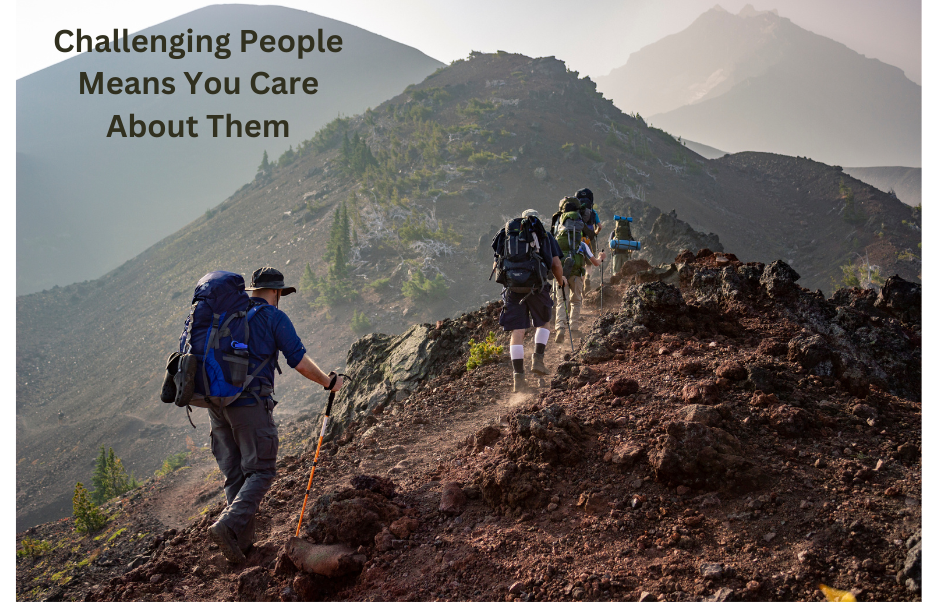
We don’t coddle people. We care for them. Some leaders are soft. They mistakenly believe that being nice is always the best choice. Unfortunately, they miss the point. The goal of leadership is not being nice. A leader’s calling is to make the people around them better. Sometimes making someone better means we care about them more than we care about being nice. When you look back on the coaches in your life who had the most impact on you, they probably weren’t always nice. They probably told you some hard truths about yourself or your performance. Those truths may have stung when they said them. But they said them because they cared. As my friend Colonel (Retired) Craig Flowers says, “We don’t coddle people. We care for them.” Sometimes the most caring thing you can do for someone is to challenge them. When we care about someone, we want what is best for them. We see who they could be or should be, and we challenge their current choices. We engage in uncomfortable conversations because we truly believe that is what is best for them. Being nice may feel good to us and to them at the moment, but are they better as a result of that nice conversation? Don’t get me wrong, we must always treat people with respect and value who they are. But again, one of the best ways we can show respect for someone and value them is to push them to be more than who they are currently being. In my decades of coaching people how to coach people, I run into too many leaders who hesitate to say the hard truths. Some leaders water down the truth in an attempt to be nice at the moment. Many times, it is not because the individual can’t handle a challenging conversation, it is because that leader is uncomfortable initiating that conversation. When leaders avoid challenging people because it makes the leader uncomfortable, that is a selfish choice on the part of the leader. Why? That leader just placed their own comfort before the other person’s growth. When a leader does that, they are falling short of their calling. Does challenging the other person always seem nice at the moment? Probably not. But it is perhaps the most caring thing a leader can do for the person they are called to lead and develop. Leaders, don’t shy away from these moments. These are the moments we put their growth before our own comfort. That is one way Leaders of Character show they care for the people around them. Questions: Who needs you to challenge them to get better? What has prevented you from doing it already? Here is a quick assessment that will take you 5 minutes to figure it out. Nobody will ever see your results but you. Warning: If you are not going to be honest with yourself this is a worthless assessment. To take the assessment use the QR code above or go to www.MYCHARACTERTEST.com
VLOG – Moral Drift – How Did I Get Here?
You never drift towards excellence. Excellence is only achieved with intentionality. Becoming a Leader of Character takes intentionality. Watch my story in this 106 second video and think about where you can become more intentional with your choices. Here is a quick assessment that will take you 5 minutes to figure it out. Nobody will ever see your results but you. Warning: If you are not going to be honest with yourself this is a worthless assessment. To take the assessment use the QR code above or go to www.MYCHARACTERTEST.com
Entitlement and Negativity are Linked

When you think you deserve more, you become a victim. “I deserve more!” says the entitled person. When someone thinks they deserve more, will they ever be satisfied with what they have? No. As a result, entitlement sets people up to become selfish and negative. Who wants to be around, let alone follow, someone like that? Nobody. In today’s society, entitlement is a debilitating attitude that prevents people from becoming who they are called to be. They become negative and believe that the world is there to fulfill their needs. When it doesn’t, they become selfish and look out for themselves. Notice this issue is not wanting more. The issue is thinking we deserve more. Wanting more is the American Way. It is the way we make things better. It is the way one generation of a family works to improve things for the next generation. But pay attention to who that progress depends upon – Us! When we think we deserve more, then it is up to other people to change or for our circumstances to change. When we think that way, we make ourselves powerless victims. We complain. We wait. We stagnate and get mired in our own self pity. That is not what Leaders of Character do. Leaders of Character recognize that in the midst of uncontrollable circumstances, we still have power to make our own choices. We can choose to see the circumstances and find opportunities. We can choose to wallow, or we can choose to act. We can drag others down or we can lift them up. The entitled person has made a choice to be the victim. The Leader of Character has made a choice to be a leader – an agent of change. They take charge of their lives, no matter the circumstances or the people around them, and they take action. They act with Courage even if times are difficult. They exercise Humility, recognizing it is not about me. They choose Selflessness and focus on others instead of themselves. If you find yourself feeling negative and focusing on what you think the world might owe you, try a simple exercise. Be thankful for what you have. Take time each day and write down three things you are grateful for during the last twenty four hours. These may be little things like a laughing child, a fun conversation with a friend, and another paycheck. They could be big things like a roof over your head, a good report from your doctor, and the vacation you just took. When we stop and think about it, we all have been given a lot to be thankful for. Thanksgiving should happen more than once a year. Thankfulness is the antidote to entitlement. I guarantee you, when you spend time each day focusing on what you have been given in your life, the things that you are missing fade into the background. You will see your world differently and begin to celebrate your blessings, which will lead to Positivity and open your eyes to the needs of others – Selflessness. If you want to improve your view of the world – get rid of entitlement and replace it with thankfulness. Question: When have you let the victim mentality take over? How can thankfulness help you avoid that the next time? Here is a quick assessment that will take you 5 minutes to figure it out. Nobody will ever see your results but you. Warning: If you are not going to be honest with yourself this is a worthless assessment. To take the assessment use the QR code above or go to www.MYCHARACTERTEST.com
Being an Unethical Rule Follower
Integrity goes beyond just followiing the rules. Just because nobody has written a rule against it does not mean it is the right thing to do. How do we become unethical rule followers? Watch the next 109 seconds and think about your Integrity in these situations. Here is a quick assessment that will take you 5 minutes to figure it out. Nobody will ever see your results but you. Warning: If you are not going to be honest with yourself this is a worthless assessment. To take the assessment use the QR code above or go to www.MYCHARACTERTEST.com
VLOG – Your Character is Your Choice
How we are is who we are? The habits we display regularly determine our character. What choices do you make in difficult circumstances? Whatever they are, they will set you up to make a similar choice in the future. Are those choices something you want to repeat? Watch the 121 second video and reflect on those choices. Here is a quick assessment that will take you 5 minutes to figure it out. Nobody will ever see your results but you. Warning: If you are not going to be honest with yourself this is a worthless assessment. To take the assessment use the QR code above or go to www.MYCHARACTERTEST.com
VLOG – Compliant Groups vs Committed Teams
The next 117 seconds focuses on the difference between leaders who manage compliant groups and leaders who lead committed teams. Which would you rather have? It all comes down to who that leader is and what they focus on. Here is a quick assessment that will take you 5 minutes to figure it out. Nobody will ever see your results but you. Warning: If you are not going to be honest with yourself this is a worthless assessment. To take the assessment use the QR code above or go to www.MYCHARACTERTEST.com
VLOG – Your 1st Instinct Will Betray You
Our 1st intincts will get us in trouble. Those 1st instincts may be personality driven or driven by our biases. But they also give us the opportunity to choose our 2nd instinct – our character. In 137 seconds, I discuss how we exercise character and have the Humility to make choices based on our 2nd instincts. Here is a quick assessment that will take you 5 minutes to figure it out. Nobody will ever see your results but you. Warning: If you are not going to be honest with yourself this is a worthless assessment. To take the assessment use the QR code above or go to www.MYCHARACTERTEST.com
VLOG – Delaying Bad News
Sooner or later you are going to have to have that hard conversation. So why are you putting it off? In 111 seconds, I talk about why we delay those conversations and how our character is challenged each time we are tempted to put off that uncomfortable moment when you exercise the Courage to speak up. Here is a quick assessment that will take you 5 minutes to figure it out. Nobody will ever see your results but you. Warning: If you are not going to be honest with yourself this is a worthless assessment. To take the assessment use the QR code above or go to www.MYCHARACTERTEST.com
VLOG – Excuses Cheapen Our Integrity
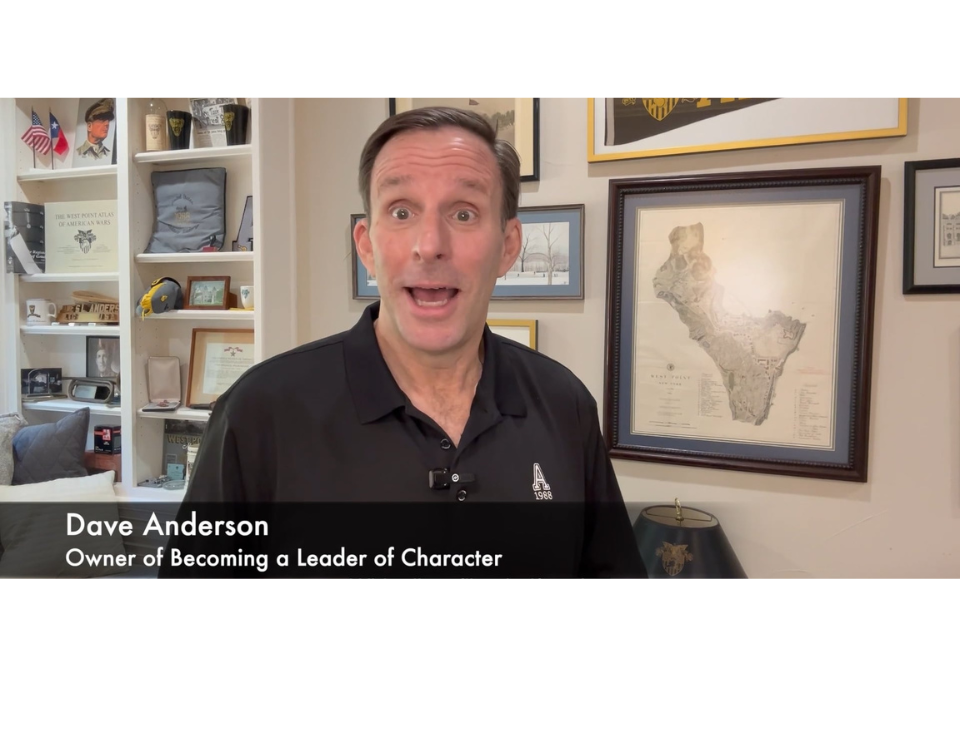
When we make excuses, we sacrifice our Integrity. Over the next 128 seconds I make a case for why the excuses we make are in fact lies. I want you to rethink your approach to excuses and recognize the damage they do to your Integity. Or do you not have the time to watch this? Is that an excuse? Here is a quick assessment that will take you 5 minutes to figure it out. Nobody will ever see your results but you. Warning: If you are not going to be honest with yourself this is a worthless assessment. To take the assessment use the QR code above or go to www.MYCHARACTERTEST.com
VLOG – A Selfless Servant Leader is not a Weak Leader

If you think servant leadership is weak leadership you are dead wrong! I want to convince you that you can care for people and tell them hard truths at the same time. Avoiding a hard conversation so you stay comfortable is a selfish act. How is that? Hear my thoughts on that in 98 seconds. Here is a quick assessment that will take you 5 minutes to figure it out. Nobody will ever see your results but you. Warning: If you are not going to be honest with yourself this is a worthless assessment. To take the assessment use the QR code above or go to www.MYCHARACTERTEST.com
Lazy Leaders Demand Compliance

Don’t be lazy and demand compliance. Put in the effort now to inspire the commitment. The leaders who have to work the hardest are the leaders who demand compliance. It is ironic, because when a leader consistently demands compliance, it is often the easiest thing to do in the short run. The leader may be relying on the authority granted by a promotion or a rank on their collar. The leader mistakenly believes that giving orders is efficient. But, that is rarely the case. During my military and corporate careers I saw the people who demanded compliance working longer hours and being more dissatisfied with the results. For the last 10 plus years, I’ve seen the same dynamic in banks, telecommunications companies, fire departments and law enforcement agencies. Compliance is a short term leadership tactic. Yes, when quick action is needed, demanding and expecting compliance is efficient. But, while short term tactical efficiency works today, it is a lousy long term leadership strategy. In fact, it is a lazy leadership strategy. “Just do what I tell you.” “It’s all in the policy manual.” “I don’t have time for your questions.” “I was doing this before you were in diapers.” “Stay in your lane.” These comments are made by lazy leaders. They may get compliance in the moment, but they will never get commitment. There is a huge difference between a compliant group and a committed team. The compliant group does things because they have to, and they usually only do the minimum. The committed team does things because they want to, and they usually go above and beyond. The leader of a compliant group gives orders and tells people what to do. Their communication is short and efficient, in the moment. They tell people “what to do” and “how to do it”. If the leader sees a problem they solve it. If people are unsure of what to do next, they wait to be told what to do by the leader. The leader may feel like they are integral to the success of the team. But in the long run, that leader spends more time monitoring progress, demanding interim reports, and complaining when things are not done to their expectations. The leader of a committed team provides goals and then empowers people to accomplish the goals. They take time to train the skills to do the work and then let the people do it. They put in more time upfront explaining the “why” and less time on the back end telling people “what” to do. They inspire people and then trust them to do their best work. The people in turn, find problems and solve them. They come to work knowing they are trusted, and they are committed to doing good work. In the long run, the leader’s job gets easier and easier, because people who solve their own problems learn faster and adapt on their own. With each successive project the team becomes more efficient and the output gets better. At the same time, the leader is less and less important to the project’s success. Compliance may be less work upfront. But the leader dooms themselves to a life of micromanaging and a group of employees who only do things when they have to, at the minimum standards, when they are told to do it. Commitment may be more work upfront. But the leader builds a team that doesn’t need monitoring because they are doing what they want to do, above expectations, and doing it without being told what to do. Which is a smarter way to lead? Which is an easier way to lead? Leaders – Don’t be lazy and demand compliance. Put in the effort now to inspire the commitment that will make your job easier in the future and allow your people to flourish. Questions: Which would you rather lead? A compliant group or a committed team? How can you inspire commitment? Here is a quick assessment that will take you 5 minutes to figure it out. Nobody will ever see your results but you. Warning: If you are not going to be honest with yourself this is a worthless assessment. To take the assessment use the QR code above or go to www.MYCHARACTERTEST.com
VLOG – Lying to Ourselves about Little Lies

We are lying to ourselves about the impact of little lies. They make a difference because each time we make a choice, a little lie, it makes it easier to make that same choice again. The next 141 seconds is meant to make you rethink that lie you may be telling yourself about little lies. P.S. BEAT NAVY!!! Here is a quick assessment that will take you 5 minutes to figure it out. Nobody will ever see your results but you. Warning: If you are not going to be honest with yourself this is a worthless assessment. To take the assessment use the QR code above or go to www.MYCHARACTERTEST.com
Are You Reliable? What are Your Everyday Moral Obligations?

If not me, then who? If not now, then when? You may say, Hey! I did what I was told to do!” But is that good enough? There are things we are told to do. There are job descriptions, policies, and verbal directions that are intended to tell us what tasks we need to accomplish. Examples include our job descriptions, project deadlines, standards and metrics. The real issues occur when someone believes that accomplishing these things are good enough. This may be good enough for somebody who wants to remain at an entry level position or never be trusted with more responsibilities. Taking action based on just your assigned tasks will probably be enough if that is your goal. But for anyone aspiring to be more, then there is more to do. Duty: Taking action based on our assigned tasks and moral obligations. We all have moral obligations as leaders at work and at home. Think of our moral obligations as the “ought to’s” in life. These go beyond the minimum expectations of job descriptions or verbal directions. They include the things that need to be done. Embracing and acting on your moral obligations makes you somebody people can count on. You become a person who takes the initiative because you are not waiting for someone to tell you what to do. You ask yourself: “If not me, then who?” “If not now, then when?” Duty – taking action based on our assigned tasks and moral obligations – becomes a habit through practice. Think of Duty, and all six of the Habits of Character, like a muscle. The more you exercise it, the stronger it gets. The more you take action on your “ought to’s” the easier it will become the next time you are faced with a moral obligation. To give you some insight, here are some moral obligations I have at work and at home. Some of them I do well and others need exercise. Work: Keeping track of travel receipts for our Operations Leader – Lauren. Reviewing my notes at the end of the week to be sure I’ve fulfilled all my commitments. Making a phone call when I’d prefer to just send an email. Managing my priority list so the important things get done before the fun things. Home: Picking up the ice cube that fell on the floor. Make the bed when my wife Elizabeth has to leave early for work. Staying healthy through diet and exercise so I am available for my family for a long time. Calling my friends to check in on them. What are your moral obligations? What are the things you “ought to do” at work and at home? I want to challenge you to make your own list and then take action. Because each time you fulfill those moral obligations, you are another step closer to being that reliable Leader of Character that others will want to follow. Question: What is the smallest moral obligation you can improve upon? How will being more consistent with that help you to become a more reliable person? Here is a quick assessment that will take you 5 minutes to figure it out. Nobody will ever see your results but you. Warning: If you are not going to be honest with yourself this is a worthless assessment. To take the assessment use the QR code above or go to www.MYCHARACTERTEST.com