West Point’s 4th of July Prayer for Leaders

Forty-one years ago this week, I entered the United States Military Academy at West Point. We were the Class of 1988. In our first week, we had to learn the West Point Cadet Prayer. Jump forward to today. The Class of 2029 has begun their journey as part of the “Long Gray Line” and the West Point Cadet Prayer is still an important guide for today’s cadets. In honor of Independence Day and the men and women who serve allowing us the freedom to speak and to pray as we see fit, I would like to share The West Point Cadet Prayer. Before you read it, ask yourself: “What challenge does this prayer offer me? Whether you are a person of faith or not, this challenge is open for you. Duty – Honor – Country. These three core values of West Point have stood the test of time for the last two centuries. The West Point Cadet Prayer is used by graduates as a reminder of these and other values which are meant to form the character of our nation’s future leaders. I would like to welcome you to let this prayer challenge you as you and your family reflect during our nation’s holiday. The West Point Cadet Prayer “O God, our Father, thou Searcher of human hearts, help us to draw near to Thee in sincerity and truth. May our religion be filled with gladness and may our worship of Thee be natural. Strengthen and increase our admiration for honest dealing and clean thinking, and suffer not our hatred of hypocrisy and pretense ever to diminish. Encourage us in our endeavor to live above the common level of life. Make us to choose the harder right instead of the easier wrong, and never to be content with a half-truth when the whole can be won. Endow us with courage that is born of loyalty to all that is noble and worthy, that scorns to compromise with vice and injustice and knows no fear when truth and right are in jeopardy. Guard us against flippancy and irreverence in the sacred things of life. Grant us new ties of friendship and new opportunities of service. Kindle our hearts in fellowship with those of a cheerful countenance, and soften our hearts with sympathy for those who sorrow and suffer. Help us to maintain the honor of the Corps untarnished and unsullied and to show forth in our lives the ideals of West Point in doing our duty to Thee and to our Country. All of which we ask in the name of the Great Friend and Master of all. Amen” From our team to you and your family, Happy Independence Day! Dig Deep Question: How many different character challenges does this prayer present to you, your family or your team? What portion of the prayer challenges you the most? Here is a quick assessment that will take you 5 minutes to figure it out. Nobody will ever see your results but you. Warning: If you are not going to be honest with yourself this is a worthless assessment. To take the assessment use the QR code above or go to www.MYCHARACTERTEST.com
VLOG – The Courage to Trust First – Even Though You Could Get Burned

Nobody trusts somebody who doesn’t trust them. Yet, even though many leaders want to be trusted, they don’t trust their people first. Could you get burned? Yes. But without trust, your team will never go beyond being average. It depends on the Courage of the leader to trust first. Watch the next 87 second video to hear more. Audiobook sales have taken over for ebook sales. When we first published Becoming a Leader of Character in 2017, people were predicting ebooks were going to kill traditional hard copy print books. That didn’t happen. In fact, print books’ percentage of sales are very similar to what they were in 2017 when we first published. What has changed is that audiobooks have eaten away at ebook sales. Therefore, if you have been waiting on the audiobook version of Becoming a Leader of Character it is now here! You can get it on Spotify, Audible or any other major platform for audiobooks. While you drive or workout, marinate your brains in the Six Habits of Character – Courage, Humility, Integrity, Selflessness, Duty, and Positivity. Order now on your favorite platform: (Audible is coming soon!) Order Audiobook on Spotify Order Audiobook on Apple Audible: Will be available in the coming weeks. We will let you know as soon as Audible makes it available.
Leaders – What If You Are Wrong?
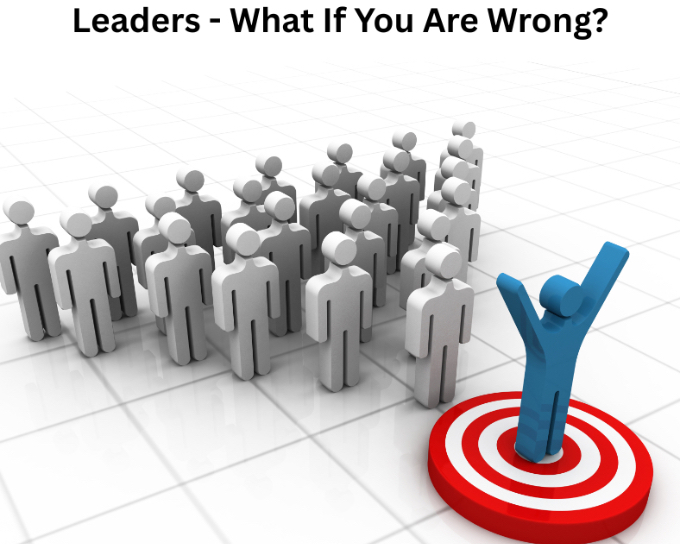
Believe it or not, sometimes leaders get it wrong. All leaders are wrong sometimes. Do you know why? Because they are human. We are human, and we are not perfect. So why do some leaders refuse to listen to others? Why do some leaders resist changing their plans when somebody brings them new information? Why can’t we all just start from a point of view “I could be wrong.” The answer is: Pride. The success that leaders have experienced in the past often causes them to cross the line from confidence into unbridled pride – in other words, arrogance. It’s a lesson I have to learn again and again. I work with very smart and wise people on our Becoming a Leader of Character team. But, I realize there are times when my confidence turns to arrogance. I may have an idea or a strategy that I love. I get excited and lay out a course of action. But, when they challenge me, instead of listening to them, I dig in my heels. I want what I want. I see their input as a challenge, and I like to win challenges. Therefore, I shut them down or shut them out. This is the ugly side of me and maybe a lot of leaders out there. But what if we did it differently? What if we started out by asking ourselves, “What if I am wrong?” Exercising Humility and having the self awareness to realize that being wrong is a possibility will help us in a lot of ways. People will feel affirmed and important. They will bring us a new perspective that we don’t have. We will encourage them and empower them to be part of the solution. They will trust us more because they know we make decisions with more complete information. We will avoid preventable mistakes. We will become wiser because we have more input from wise people. The team will be better. Our families will be better. The only reason to not adopt the “What if I am wrong?” perspective is arrogance. We are too proud to admit our own potential for mistakes. We are unwilling to be challenged by others. We are blind to our own shortcomings. If more leaders began by asking themselves “What if I am wrong?” imagine the productive dialogue we’d have among leaders in politics, businesses, government agencies and in our homes! Imagine the positive give and take between people who make critical decisions. Imagine the buy-in to those decisions once they are made. It just takes some Humility from the leaders. Question: When was the last time you let yourself believe you might be wrong? Did it build up or tear down your relationship with others? Audiobook sales have taken over for ebook sales. When we first published Becoming a Leader of Character in 2017, people were predicting ebooks were going to kill traditional hard copy print books. That didn’t happen. In fact, print books’ percentage of sales are very similar to what they were in 2017 when we first published. What has changed is that audiobooks have eaten away at ebook sales. Therefore, if you have been waiting on the audiobook version of Becoming a Leader of Character it is now here! You can get it on Spotify, Audible or any other major platform for audiobooks. While you drive or workout, marinate your brains in the Six Habits of Character – Courage, Humility, Integrity, Selflessness, Duty, and Positivity. Order now on your favorite platform: (Audible is coming soon!) Order Audiobook on Spotify Order Audiobook on Apple Audible: Will be available in the coming weeks. We will let you know as soon as Audible makes it available.
Is Being on Time Really That Hard?

Choosing to work on your chronic lateness is a good place to work on your character. Why are some people always on time and others are always late? Sure there are unforeseen circumstances that can make anyone late. But there are certain people we all expect to be late. It is predictable. It is also annoying. There is not a “late gene” that makes being late unavoidable. Some personalities are less organized than others. In fact, I am that person. There are a lot of people who know me who will snicker at my difficulty with remembering specifics and dealing with little details. But, I also have a reputation for being on time, even early, for everything. From personal experience, I know that my personality does not make me late. It could contribute to being late if I don’t care about being on time. But, I am intentional and overcome that disorganized part of my personality. People who are consistently late are not fighting a hereditary issue or a personality flaw. They are fighting an issue of character. The issues are selfishness and pride. The antidotes are Selflessness and Humility. Most of us who are on time can describe the selfishness of always being late. They don’t see how their lateness affects others, or they don’t care. They believe their time is more important than our time. They refuse to put in the same amount of effort as we do to arrive on time. But how are these people losing the battle against pride? They know they have a problem, yet they choose not to work at getting better. They apologize and then do it again the next time. People who refuse to grow in areas of weakness, make it all about them. Some of you reading this are probably saying, “Dang! Dave must have had someone show up late recently.” Maybe. But we all know those people. Maybe that person is looking you in the mirror each morning. I want to encourage you! You can get better at this. Your willingness to work on this bad habit tells others you do care about them and you recognize you should and can do better. Winston Churchill once said, “Character may be manifested in the great moments, but it is made in the small ones.” Being late may seem like a small thing, but it is these small choices that we make that set us up for success in the big moments to come. Deciding to grow in this small area is a window into your character. It is a window because you are choosing to put others first and exercise Selflessness. It is a window because you are deciding that being late is not “good enough”. You can get better and you see the need to make those changes. People don’t consider us reliable when we can be counted on in some areas and not in others. If you want to be a reliable leader, coworker, friend or parent, choosing to work on your chronic lateness is a good place to begin working on your character. Question When someone is always late, do you think of them as reliable? What damage does their lateness do to your relationship with them? Audiobook sales have taken over for ebook sales. When we first published Becoming a Leader of Character in 2017, people were predicting ebooks were going to kill traditional hard copy print books. That didn’t happen. In fact, print books’ percentage of sales are very similar to what they were in 2017 when we first published. What has changed is that audiobooks have eaten away at ebook sales. Therefore, if you have been waiting on the audiobook version of Becoming a Leader of Character it is now here! You can get it on Spotify, Audible or any other major platform for audiobooks. While you drive or workout, marinate your brains in the Six Habits of Character – Courage, Humility, Integrity, Selflessness, Duty, and Positivity. Order now on your favorite platform: (Audible is coming soon!) Order Audiobook on Spotify Order Audiobook on Apple Audible: Will be available in the coming weeks. We will let you know as soon as Audible makes it available.
A Leader’s Integrity – What You Allow You Condone

Standards and values test the leader’s Integrity. When I work with individual leaders and entire organizations the problem is rarely a lack of standards and core values. The problems arise from the leadership who are not upholding the standards and values they claim to have! I tell people all the time: “What you allow, you condone.” A leader who claims to have standards, yet doesn’t enforce those standards, doesn’t really have standards. A leader who claims a set of core values yet doesn’t correct people who operate outside those values, does not have core values. It doesn’t matter what standards or values you claim to have. Talking about standards and values means very little, if you allow people to behave outside those standards and values. Each time a leader claims to have standards or values, they are setting themselves up for an Integrity test. When those tests come along, will we pass them or will we fail them? Some leaders are wishy washy. Sometimes they exercise Integrity and hold the line and at other times they don’t. When a leader lacks consistency, then the people are unsure of what is important. They begin to play CYA (Cover Your A ). And they stop trusting the leader. Nobody trusts a person who says one thing yet does another. That is the definition of a hypocrite. This is just a short reminder to the leaders of teams, departments, companies and families out there. What you allow, you condone. Be consistent and correct behaviors that operate outside the standards and values you claim to believe in. The more those behaviors fall short, the more the team, the department and the family slide away from being who you want them to be. As the leader, it is your Integrity that’s being tested at that moment. Pass the test and you’ll be leading a team and a family that makes you and the people proud. Questions Are you consistently upholding the standards and values you claim to have? If not, how does this impact your own Integrity? Audiobook sales have taken over for ebook sales. When we first published Becoming a Leader of Character in 2017, people were predicting ebooks were going to kill traditional hard copy print books. That didn’t happen. In fact, print books’ percentage of sales are very similar to what they were in 2017 when we first published. What has changed is that audiobooks have eaten away at ebook sales. Therefore, if you have been waiting on the audiobook version of Becoming a Leader of Character it is now here! You can get it on Spotify, Audible or any other major platform for audiobooks. While you drive or workout, marinate your brains in the Six Habits of Character – Courage, Humility, Integrity, Selflessness, Duty, and Positivity. Order now on your favorite platform: (Audible is coming soon!) Order Audiobook on Spotify Order Audiobook on Apple Audible: Will be available in the coming weeks. We will let you know as soon as Audible makes it available.
You Aren’t Who You Think You Are
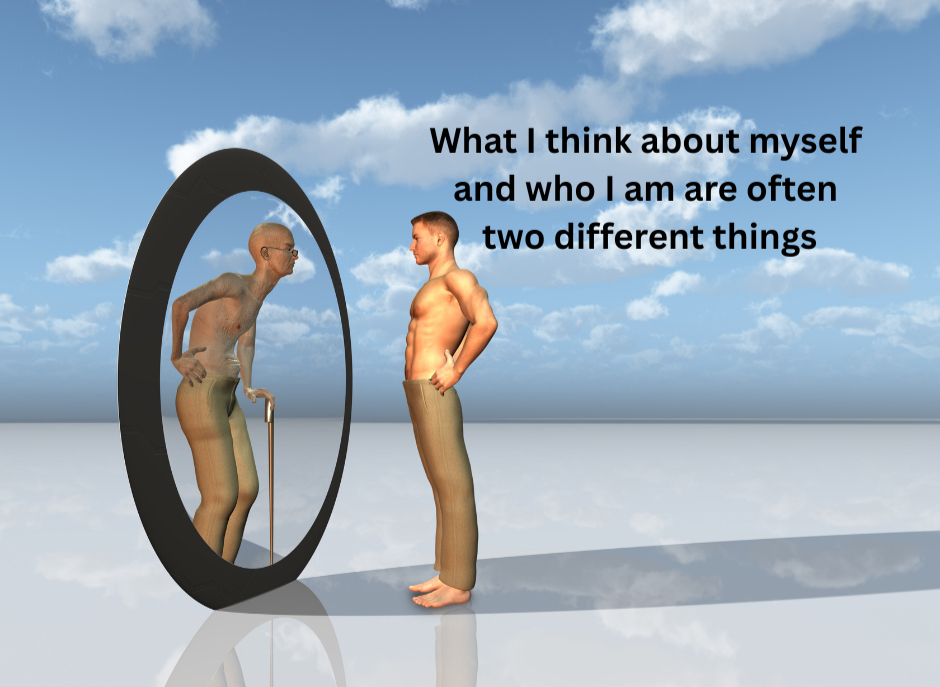
You are who your actions prove you are! Who we think we are only reflects our own point of view. What I think about myself and who I am are often two different things. All of us know people who don’t see themselves clearly. They think they are funny, but they are not. They think they are good listeners, but they are not. They think they are selfless, but they are not. What they think about themselves is not aligned with how they actually behave – what they actually do. You have to DO what you want to BE. You can think of yourself in one way, but if your day to day actions don’t prove that you are that type of person, then you are deluding yourself. You may think you are courageous, but if you consistently avoid uncomfortable situations, you are actually something else. You may think you are humble, but if you consistently need the spotlight, you are actually something else. You may think you have Integrity, but if you use white lies to get out of uncomfortable situations, then you are actually something else. If your actions are not aligned with who you think you are, it may be time to reconsider who it is you are and who you want to be. Yes, becoming the person you want to be STARTS with thinking about it. But that is only the start. For example, if you decide you want to become a more selfless person, it starts with thinking about it. But then you need to talk about it with others in order to understand what you can actually do to exercise Selflessness. The next step is then to take action and do what selfless people do. Each time you make the choice to take action and be selfless and do what selfless people do, it will become easier to make that choice again. With each choice you make, you are closer to making Selflessness a habit. And once those selfless choices are automatic (think muscle memory), that is when you have actually become that selfless person. You see, thinking selfless thoughts is not enough. To truly be selfless we must actually do selfless things on a habitual basis. That is what actually makes us selfless. All the Six Habits of Character: Courage, Humility, Integrity, Selflessness, Duty, and Positivity become part of our character the same way – through action. So my encouragement to you is, stop thinking about being that person! Go out there and actually DO what you want to BE! All it requires is taking all that thinking you’ve been doing and actually putting it into action. Each time you take action and exercise that Habit of Character, you are another step closer to building that habit and actually becoming that Leader of Character you’ve been thinking about becoming! Question: Who do your actions prove that you are? What new choices can you make to start becoming who you want to be? Audiobook sales have taken over for ebook sales. When we first published Becoming a Leader of Character in 2017, people were predicting ebooks were going to kill traditional hard copy print books. That didn’t happen. In fact, print books’ percentage of sales are very similar to what they were in 2017 when we first published. What has changed is that audiobooks have eaten away at ebook sales. Therefore, if you have been waiting on the audiobook version of Becoming a Leader of Character it is now here! You can get it on Spotify, Audible or any other major platform for audiobooks. While you drive or workout, marinate your brains in the Six Habits of Character – Courage, Humility, Integrity, Selflessness, Duty, and Positivity. Order now on your favorite platform: (Audible is coming soon!) Order Audiobook on Spotify Order Audiobook on Apple Audible: Will be available in the coming weeks. We will let you know as soon as Audible makes it available.
Memorial Day Tribute to Donnie – KIA Operation Desert Storm
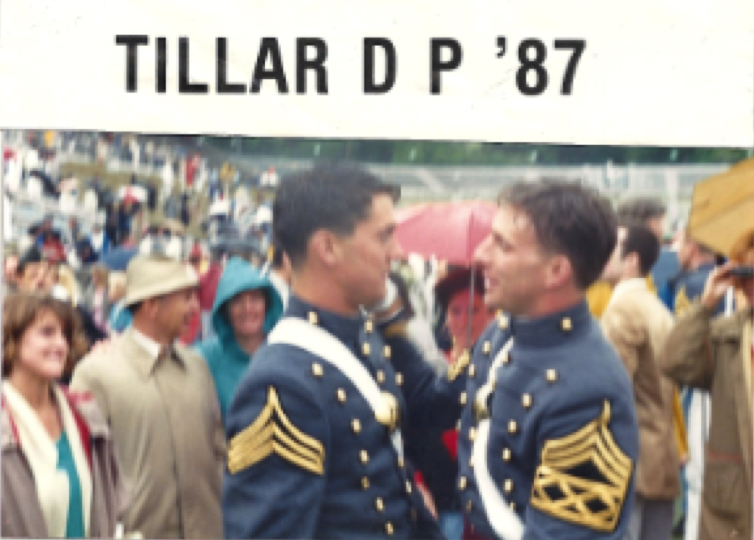
My best friend, Donnie Tillar, was the one who convinced me to go to West Point. Donnie was a year older than I was. Thanks to his persuasiveness, I joined my childhood friend at West Point as part of the Corps of Cadets. We both served in Operation Desert Storm. Every year, as Memorial Day approaches, I think about him. Because of his influence in my life, I want to share my Memorial Day tribute to Donnie. A Memorial Day Tribute Donnie’s Blackhawk helicopter was tragically shot down during the last hours of Operation Desert Storm. In February of 1991, Donnie passed away. Yet, it would not be until several weeks later that I received word, as we did not have the luxury email back then. My father, The General, was the one to let me know what had happened to Donnie. I kept a journal while I served in Operation Desert Storm. Below is an entry from my journal which I wrote on March 14th, 1991—the day I found out about Donnie. I was a young, brash and broken 25-year-old 1st Lieutenant in the Field Artillery when I wrote it. I shared this same journal entry at a memorial service I organized with some high school friends, back in May of 1991. I now share it every Memorial Day Weekend here. Memorial Day is a day reserved for our men and women who have died in service to our country. It is a day to thank those men and women and their families who have sacrificed so much so you and I have the freedoms we enjoy. In honor of Donnie and the other brave men and women of our country who died in the line of service, I want to share the following with you: Day 151 In Country 14 March 1991 Today, I cried. I screamed. I shook and a part of me died. I got a letter from Dad telling me Donnie Tillar had been killed when his Blackhawk was shot down over Iraq. The details are sketchy as to when and what mission he was doing. I’m just so shook up by the whole incident. Donnie and I go back to 7th grade. We were inseparable. He’s the closest I ever came to having a brother. Dad said he learned in Vietnam it was always the best ones who got hurt. Now, I know firsthand the true cost of war. In a way, I idolized Donnie. He could accomplish anything he wanted to. He was the best athlete I ever knew. He could play any sport. He was smart. He made the Dean’s List constantly at West Point without really seeming to try. He could dance. Man, could he dance. The ladies loved him. I loved him. I still do. When I heard the news, I couldn’t stop sobbing. I grabbed my Walkman and walked about 2 KMs. Then, for about an hour and a half, I just walked in circles. I yelled, I cried and I sang. I listened to the Rolling Stones Hot Rocks. Donnie loved The Stones. I sang at the top of my lungs, by myself in the middle of the Arabian Desert. I talked to Donnie as if he was there. After a while, my mind turned to our adventures together. I began to smile. Then, I found myself laughing and crying at the same time—if that is possible. I returned to my vehicle in a state of numbness. But, I began to tell everyone and anyone, Donnie and Dave stories. They just flowed out of me. There was the time when Donnie and I got his parent’s car stuck in the snow ON TOP OF THE SKI SLOPE. Then there was the time Donnie and I drove away on his motorcycle with a case of champagne after work at the Hotel Thayer. Donnie and me made trips to Stowe skiing and I thought of the hell we put his Dad through. And then, there was the story about how every time we’d go out together, Mrs. Tillar would roll her eyes when she found out he would be with me, while my mother did the same when she knew I’d be with him. Now the beat goes on. I will tell people about my best friend, Donnie Tillar, for the rest of my life. My first son will be named after a true hero and a true friend—Donaldson Preston Tillar III. I am going to have a party for him. In his honor, I want to gather his old friends and old loves together for a big blowout. He’d love to be there. But, he’ll be in a much better place. All we can do is raise our glasses and drink a couple for a man who touched all of us. A man with a penchant for fun. A man we will all miss. A man I will fondly remember as the brother I never had. Today, I have a 28-year-old son named: James Donaldson Anderson. He and his twin sister were born 6 years to the day (March 14, 1997) after I originally wrote this journal entry. In November 2012, Donnie’s younger sister Lani got married. I had the honor of officiating her wedding and being with her whole family. Donnie was there too. We all felt him. Remember our fallen heroes and their families. Not just on Memorial Day, but every day in your prayers.
Do These Two Things Before You Have That Hard Conversation
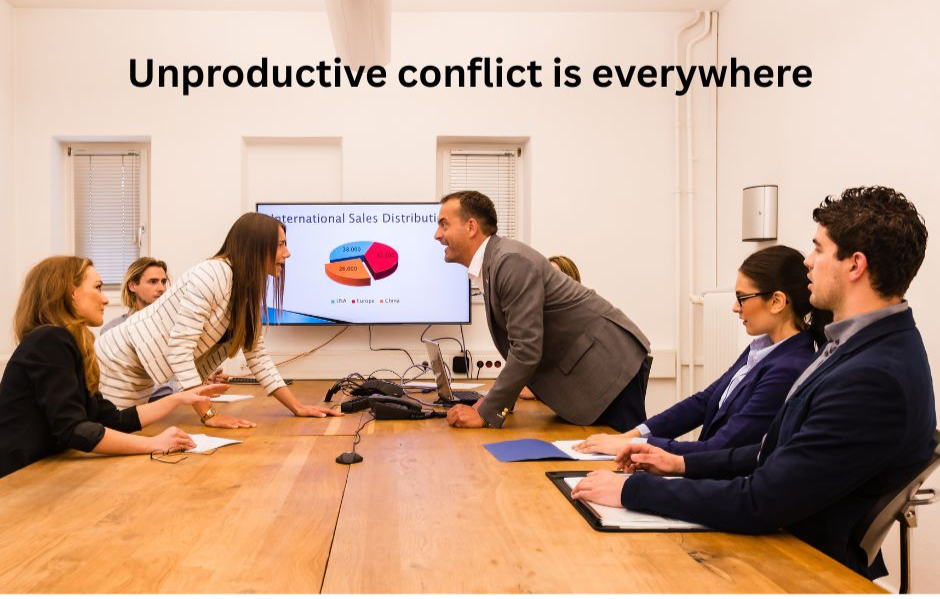
Friction sharpens the blade. Unproductive conflict is everywhere. We see it modeled in Washington DC and on our cable news shows. We see it modeled in businesses and in households. Unfortunately, these poor models have left many people unprepared or unwilling to engage in conflict. In fact, people often believe conflict is a bad thing. But, it is friction that sharpens a blade. However, the secret to producing a sharper blade is not just about applying friction, it is also about the angle that blade is applied to the sharpening stone. When it comes from the wrong angle, that stone will damage the blade or in another case leave it unchanged. There are many books and seminars on how to engage in conflict. We even spend a day teaching the topic, Communicating with Character. We spend time talking about the mechanics of engaging in productive conflict. But there are two steps we start with that are critical to being sure the conflict is productive. And those two steps are dependent on two Habits of Character: Courage and Humility. Courage: Acting despite perceived or actual risk. Humility: Believing and acting like “It’s not about me.” The first step to communicating with character when facing conflict is actually exercising the Courage to engage. Too many people avoid these situations. They gloss over the issue, make it seem like it’s no big deal, or they just kick the can down the road over and over again in hopes that it will go away. (But it rarely does….) This is like laying the blade flat on the sharpening stone and applying as little pressure as possible on the edge of the blade. That knife will not get sharp. That knife might not get damaged. But the lack of friction will cause it to dull over time and become useless. It takes Courage to step into a situation that may make you uncomfortable. It takes Courage, to engage a person who may not be open to your conversation. It takes Courage to communicate with character at the moment a Leader of Character is needed to step up and speak up. The second step to Communicating with Character when facing conflict is exercising the Humility to give the other person the benefit of the doubt. Too often, people enter into a difficult conversation ready to fight. They make assumptions about the other person’s motives and decide that in order to win, they need their point of view to win the day. They see the other person’s motives as less than their own. They believe there is purity and Integrity in their own motives, while the other person’s motives are less pure and less honest. That approach is synonymous with pulling the blade across the sharpening stone at a ninety degree angle. There will be friction. But that friction is going to dull the blade quickly and could make it useless in the long run. The damage we do, when we assume our motives are better than theirs, sets us up to damage the relationship and therefore make it dull and useless in the future. But if you start by exercising the Courage to engage in the conflict and then exercising the Humility to see the other person’s motives are as valid as your own, the opportunity for a positive outcome skyrockets. The current situation becomes more manageable and future conflicts become less contentious. Win/win scenarios become real possibilities, and both parties walk away from the conflict sharper – better. But it all needs to start with Courage and Humility. Question: When have you seen someone avoid conflict out of fear or discomfort? Did the situation improve by doing that? Audiobook sales have taken over for ebook sales. When we first published Becoming a Leader of Character in 2017, people were predicting ebooks were going to kill traditional hard copy print books. That didn’t happen. In fact, print books’ percentage of sales are very similar to what they were in 2017 when we first published. What has changed is that audiobooks have eaten away at ebook sales. Therefore, if you have been waiting on the audiobook version of Becoming a Leader of Character it is now here! You can get it on Spotify, Audible or any other major platform for audiobooks. While you drive or workout, marinate your brains in the Six Habits of Character – Courage, Humility, Integrity, Selflessness, Duty, and Positivity. Order now on your favorite platform: (Audible is coming soon!) Order Audiobook on Spotify Order Audiobook on Apple Audible: Will be available in the coming weeks. We will let you know as soon as Audible makes it available.
What Did You Learn from Your Last Failure?
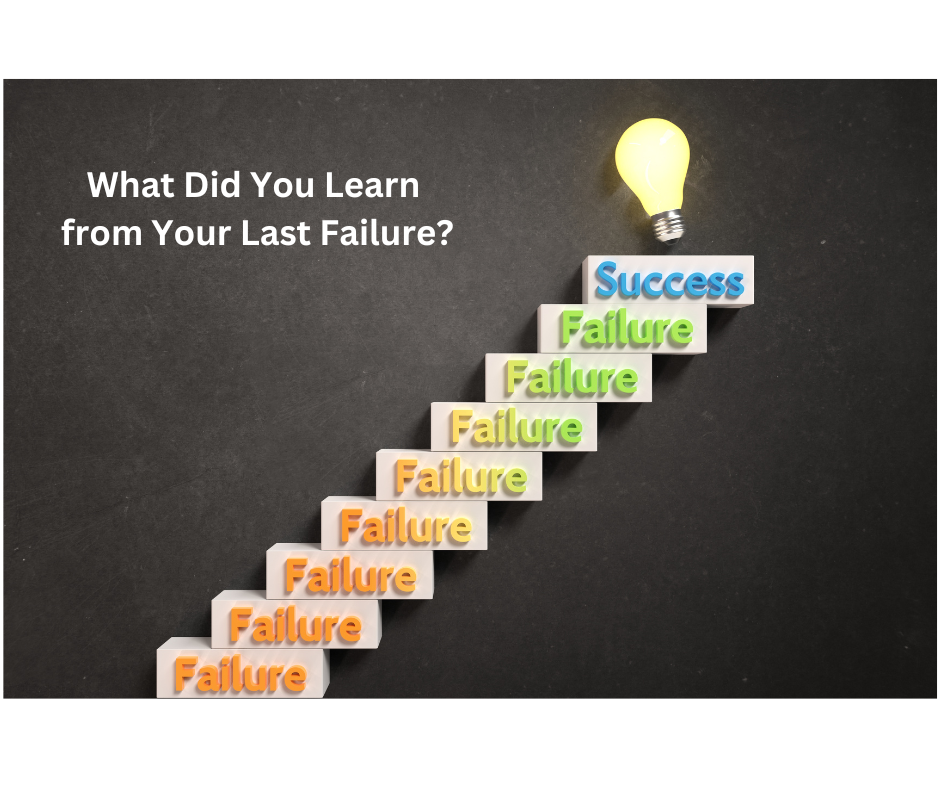
“What did I just learn?” When you fail, you have two choices. You can wallow in that failure or you can learn from it. It is your choice. The wisest people, the most successful leaders, do not see failure as the worst thing that can happen. They see failure without learning as the worst thing that can happen. When you have failed and you learn nothing from that failure, you waste life’s greatest learning laboratory. Failure is essential to learning. You didn’t learn your math tables, how to drive, or become an expert in your field because you did everything right the first time you tried it. You failed once, twice, maybe multiple times. But each time you failed, you learned something new and grew. That is how you got good at that thing. The problem many people have is that they see failure as a personal indictment of who they are. They believe that whatever they just failed at doing, will be their undoing. Some people try to hide their failures from others and may even delude themselves into thinking it was out of their control. When someone brushes past a failure and moves on like it is no big deal, they have just doomed themselves to mediocrity. When we pass the buck and say, “I couldn’t control it.”, we are convinced we have nothing to learn. Therefore, we stop growing. I see it happen on teams all the time. I get to work with engineers, bankers, lawyers, entrepreneurs, cops, and fire personnel. I see many of these trained professionals walk away from a situation, a project, or an incident and miss the critical last step in the process. The last step they, and all of us, should be doing is stopping and asking ourselves: “What did I/we just learn?” If more individuals and more teams paused after a failure and asked themselves this question, we would have a lot more wise and successful people in our midst. I called failure life’s greatest learning laboratory. But, so many leaders and teams ignore that opportunity to learn. Lot’s of times it is that individual’s pride that prevents them from taking a step into that lab. They do not want to face their shortcomings now, so they set themselves up for more failures in the future. A project, a mission, an incident is not complete until you stop and ask yourself, “What did I just learn?” I had a coach who never berated me or dwelled on my failures. He just asked me, “What did you just learn?” He would not let me off the hook either. He forced me to stop and evaluate my thoughts, my words, and my actions before he would let me move on to the next thing. As a result, every success AND every failure became a learning laboratory that prepared me for the future tests I would face. In the military they call these After Action Reviews. These are used by teams at the end of every mission – the successful missions and the screw ups. In fact, the mission is not completed until the AAR process is done. That ensures that every team and every team member is focused on growing and becoming wiser before the next mission. If you want a free PDF outline of an AAR process, just email us at info@alslead.com and we will send it to you for you and your team to use. Question: What failures have you learned from the most? When can you institute a personal or team AAR? Audiobook sales have taken over for ebook sales. When we first published Becoming a Leader of Character in 2017, people were predicting ebooks were going to kill traditional hard copy print books. That didn’t happen. In fact, print books’ percentage of sales are very similar to what they were in 2017 when we first published. What has changed is that audiobooks have eaten away at ebook sales. Therefore, if you have been waiting on the audiobook version of Becoming a Leader of Character it is now here! You can get it on Spotify, Audible or any other major platform for audiobooks. While you drive or workout, marinate your brains in the Six Habits of Character – Courage, Humility, Integrity, Selflessness, Duty, and Positivity. Order now on your favorite platform: (Audible is coming soon!) Order Audiobook on Spotify Order Audiobook on Apple Audible: Will be available in the coming weeks. We will let you know as soon as Audible makes it available.
VLOG – How We Become Selfish, Entitled and Negative
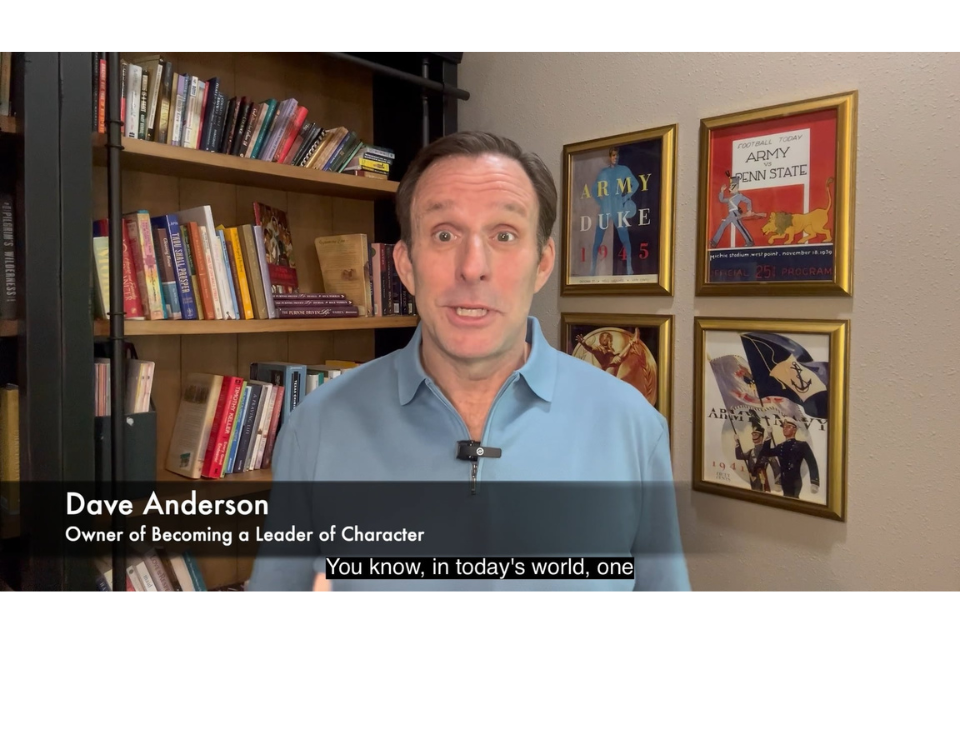
Self! If you want to be a Leader of Character, you can’t let that word blur your vision. If you do, you are in danger of falling into the Selfish Cyle of self-focus, entitlement, and negativity. Watch this 103 second video and learn how to avoid the Selfish Cycle. Audiobook sales have taken over for ebook sales. When we first published Becoming a Leader of Character in 2017, people were predicting ebooks were going to kill traditional hard copy print books. That didn’t happen. In fact, print books’ percentage of sales are very similar to what they were in 2017 when we first published. What has changed is that audiobooks have eaten away at ebook sales. Therefore, if you have been waiting on the audiobook version of Becoming a Leader of Character it is now here! You can get it on Spotify, Audible or any other major platform for audiobooks. While you drive or workout, marinate your brains in the Six Habits of Character – Courage, Humility, Integrity, Selflessness, Duty, and Positivity. Order now on your favorite platform: (Audible is coming soon!) Order Audiobook on Spotify Order Audiobook on Apple Audible: Will be available in the coming weeks. We will let you know as soon as Audible makes it available.
Just Admit It! You Stink at ….

When a leader never admits their faults, they are essentially saying, “I am perfect.” As a young and naive manager, I thought people wouldn’t trust me if I told them I wasn’t good at something. If I had a weakness, I tried to hide it so others wouldn’t know. I was sure that the people I was called to lead would question my fitness for leadership if I ever said, “I stink at _____.” But the truth is everyone already knew my weaknesses whether I admitted to them or not! When everyone knows we stink at something and we won’t admit it, that does not build their trust, that tears it down! As leaders, our pride may make us believe that we should be good at everything. We may even think that everyone else thinks we should be good at everything. But both those thoughts are markers of a naive person. When a leader owns their weaknesses that actually builds trust with the people around them. A leader who exercises the Humility to see themselves honestly and then be honest about what they see, gains the respect of others. In a recent workshop with some senior leaders in the fire services, I asked the group, “What will people think if you let them know you are not good at something?” Immediately, one of those leaders said, “I will lose their trust.” I looked this big burly man’s man dead in the eye and said, “You are dead wrong my friend! A leader who admits faults actually builds trust. Because that leader is just admitting to things everyone already knows about them!” He answered out of a position of pride not out of one of Humility. He was living the “fake it until you make it” life and thinking that would add to his credibility. A leader who fakes it, will never gain the trust of others. That is just a foolish or naive approach to leadership. There is and never will be a perfect leader on this side of heaven. But, when a leader never admits their faults, they are essentially saying, “I am perfect.” Which makes everyone around them think, “this guy is either that ignorant, that arrogant or that delusional!” Whichever it is, it is not going to inspire them to trust you. Exercising Humility takes the willingness to look in the mirror, honestly evaluating yourself, and then admitting to others what you see. Don’t worry! They already see it! This now allows you to ask for help, build credibility, and actually set the example for the rest of your team to do the same thing. That is a leader who will be leading a team built on trust and a leader that will have a team committed to getting better. Question: What do you stink at doing that you should admit to others? How will that set an example for them? Here is a quick assessment that will take you 5 minutes to figure it out. Nobody will ever see your results but you. Warning: If you are not going to be honest with yourself this is a worthless assessment. To take the assessment use the QR code above or go to www.MYCHARACTERTEST.com</
VLOG – Your Attitude is a Choice – Make a Different Choice
What attitudes are you choosing each day. It is truly up to you. Your circumstances don’t choose your attitudes, you do. Watch the next 89 seconds and think about what choices you are making and how you can change those choices. Audiobook sales have taken over for ebook sales. When we first published Becoming a Leader of Character in 2017, people were predicting ebooks were going to kill traditional hard copy print books. That didn’t happen. In fact, print books’ percentage of sales are very similar to what they were in 2017 when we first published. What has changed is that audiobooks have eaten away at ebook sales. Therefore, if you have been waiting on the audiobook version of Becoming a Leader of Character it is now here! You can get it on Spotify, Audible or any other major platform for audiobooks. While you drive or workout, marinate your brains in the Six Habits of Character – Courage, Humility, Integrity, Selflessness, Duty, and Positivity. Order now on your favorite platform: (Audible is coming soon!) Order Audiobook on Spotify Order Audiobook on Apple Audible: Will be available in the coming weeks. We will let you know as soon as Audible makes it available.
The Easy Choice Is Often The Wrong Choice
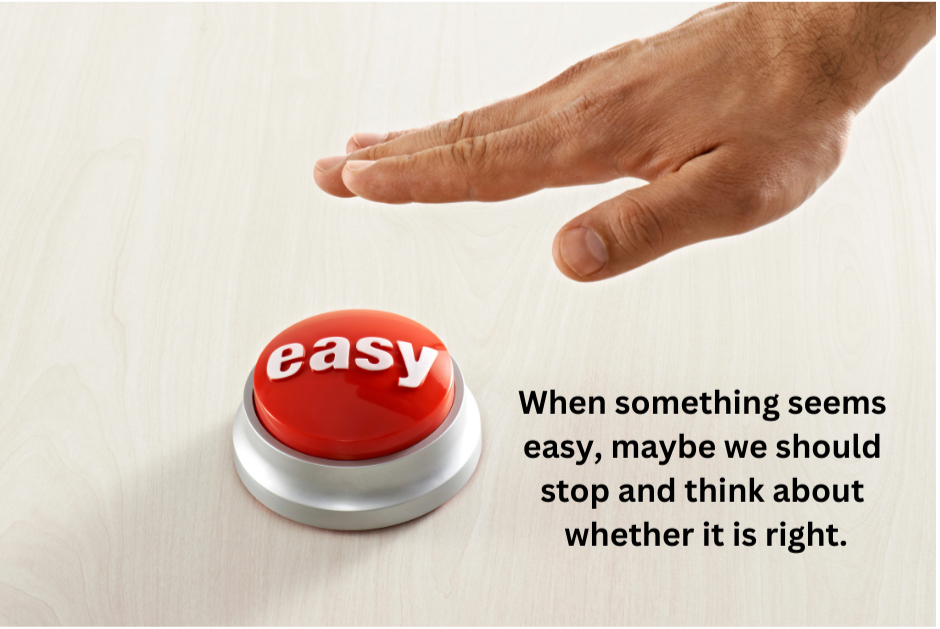
When something seems easy, maybe we should stop and think about whether it is right. It would be nice if there was actually an Easy Button for the choices leaders make. But life doesn’t work like that. In fact, when we have a choice between something that is easy versus something that will cause us to work a little harder or endure some level of pain, the easy choice is often the wrong choice. Don’t get me wrong, I am a big believer in being pragmatic. Let’s not overcomplicate things. Let’s get stuff done! These are familiar phrases that people who know me have heard often. But there is a danger when we don’t take a moment to run those choices through our values. Without a values filter, the path of least resistance becomes a slippery slope down into the pit of hypocrisy and selfishness. The easy choice can lead us to: Keep us in bed longer than we planned. Choosing to do fun work versus the stuff our team needs more. Omit information that makes us look bad. Say, “I ran out of time.”, when I actually procrastinated starting. Cutting and pasting a paragraph from an old performance review into this year’s. Sending an email instead of walking down the hall for a conversation. Telling someone what to do instead of teaching them how to do it. Ignoring the dishes in the sink, instead of putting them in the dishwasher. Finding a way around the rules versus working within the rules. Avoiding a difficult conversation versus proactively engaging. Holding onto information to maintain control versus sharing all that you know. When something seems easy, maybe we should stop and think about whether it is right. Is this the right thing to do or just the thing that makes my life easier at the moment? Is it the leader’s job to make their own life easier or is it to do what is right and what is best for others? When our first instinct is to look for what is the easiest choice, I want to challenge you to go with your second instinct and filter that easy choice through your values. Am I choosing the harder right or the easier wrong? Would I be satisfied if I were on the receiving end of this action? Did I just make the other person’s life easier or harder? Would the people I love be proud of my choice? Asking ourselves these questions will help us stay off that slippery slope that will lead us into hypocrisy and selfishness. When we can take the high road and put our feet on solid ground, we will be the leads others will trust and the person we will be proud to see staring at us in the mirror every morning. Question: In your past, when has the easiest choice proven to be the wrong choice? In your past, when was the harder choice the right choice? Audiobook sales have taken over for ebook sales. When we first published Becoming a Leader of Character in 2017, people were predicting ebooks were going to kill traditional hard copy print books. That didn’t happen. In fact, print books’ percentage of sales are very similar to what they were in 2017 when we first published. What has changed is that audiobooks have eaten away at ebook sales. Therefore, if you have been waiting on the audiobook version of Becoming a Leader of Character it is now here! You can get it on Spotify, Audible or any other major platform for audiobooks. While you drive or workout, marinate your brains in the Six Habits of Character – Courage, Humility, Integrity, Selflessness, Duty, and Positivity. Order now on your favorite platform: (Audible is coming soon!) Order Audiobook on Spotify Order Audiobook on Apple Audible: Will be available in the coming weeks. We will let you know as soon as Audible makes it available.
Quit Trying to Guess Someone’s Motives
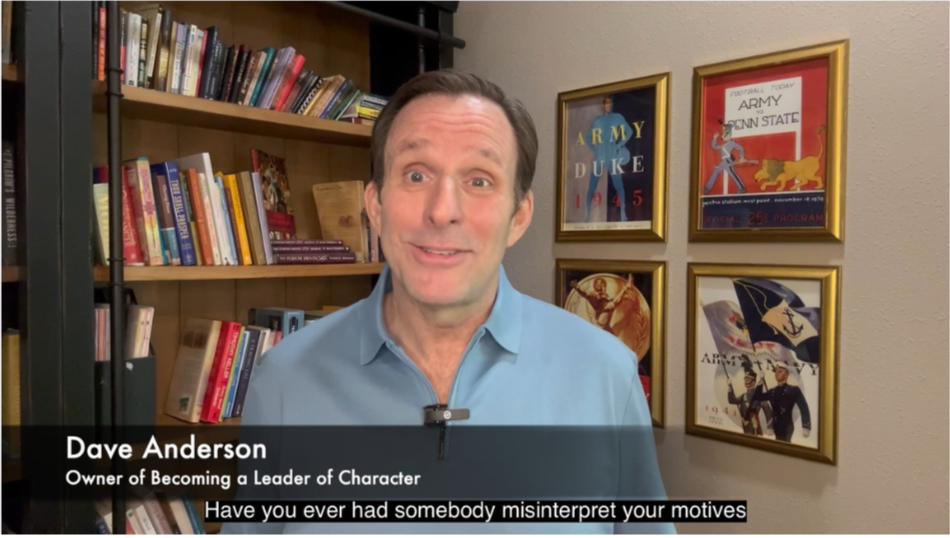
Guessing somebody’s motives is a bad practice. We really don’t know what their motives are. But we assume they must be negative. What if we started out by giving people the benefit of the doubt? Take 90 seconds to watch and listen. I promise, my motives are pure. Audiobook sales have taken over for ebook sales. When we first published Becoming a Leader of Character in 2017, people were predicting ebooks were going to kill traditional hard copy print books. That didn’t happen. In fact, print books’ percentage of sales are very similar to what they were in 2017 when we first published. What has changed is that audiobooks have eaten away at ebook sales. Therefore, if you have been waiting on the audiobook version of Becoming a Leader of Character it is now here! You can get it on Spotify, Audible or any other major platform for audiobooks. While you drive or workout, marinate your brains in the Six Habits of Character – Courage, Humility, Integrity, Selflessness, Duty, and Positivity. Order now on your favorite platform: (Audible is coming soon!) Character Counts! Dave Order Audiobook on Spotify Order Audiobook on Apple Audible: Will be available in the coming weeks. We will let you know as soon as Audible makes it available.
Ready! Go! Order Becoming a Leader of Character Audiobook today!
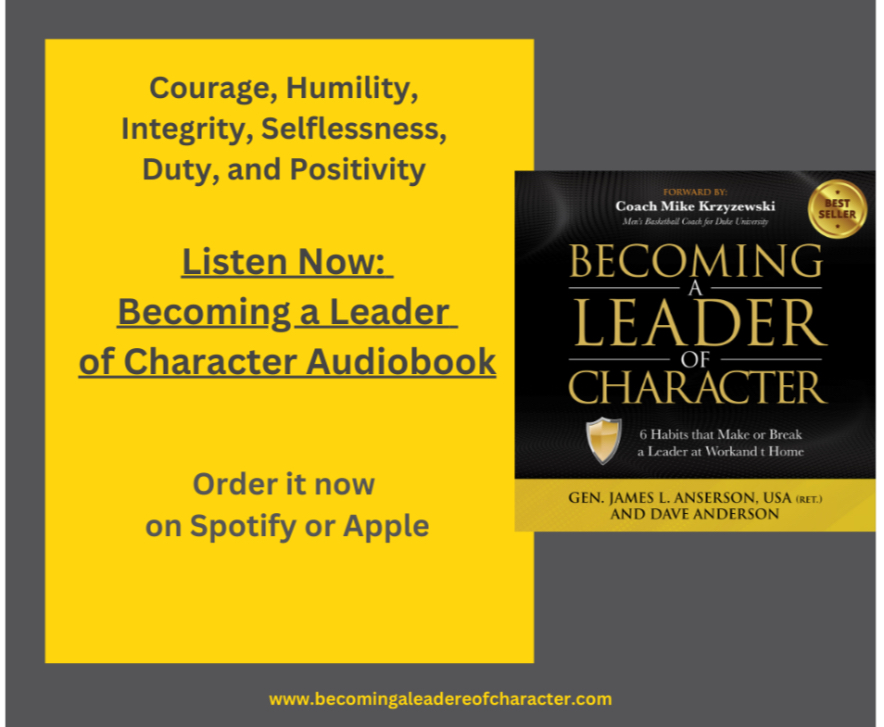
Okay friends! You knew this day was coming. Today is the day to order the audiobook version of Becoming a Leader of Character is available NOW! Please order on Spotify, Apple or another platform. (Audible is coming soon!) Here are some links to make it easier for you: Order Audiobook on Spotify Order Audiobook on Apple Audible: Will be available in the coming weeks. We will let you know as soon as Audible makes it available. Please share this email with other people that you know may the audiobook type and who might want to hear about The Six Habits of Character: Courage, Humility, Integrity, Selflessness, Duty, and Positivity. Character Counts! Dave