To Win You Have to Risk Losing
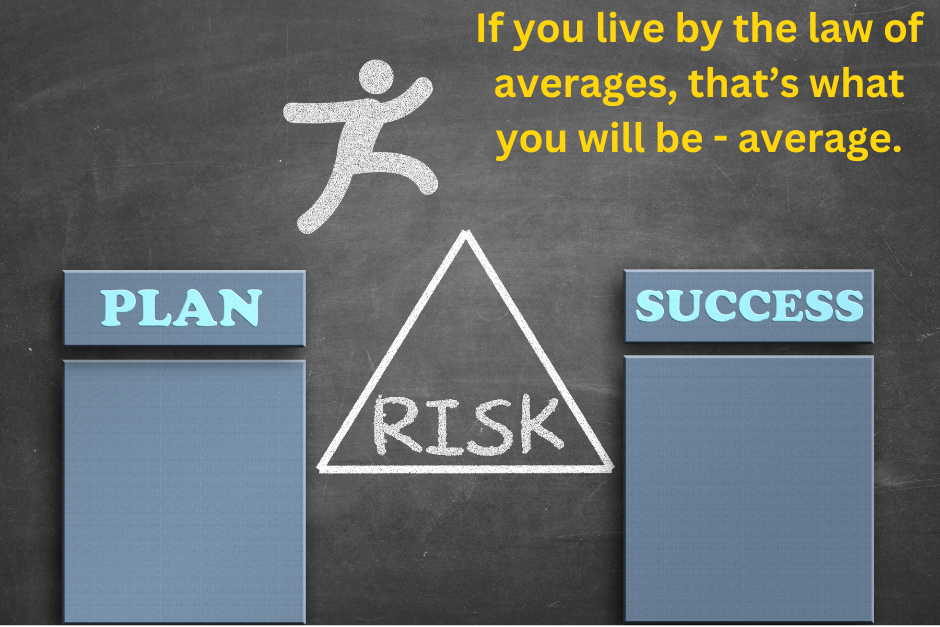
If you live by the law of averages, that’s what you will be – average. A fourth quarter comeback won’t happen if a team looks at the odds. There are no medical miracles if the doctors or the patient play the odds. The miraculous. The improbable. The heroic. None of those happens if people always make decisions based on what is most likely to happen. If everyone played the odds, everyone would quit too early. What were the odds of Abraham Lincoln winning a presidential election after losing eight previous elections to other offices? What were the odds of the college kids of the 1980 United States Olympic Hockey team defeating the professional hockey players of the USSR? If you played the odds on these two events, Lincoln would not have run, and those college hockey players would not have even played the game. This may sound like a bit of a rah rah speech – because it is. The odds are not wrong, but they are not guaranteed either. People who do great things, rarely accomplish those great things because everything was in their favor. It is actually the opposite. They see that chance of failure, but they decide to move forward anyway. I am not talking about reckless decisions, but I am talking about risky ones. Decisions that other people may question. Decisions that don’t seem to make sense on paper. Decisions, that on average, will not turn out well. But, if you live by the law of averages, that is what you will be – average. Look at the greatest inventions, the greatest medical breakthroughs, the greatest military victories, and the greatest sports victories. We remember the inventors, physicians, leaders and athletes who overcame the law of averages. When you look at all these people two things shine through their decisions at the moment of testing: Courage and Positivity. Courage: Acting despite perceived or actual risk. Positivity: Displaying a positive or “can do” attitude in all circumstances. Was there a potential for failure? Yes. Had they or others failed before? Yes. Were the circumstances they faced difficult? Yes. Did they let that affect their attitude? No. Courage and Positivity are habits that we develop with practice. We have to have the Courage to try again after we have failed. We have to have the Positivity to continue to look for new solutions to old problems. Very few great things happen for people who make every decision based on the odds. These are the people who will rarely see results that are better than average. On the other hand, with Courage and Positivity, those same people give themselves a chance to do something remarkable – that beats the odds. Question: Who do you know that has the Courage and the Positivity to go against the odds? When has playing the odds held you back? Here is a quick assessment that will take you 5 minutes to figure it out. Nobody will ever see your results but you. Warning: If you are not going to be honest with yourself this is a worthless assessment. To take the assessment use the QR code above or go to www.MYCHARACTERTEST.com
VLOG – This Week’s Character Clip April 16, 2024
We all want character. But you’re not born with character. You develop character. So what do you have to do to get it? Here are my thoughts in under 90 seconds. Here is a quick assessment that will take you 5 minutes to figure it out. Nobody will ever see your results but you. Warning: If you are not going to be honest with yourself this is a worthless assessment. To take the assessment use the QR code above or go to www.MYCHARACTERTEST.com
Is Your Leadership on Solid Ground?

Those tiny cracks in the foundation are a sign something larger is about to happen. Where do you build your house? Do you build it on the sand? Something that will shift and be unstable? Something that will erode from underneath when a storm comes? Look at the recent failures of CEO’s like Elizabeth Holmes at Theranos or Sam Bankman-Fried at FTX. They did not have a strong foundation. Look at the politicians we don’t respect or the celebrities who turned out to be predators. There was always paint covering the cracks in the foundation – until those cracks caused a catastrophic failure and people were hurt when it collapsed. A critical part of the foundation is the ground on which the foundation is built. Modern builders do soil analysis and take care to determine if the house they are about to build will last. They don’t build a home on the sand. They look for something that will hold up the structure they are creating. It all starts with choosing the right ground. It doesn’t matter how beautifully designed a home may be, it will still collapse under its own weight if the foundation is built on the shifting sand instead of upon solid rock. What type of ground are you building upon? There are a lot of people who spend a lot of time and money building companies, teams, and even their lives on the sand and then wonder why it all falls apart. The first sign may be small hairline cracks. Leaders may initially ignore these cracks saying they are just “cosmetic”. But over time, the cracks get longer and grow wider. Leaders may paint over the cracks before guests visit, or before a buyer tours the premises. But, the paint soon cracks again. Those tiny cracks are the signal that something larger is wrong. It doesn’t matter how often the crack is patched and painted over, if the foundation is not set on solid rock, the shifting of the sand below the foundation will continue to create the cracks that will destroy the home. What are some shifting sands that bring leaders down? Putting profits before their values. Building their brand instead of building their character. Short term results versus long term legacy. When a leader loses track of their values. They destroy their character. And, their legacy is not anything that will last. Profits shift just like sand. A brand is all about appearances and nothing of substance. Short term results are just that, short term. A leader’s true legacy is the people or the organization they leave behind. What are we leaving behind for others? Is it worth anything? The question we need to ask ourselves is “Whatever I am building, am I building on solid rock or on shifting sands?” If the answer is shifting sands, long term success is unlikely. Start on solid rock. Know your values. Build your character. And focus on your long term legacy. By the way, if you do the first two, the third one – your legacy – will be around longer than you are. Question: What are your values and what are you doing to strengthen your character? Here is a quick assessment that will take you 5 minutes to figure it out. Nobody will ever see your results but you. Warning: If you are not going to be honest with yourself this is a worthless assessment. To take the assessment use the QR code above or go to www.MYCHARACTERTEST.com
Quit Procrastinating! Just Do It!

Procrastination is a selfish act that turns us into stressed out and unreliable people at work and at home. I didn’t want to write this blog this morning. I didn’t feel like it. I felt like a hypocrite writing it. But I try to say things in these blogs that need to be said. A lot of the times, I need to hear the words as much as I think other people need to hear them. I had a lot of reasons to put off writing today. None of them were really important reasons. But the voices in my head can overpower my better judgement. The bottom line is those voices come from my self-focused and self-indulgent part of my heart. Those voices guide me away from what I should do and convince me that a little time on social media is not a big deal. Or scrolling through stories on my ESPN app or Apple News is okay. Maybe I’ll wander into the kitchen to see what is in the pantry even though nobody went shopping since I looked in there an hour ago. Procrastination looks like different things for different people. But the results are almost always the same. When we procrastinate, we not only hurt ourselves, but usually someone else as well. Somebody is waiting for that paperwork. Somebody is waiting for us to respond. Somebody is waiting for us do our chores around the house. While we procrastinate, someone else is waiting. Procrastination hurts us as well. The workout I thought about this morning, rarely gets done in the afternoon. The paperwork I let pile up all week, almost always creates stressful moments before I head home on Friday. The stuff I left undone on Friday hangs over me throughout the weekend. Procrastination is a selfish act that turns us into stressed out and unreliable people at work and at home. There is one surefire cure for procrastination: Just do IT! Whatever IT is! Knock IT out. Be done with IT. Get IT off your list. Once that thing is done, the rest of your day is gravy. You feel released to focus on the stuff you enjoy doing. Your productivity and your mood improve. The people around you are able to be more productive as well, and therefore they are happier. It is an amazingly simple prescription, but just getting started on the thing that you don’t want to do, feels liberating. I am experiencing that right now! Trust me! It is now 7:45am and I feel ready to tackle the rest of my day. My first thought when I sat down in front of my computer was not excitement. But with some self-control and some self-discipline I overcame the the temptation to put this off until later. Again, I want to encourage you to “Do IT now!” You’ll have a better day after IT is done. And you will have exercised a muscle we define as Duty: Taking action based on your assigned tasks and moral obligations. And each time you make that choice to avoid procrastinating, it will get easier to make that choice again, and again, and again. Over time, you will no longer be a procrastinator, you will be someone who gets stuff done, when they say they will get it done, for the people who are waiting for you to get it done. Another name for that person is a Leader of Character. Question: What have you been putting off that you can start doing now? What if you knocked IT out before the hour was done? Or at least started IT? Here is a quick assessment that will take you 5 minutes to figure it out. Nobody will ever see your results but you. Warning: If you are not going to be honest with yourself this is a worthless assessment. To take the assessment use the QR code above or go to www.MYCHARACTERTEST.com
When Being Right is a Curse

Sometimes the right thing to do when we know we are right, is to stay quiet – if it is not an issue of Integrity. “Well I was right!” is the refrain of many intelligent yet lonely people. This is a phenomena that plays itself out in the work place and in personal lives. For some of us, we don’t just like to be right. We need to right. We need to correct something that is wrong. It doesn’t need to be a major injustice, slander or lie. Those are things that we should always do our best to correct. Those moments are a challenge to our Integrity – doing what is good, right and proper, even at personal cost. Unfortunately, the need to be right becomes a curse for people because they are unable to control their urges. There is that pressure that builds up when someone uses a word incorrectly, or doesn’t capitalize a day of the week in a sentence. It happens when a spouse is telling a story, and the other spouse feels compelled to correct a minor detail. It happens when I child is excited about a good grade on a paper, and the parent points out a missed comma. It happens when someone has to pull out their phone to verify a minor piece of information, and then tell everyone what they found, even though the conversation has already moved on. For some of us who are very detailed oriented, this is truly a struggle. When someone else misses or accidentally misrepresents something minor, everything in our being could be telling us to say something – to correct it. But many times, the more mature thing is to just let it go. None of these moments are an issue of Integrity for us. In fact they test other parts of our character. They test our Humility, our Selflessness, and our Positivity. Humility: Believing and acting like “it’s not about me.” Selflessness: Putting the needs of others before my own needs, desires, or convenience. Positivity: Displaying a positive or “can do” attitude in all circumstances. Sometimes the right thing to do when we know we are right, is to stay quiet – if it is not an issue of Integrity. Staying quiet in those moments may be a test. It will test our Humility because we put aside our own urge to correct something for the good of someone else. Our Selflessness is tested because we put their telling of the story before our own need to correct a minor detail. And we exercising Positivity because we don’t deflate the other person by exposing their lack of attention to the details. I want to be sure nobody thinks I am advocating for sloppy work or fudging on the truth. If you have read any of our books or blogs over the last decade, you know that is not the point. The bottom line is that sometimes it is okay to let someone else be wrong. It is okay for the story to be mostly accurate. It is okay and probably wise to stay quiet in those moments. Evaluate their motives. If they are being purposefully deceitful, then you need to act. But, if it is a minor detail, with no intent to deceive, and correction will not truly change the outcome, then let it go. The need for accuracy and your attention to detail is a gift in so many important situations. But it can be a curse in a lot of other situations. When we exercise the Humility, the Selflessness, and the Positivity to stay silent at those moments we are exercising our character. And, we are giving others a gift as well. Questions: How do you feel when someone corrects a minor/unimportant part of your stories? How often do you do that to others? Here is a quick assessment that will take you 5 minutes to figure it out. Nobody will ever see your results but you. Warning: If you are not going to be honest with yourself this is a worthless assessment. To take the assessment use the QR code above or go to www.MYCHARACTERTEST.com
Are You Bigger Than Your Performance?

If you use grades, sales numbers, winning cases, closing deals or promotions as your measuring stick for yourself, you will be dissatisfied. I’d won again. It was another pelt on my wall. They handed me a plaque that said I was Sales Representative of the Year. My metrics were impressive. When they showed my numbers on the big screen, there was no denying my performance. I even got promoted as a result of those objective measurements. But then the next year, I was in last place. My performance was excruciatingly bad. Those same measurements that made me feel successful, now made me feel worthless. I was the same person each year. The performance was different, but I was the same Dave. Unfortunately, at that point in my life I was negotiating with my character. I was doing what I thought I needed to do to be successful. I wasn’t breaking policy or crossing the line into anything illegal. But I was compromising my character in an effort to hit those objective metrics of success. When I look back on it now, both the winning and the losing were unsatisfactory and left me unfulfilled. Later in life, with that same company and in similar circumstances I experienced successes and recognition for those same objective measures of success. Plus, I experienced years when my name was absent from the awards lists. But no matter what those objective measures of success said about my performance, I was fulfilled. Why? Because I had learned that I was bigger than my performance. Who I was being was more important than those metrics that I used to use to define me. If you use grades, sales numbers, winning cases, closing deals or promotions as your measuring stick for yourself, you will be dissatisfied. What matters is who you are while you work towards those metrics. Nobody at the end of your career will ever remind you about your great numbers in 2023. Trust me, I am still fortunate to get calls from people I haven’t worked with since 2002. When they call, they never talk about how we hit our sales goals. The most satisfying and long lasting legacy we will have is on the people we get to influence everyday of our lives. What type of influence are we having? What will they remember about who we were, whether those objective metrics looked good or bad? Those are the conversations that happen 20 years later. Those conversations are really the mark of our success. Questions: ● Do you remember your objective metrics from 5 years ago? ● What do you remember about the positive impact someone else had on you in the past?
The Hypocrites in Leadership
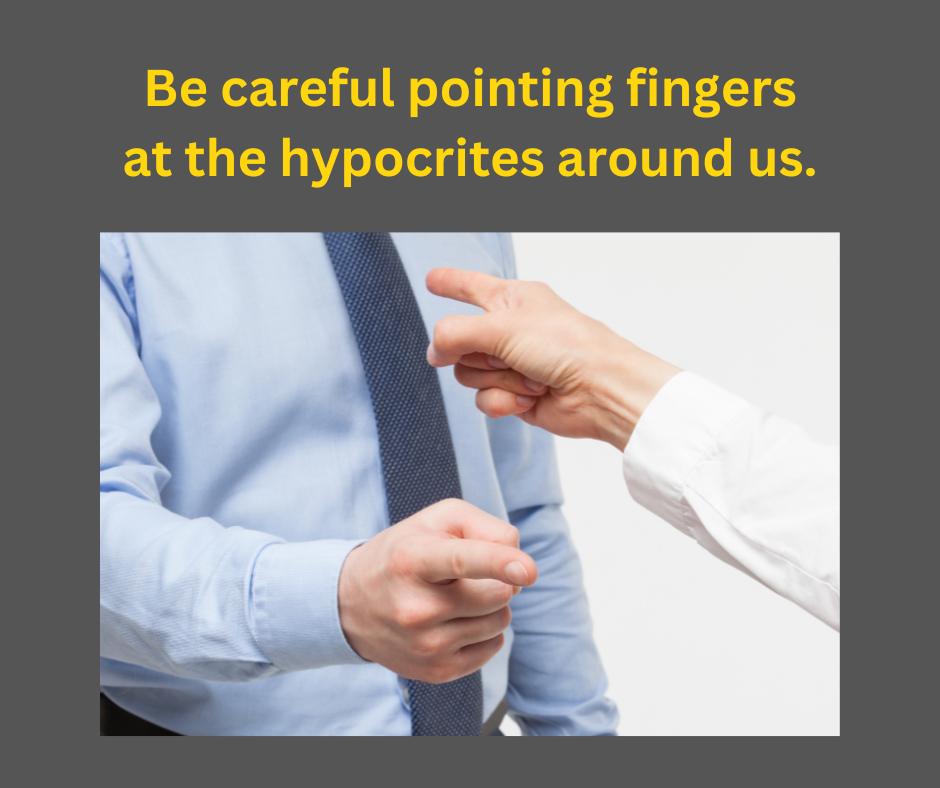
The self righteous exteriors of hypocrites covers the decay that is occurring from within. My wife hears me talking to the TV when the news is on. “What a bunch of hypocrites!” I am usually commenting on the politicians that are being interviewed and the interviewers as well. Then I will see a story about a thirty something CEO who is hailed as a genius and a progressive leader – only to find out he has been sexually harassing people in his firm. We use the word hypocrite a lot without pausing to think through what makes someone a hypocrite. Here are some examples: ● They do good things because they want people to see them doing good things. ● They judge others and hold them to standards while falling short themselves. ● They claim to care about people, but make decisions based on how they could benefit. ● They punish their children for lying, yet they break their commitments to people at work. ● They expect employees to work a full day, yet they consistently arrive late or leave early. ● They condemn the moral failures of people with different political views, but ignore the failures of their political allies. What we should all see in these examples is our own hypocrisy. When an addict starts The Twelve Step Program, the first step is to admit you have a problem. We need to be careful when we point fingers at others without pausing to look in the mirror. Where are we being inconsistent? And how do we become consistent? First, You have to know what you stand for – your values – to avoid hypocrisy. Second, you have to have the Courage to hold to your values even when doing so could make your life harder. You have to believe that deviating from those values will make you a hypocrite and someone you wouldn’t want to follow. It is really easy to see the speck in the eye of a politician on TV and say “What a bunch of hypocrites!” But if we are doing that while we have a log in our own eye, we are exactly like them – hypocrites. Yes. The hypocrites in leadership are frustrating. Their self-righteous exterior covers the decay that is occurring from within. But instead of just complaining about them, we need to use their example as a cautionary tale. We all can fall into hypocrisy in our lives if we don’t pay attention to our own thoughts, words, and actions. And the truth is, we are the only thing we can control in our lives. Questions: ● What do you stand for? ● Where are your actions inconsistent with your values? Here is a quick assessment that will take you 5 minutes to figure it out. Nobody will ever see your results but you. Warning: If you are not going to be honest with yourself this is a worthless assessment. To take the assessment use the QR code above or go to www.MYCHARACTERTEST.com
The Harder Right Versus The Easier Wrong
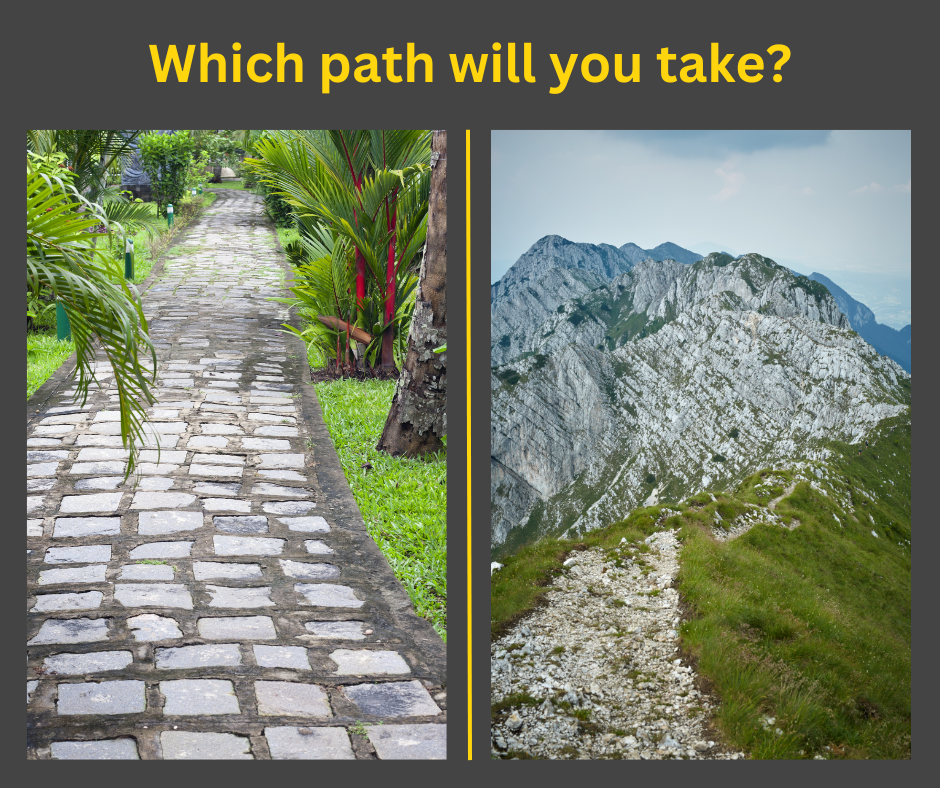
The narrower gate is harder. Trust me. Imagine you had two gates you could choose to walk through. One is wide and popular. Plus, on the other side of the gate is a path that is paved and looks flat. The second gate is narrower and only a few people enter it. On the other side of it, you see a rocky uphill climb. Most of us would choose the easy comfort of the first path versus the second. Unfortunately, when it comes to our character, that first path will lead us to our own destruction. My father, The General, used to say to me: “Hey bud! If doing the right thing were easy, everyone would be doing it.” When I went to West Point, I learned the West Point Cadet Prayer which asks: “Make us to choose the harder right instead of the easier wrong, and never to be content with a half truth when the whole can be won.” I’ve taken the easier route in my past. I looked at the short term gain at the moment my character was tested, and I ignored the impact of my choices down the road. For a while that gate seemed like the easy choice to walk through. The more I chose the gate, the wider it got. Unfortunately, I went so far down that path, I realized how slippery it got. I started sliding downhill. At the bottom of the hill was a swamp that promised to suck me in with the rest of the people who chose that path. Fortunately, I remembered my dad’s words, the words of the Cadet Prayer, and the counsel of wise friends who pointed me to the narrower gate. The narrower gate is harder. Trust me. There are fewer people choosing to climb the rocky hill that we have to climb sometimes to maintain our character. Those climbs make us sweat and breathe hard. Halfway up the hill, we may stop and wonder if it is all worth it. But when we reach the top of the hill, the view will make all that hard work worth it. Exercising character does not promise you a wide gate with an easy path today. But, it does promise you a summit in your life, and after your life is over, that will make it all worthwhile. Choosing the harder right instead of the easier wrong is the path Leaders of Character need to choose. And, we must be careful to choose it daily. It is not a one time choice. The wider gate will always be there tempting us. In fact, I admit I still choose that wide gate with the seemingly smooth path at times. We will never be perfect, this side of heaven. But each time we have a choice, we need to choose the hard right thing, even if others are not doing it. In the end, we will all be happy with the view we get rewarded with at the top of the climb. Questions: When have you chosen that wider gate and regretted your choice later? What harder right choice are you facing right now? Here is a quick assessment that will take you 5 minutes to figure it out. Nobody will ever see your results but you. Warning: If you are not going to be honest with yourself this is a worthless assessment. To take the assessment use the QR code above or go to www.MYCHARACTERTEST.com
The Best Leaders Produce More Leaders
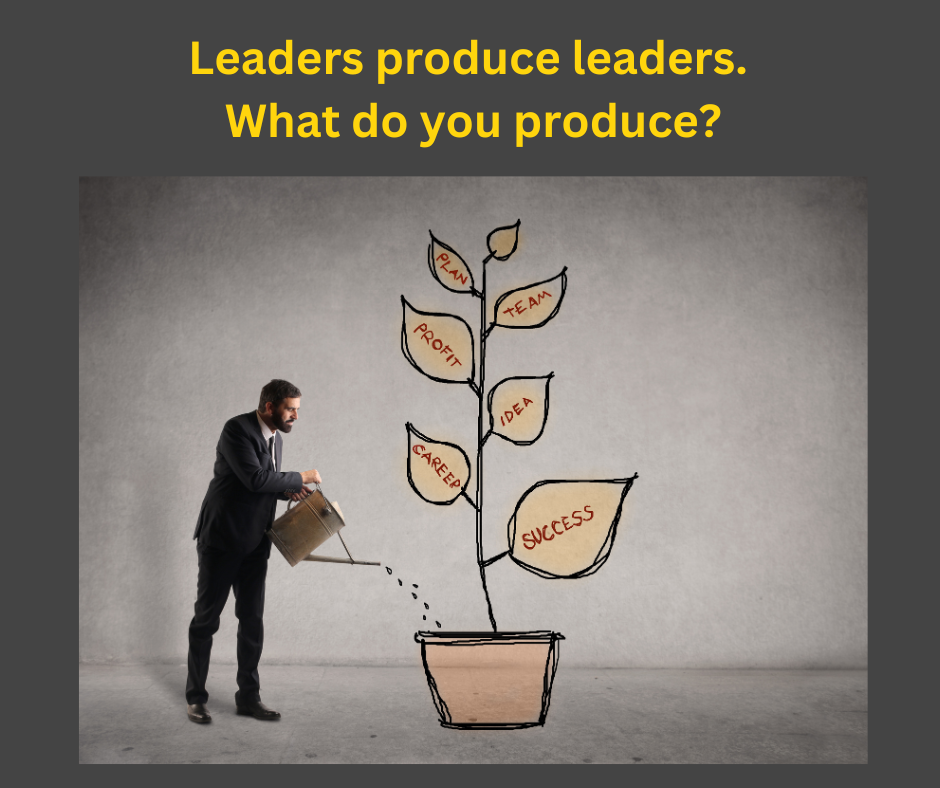
A leader will not be remembered for the metrics they hit or the resources they managed. What is the easiest way to tell a pear tree from an apple tree? The fruit they produce. But just being an apple or a pear tree does not make them valuable. In an apple orchard, if a tree does not bear fruit, it gets cut down for firewood. If you want to know what kind of leader someone is, look at the fruit they produce. When you look at the best coaches in sports, look at the coaches that come from their programs. Hall of Fame NFL Coach Bill Walsh had assistant after assistant become head coaches in the NFL. They call that a coaching tree for a reason. In fact, the fruit coming from his leadership has produced additional coaching trees. Andy Reid, the current coach of the Super Bowl Champion Kansas City Chiefs, once worked for Super Bowl Head Coach Mike Holmgren, who worked for Bill Walsh. Andy Reid now has multiple people who have become head coaches through his leadership. There are a lot of things that pull leaders away from the goal of producing other leaders. Finances, personnel issues, training requirements, meetings, customer maintenance, and a myriad of other tasks can distract us. These issues can’t be ignored. They just need to be prioritized behind the people we are called to lead and develop. If the people we lead are not growing and getting better as a result of our influence in their lives, our impact will be short term. Once we leave our current job our impact will be forgotten. However, if the fruit we bear are more leaders, our impact will be generational, much like Bill Walsh’s impact has been. When it is all said and done, a leader will not be remembered for the metrics they hit or the resources they managed. Leaders will be remembered for the other leaders they produce. It is sad that so many leaders work for so many years and the day after they retire, their impact will be forgotten. Our goal should be to produce fruit that leaves a legacy beyond us. In fact, the fruit of trees are really just vehicles for the seeds that will produce more trees and more fruit in the future. That is what leaders do. Leaders produce leaders. The question is: “What do you produce?” Questions: Who should you be investing time in? How will you prepare them for their future as a leader? Here is a quick assessment that will take you 5 minutes to figure it out. Nobody will ever see your results but you. Warning: If you are not going to be honest with yourself this is a worthless assessment. To take the assessment use the QR code above or go to www.MYCHARACTERTEST.com
Who are You? Who Do You Want to Be?
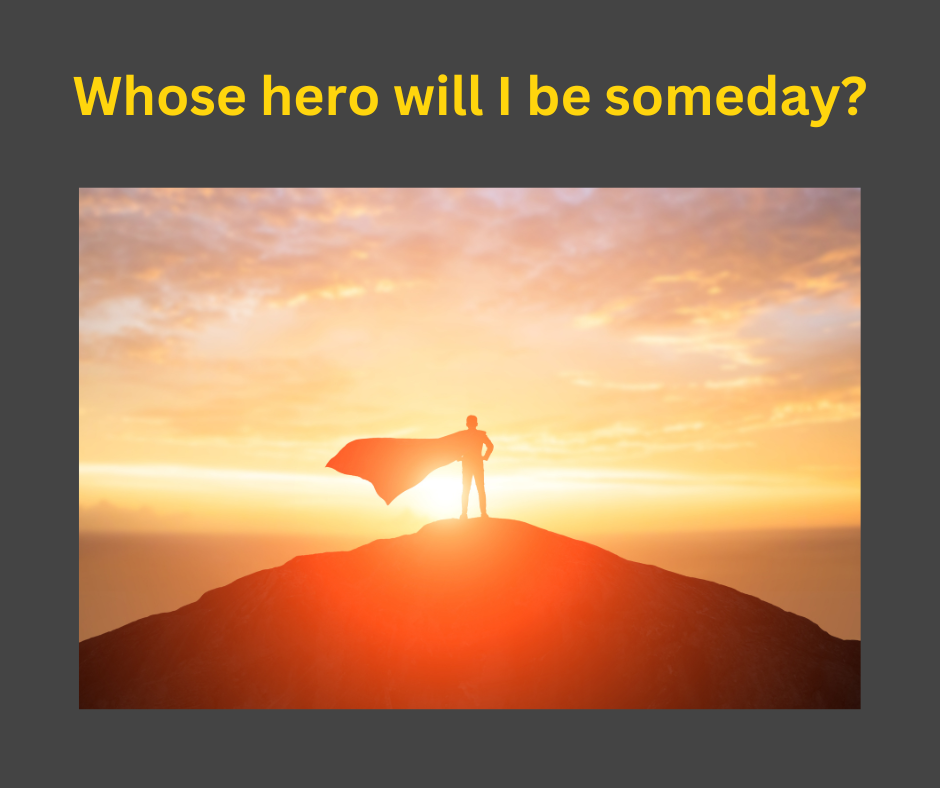
The great thing is, who you are today is not your destiny. It is just a current snapshot of your choices. Spiderman! My mom! Martin Luther King Jr.! Patrick Mahomes! James Reece! If you ask children or adults who their heroes are or who they want to be like when they grow up, you will get a variety of answers. Heroes come in all shapes and sizes and from all walks of life. But everybody has heroes. Some of us may not have thought about our heroes for a long time. It may seem like we should have outgrown those ideas. But, I want to challenge you to remember your heroes and what they meant to you in the past. What did they do that made them your heroes? What did they stand for that made them stand out to you then? How did they make you feel when you saw them do something special or even heroic? Remembering our heroes is one way we can get back to focusing on the type of person we want to be. When you look at your heroes, how are you living your life in comparison to them? This is not about shaming anyone. This is a moment when we can all pause and reflect on who we are now and who we want to be. If you want to, take our character assessment and see how you are doing right now when it comes to Six Habits of Character: Courage, Humility, Integrity, Selflessness, Duty, and Positivity. www.MYCHARACTERTEST.com Even if you don’t take the assessment, I bet those Six Habits of Character probably do a good job of describing your heroes. What enters your mind when I ask you the question, “Who do you want to be?” Your reaction to that question is telling. Do you roll your eyes? Or do you pause and think? Whether you are an eye roller or a thinker, ask yourself these questions: Whose hero will I be someday? Will my children see me as their hero? What will they remember about me and want to emulate? What will they draw from my example? Will they want to draw on my example when they need it? Your own heroes are people you love to watch. They inspire you through their actions even more than their words. People are watching you and the example you set. Perhaps the people you have the greatest influence on are your kids. The great thing is, who you are today is not your destiny. It is just a current snapshot of your choices. Your choices moving forward can align with your vision for your future. Remembering your heroes will give you a vision of who you want to be. That is what always inspired you. That is what will inspire others. Whether you are 20 years old or 80 years old, today is a great day to start focusing on being that hero to somebody else. That process can start by remembering why we loved our heroes in the first place. Questions: What did your heroes do that you could emulate? Who is watching the example you set? Here is a quick assessment that will take you 5 minutes to figure it out. Nobody will ever see your results but you. Warning: If you are not going to be honest with yourself this is a worthless assessment. To take the assessment use the QR code above or go to www.MYCHARACTERTEST.com
Please answer Two Leadership Questions for Us

This is a request that is specifically for people under the age of 35. You may have gotten a survey from us in the past. This is different and shorter – only two questions. It will take you 2-3 minutes to do this – max. Here is the link: Take Survey This survey is one of our last steps to finish our new book that specifically targets readers in their twenties. It is a book on leadership, and your input will make it better. Thanks in advance for your time. Character Counts! Dave and Jake Anderson (co-authors) P.S. Please share this with other people who fit in this age group. We would like to get as many responses as possible. Here is a quick assessment that will take you 5 minutes to figure it out. Nobody will ever see your results but you. Warning: If you are not going to be honest with yourself this is a worthless assessment. To take the assessment use the QR code above or go to www.MYCHARACTERTEST.com
The Status Quo Will Test Your Character
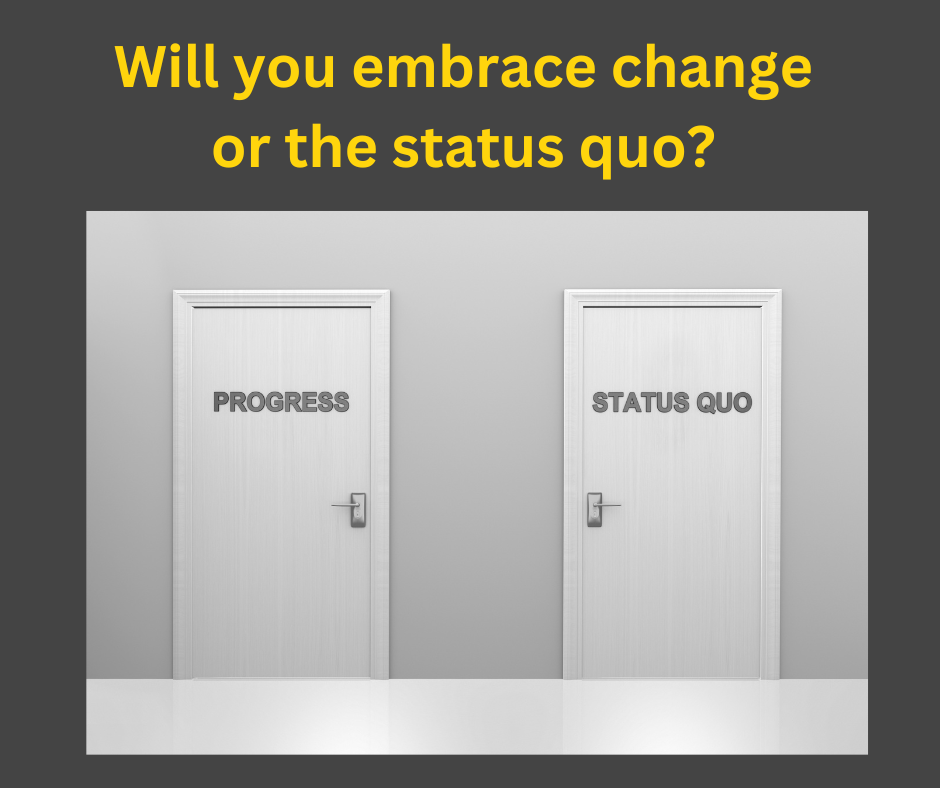
When we are faced with change, we come face to face with tests of our character. How does the status quo get established as a priority? It is crazy how people fight for the status quo. They treat change as if we are asking them to kick a puppy! Ironically, some people will fight harder to maintain the status quo than they will to maintain their Integrity. Sometimes these people are veteran employees. Sometimes they are the leaders of those employees. Here are some obvious truths that we all need to embrace. Change is Coming There has never been a time in human history where things changed so rapidly. Innovation is happening around us. No matter how hard we push back against it, it is here whether you want it or not. Dig in your heels and complain to others all you want. But you are not going to stop change from happening. The old ways of doing things will be gone – just like the home telephone. Caveat: We are not talking about embracing change when that change crosses moral or ethical lines. As my dad, The General says: “Hey bud! Be flexible in your methods but rigid in your values.” Fighting Change Does Not Stop Change People fought against home computers and smartphones. People at work drag their feet each time a new software program is introduced. When you look back, the people who are now fighting for the current software program, fought against it five years ago when it was new. Did they stop the change from happening? No. They just made it more difficult on everyone on their team, including themselves. Managers Maintain the Status Quo – Leaders Lead Change Maintaining things is a good skill to have and good management skills are important. But when change comes, maintaining is not what the team needs. The team needs leadership. A leader needs to step up and say “ This team is about getting better, not staying the same.” The leader needs to be the first to embrace the changes because they are the first to recognize: Change is Coming and Fighting Change Does Not Stop Change. Is change uncomfortable? Sure! But we need to see our attitude towards change as a character test and question ourselves when we want to pushback on change. Here are the definitions of the Six Habits of Character and some questions to consider when faced with changing the status quo. Courage: Acting despite perceived or actual risk. Ask: Am I pushing back only because I am uncomfortable? Humility: Believing and acting like “it’s not about me.” Ask: Is my current comfort more important than the progress of our team? Integrity: Doing what is good, right, and proper, even at personal cost. Ask: Am I facing a change that goes against my morals or values? Or is this just about my preferences? Selflessness: Putting the needs of others before my own needs, desires, or convenience. Ask: If I embraced this change, how am I making things better for others? Duty: Taking action based on my assigned tasks and moral obligations. Ask: If I am not being asked to do something against my morals or values, what is my moral obligation to the team? Positivity: Displaying a positive and/or “can do” attitude, in all circumstances. Ask: Is pushing back going to bring the team together or divide them? Often, it is not the change we are fighting. We are actually fighting an internal battle against fear, pride, rebellion, selfishness, laziness, and negativity. When we are faced with change, we come face to face with tests of our character. The question is do we fight for the status quo, or do we fight for our character? Questions: How have changes tested your character in the past? When people fight against change, who are they hurting? Here is a quick assessment that will take you 5 minutes to figure it out. Nobody will ever see your results but you. Warning: If you are not going to be honest with yourself this is a worthless assessment. To take the assessment use the QR code above or go to www.MYCHARACTERTEST.com
Integrity – Where Do You Draw the Line?
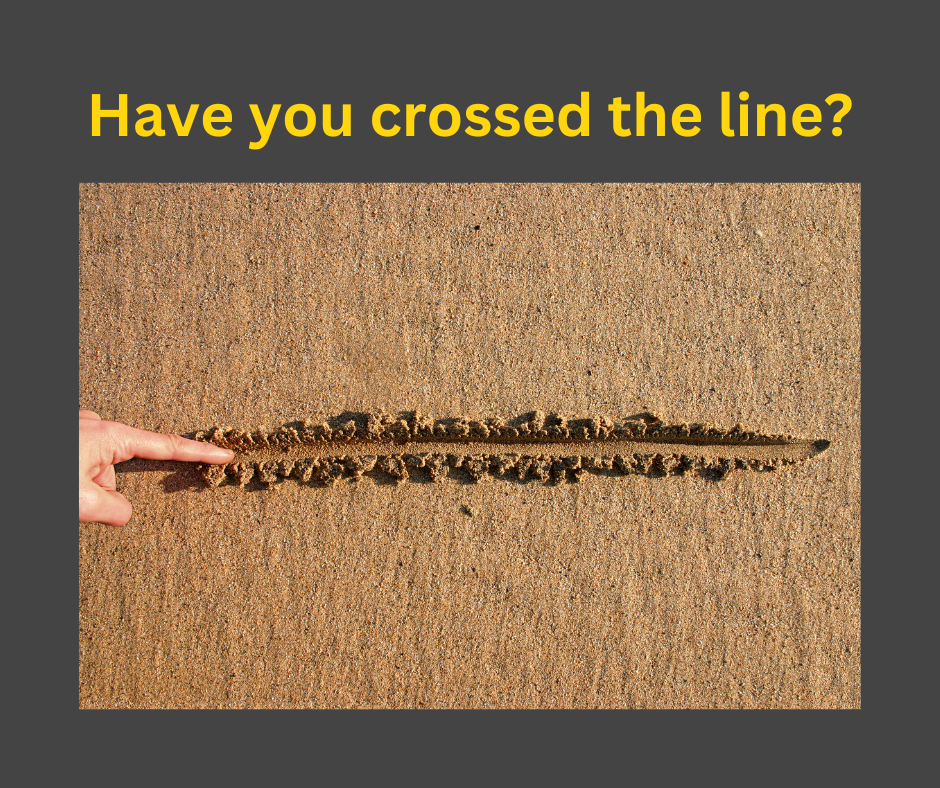
One part of Integrity is having lines that we will not cross. The other part of Integrity is actually not crossing them! Politicians are really good at drawing a “line in the sand”. They say that the line is the point of no return. It is meant to show their steadfast commitment and show strength. And then when their line is truly tested, they move it, or blurr it through their rationalizations. When a politician does that, they lose my trust. I question their promises, their motives, and even their character. In fact, watching these self imposed “lines in the sand” being moved by politicians has eroded my belief in many of our leaders. And then, I look in the mirror…. Maybe we should all look in the mirror and evaluate how we are doing? Where have we drawn the line? Is it truly a “line in the sand”? Or is it something we will rationalize away when that red line makes things difficult? Integrity gets hard when we actually have to follow up our words with action. Declaring our commitments sound noble and righteous. But do we actually behave nobley and righteously? We all believe we have lines we won’t ever cross. But when we look behind us, we can see the remnants of the old lines. These lines may have been: I would never do that. I would never say that. I wouldn’t vote for a liar. I would stop them if they tried to drive drunk. I would do something if someone was belittling another employee. The word Integrity comes from the root word – integer. Integer means whole or pure. One part of Integrity is having lines that we will not cross. The other part of Integrity is actually not crossing them! It does not take any Courage to make commitments. It takes Courage to maintain our Integrity and hold to our commitments. Drawing lines is easy. Not crossing those lines is hard. The world does not need more people making commitments. The world needs more people keeping commitments. Keeping the small commitments we make to people everyday will prepare us to keep the bigger commitments we have made. Small and big commitments matter when it comes to being a Leader of Character who consistently exercises Integrity. Maybe my “line in the sand” should be that I will follow through on every commitment I make. That way, I will take my commitments more seriously in day to day life which will in turn make me someone others can count on when my commitments are tested. Questions: Where do you draw the line? What causes people to ignore those lines or rationalize them away? Here is a quick assessment that will take you 5 minutes to figure it out. Nobody will ever see your results but you. Warning: If you are not going to be honest with yourself this is a worthless assessment. To take the assessment use the QR code above or go to www.MYCHARACTERTEST.com
Leaders have a Duty to Stay Calm

The true mark of a leader is how they react when things are messy, not when things are perfect. Gregory could get stressed about anything! In this case, it was the seating arrangement at a regional sales meeting. Teams that were supposed to be sitting together were not. And Gregory was losing it. When I tried to calm him down, he said, “I am glad you can be so flip about everything Dave!” That’s when I replied, “A couple of years ago I was in the desert and people were shooting at me Gregory. This seating arrangement is not that big a deal.” Leaders have a Duty – a moral obligation – to stay in control of their emotions. Granted there is a big difference between combat and seating charts, but the lesson is important no matter where you lead. A calm leader can inspire a team in the most difficult of circumstances. While the anxious and emotional leader will leave their people uncertain and fearful themselves. We have all seen leaders get emotional when things don’t go as planned. As Mike Tyson once said, “Everyone has a plan until they get hit in the face.” When our plans don’t work out, do we stay calm, or do we get anxious and react poorly? Are others inspired by our leadership in those moments, or do we pass our stress on to them? In order to stay calm, leaders need to exercise Courage, Humility, and Positivity when others allow fear and negativity to take hold. That is a leader’s moral obligation – their Duty. Courage: Acting despite perceived or actual risk. Humility: Believing and acting like “it’s not about me.” Positivity: Displaying a positive and/or “can do” attitude, in all circumstances. Duty: Taking action based on my assigned tasks and moral obligations. Take a deep breath and focus on the bigger picture. What do my people need to see from me right now? Calm or stress? Speak slowly and with clarity. Focus on solving the problem, not assigning blame. Figure out where you are, and where you need to be. Observe what is happening and ask thoughtful questions in order to gain more information. Ask, “What is within my/our control?” and then control it. My choices right now will be remembered and emulated by others later. Make the best decision possible at that moment. But make a decision. Take action and move forward even if that decision is imperfect. The true mark of a leader is how they react when things are messy not when things are perfect. Leading when things are going well is easy. Real leadership is displayed when your plans go haywire – when you do get hit in the face. This is when a leader needs to exercise the Courage, Humility, Positivity and the Duty to fulfill their moral obligation to stay calm. Questions: When have you seen a leader lose it when a plan falls apart? What was the impact on the people around them in the short term and long term? Here is a quick assessment that will take you 5 minutes to figure it out. Nobody will ever see your results but you. Warning: If you are not going to be honest with yourself this is a worthless assessment. To take the assessment use the QR code above or go to www.MYCHARACTERTEST.com
Self Makes Us Cowards, Egoists, Hypocrites and Negative

Self makes us cowards, egoists, hypocrites, and negative. Self is an epidemic that has infected our society. Self is dangerous in a lot of ways. Self is probably the root of most of the problems we face as individuals in the human race. Self is an insidious force that can take over our character if we allow it to happen. Think of self as a lens that colors our view of the world around us. When we look at the world through the lens of self, our view is distorted. Self blurs the lines of life and shifts our character away from the person we are called to be. Four Ways Self Attacks Our Character 1. Self makes us cowards. When self is in control, we back away from difficulty. We avoid conversations that could hurt our career. We stay quiet to make our lives easier. 2. Self makes us egoists. When self is in control, we ignore the needs of others. Our perspective becomes the only perspective. We can’t see another person’s point of view. 3. Self makes us hypocrites. When self is in control, we sacrifice our values and our Integrity becomes negotiable. We break promises when it becomes inconvenient to keep them. 4. Self makes us negative. When self is in control, we focus on what we don’t have and forget the blessings that are in front of us. We become entitled and think we deserve more. We are most negative when we are at our most selfish. Self is truly a world view that damages our character. When we filter everything through the lens of self, we become less. We become less brave, less humble, less honest, and less positive. While we become less like a Leader of Character, we become more like the culture around us. The world is already full of people who see the world in a distorted way. These are the same people who feel lost in this world. They choose themselves first and then wonder why they are not the person they know they are called to be. These choices become contagious and the epidemic of self grows. Choosing to put aside the lens of self will help you see the world from a different point of view. It will help you to make the choices that will build the habits of Courage, Humility, Integrity and Positivity. Seeing the world a new way will help you become the leader your world needs. You can be the person in your sphere of influence who chooses something different – Selflessness. Questions: When have you seen self distort the view of others? When has self distorted your view of things?