Growth and Comfort Cannot Coexist

If comfort is our goal, we will stagnate. There are a lot of external challenges that are thrown in a leader’s path – market shifts, policy changes, poor communication, and personnel turmoil. There are also obstacles that we create for ourselves. One of those obstacles is the desire to be comfortable. Here is a truth every leader needs to embrace: Get comfortable with being uncomfortable. The desire for comfort is not a bad thing by itself, but it is also a desire that will stunt your growth. Growth and comfort cannot coexist in the same person. You know this to be true. When you look backwards you will realize that the toughest circumstances were also the situations where you learned and grew the most. You are who you are today because of the times you were uncomfortable not because of the moments things were easy. But our human nature and even our society makes us search for an ever increasing level of comfort in our lives. As we become more and more successful, maintaining our comfort becomes more and more important. The problem with that is when comfort becomes our goal, we will stagnate. Who we are today will be the best we will ever be. I am in my late 50’s now, I do not want this to be the apex of my growth. Do you? I am not suggesting everyone should go climb Mount Everest or swim the English Channel. But I do want people to embrace the small difficulties in life as opportunities instead of things to be dreaded. When hard things happen, we are facing a chance to grow. These are opportunities to exercise Courage and Positivity. Courage: Acting despite perceived or actual risk. Positivity: Displaying a positive and/or “can do” attitude in all circumstances. The circumstances we face give us a choice. We can avoid the risks of that challenge and decide the circumstances are too overwhelming. Or, we can exercise the Courage to face those circumstances with an attitude that says, “I/we will find a way.” When we stop facing challenges and avoid the discomfort challenges bring, we may protect ourselves from the immediate discomfort, but we set ourselves up to be a lesser version of who we could become. Comfort is the enemy here, not the difficulties in front of us. We have to embrace discomfort if we want to grow, Our comfort zones are our mediocrity zones. Growth requires us to embrace discomfort. A comfortable leader, at work or at home, is a stagnant leader. Here are some ideas that may help you break free of your comfort zone: Learn a new skill or language. Play a video game with your kids. Do your spouse’s chores for a week. Go back and do the work of an entry level employee for a day. Cross train with someone in another department and learn their job. Read an article/book that takes a different position than you normally take. I once heard National Medal of Honor recipient Kyle Carpenter say, “Growth and comfort can’t coexist.” This truth bomb stuck with me that day. My hope is that you see the truth in that and look for a way to be uncomfortable this week! P.S. Read The Comfort Crisis by Michael Easter. It is one of the best books I’ve read this year. Question: When was the last time you were truly uncomfortable and how did you respond? Looking back, what would you change and/or what did you learn about yourself? Here is a quick assessment that will take you 5 minutes to figure it out. Nobody will ever see your results but you. Warning: If you are not going to be honest with yourself this is a worthless assessment. To take the assessment use the QR code above or go to www.MYCHARACTERTEST.com
VLOG – Leaders Lead Change They Don’t Manage the Status Quo
Nobody is inspired by a leader who says “I’m going to fight to keep everything exactly the way it has always been!” Change is coming. Fighting for the status quo insures you are falling behind everyone else. When a leader fights for the status quo, they are uninspiring and bound to lose that battle. In the next 120 seconds, hear my thoughts on why leaders fight for the status quo. Here is a quick assessment that will take you 5 minutes to figure it out. Nobody will ever see your results but you. Warning: If you are not going to be honest with yourself this is a worthless assessment. To take the assessment use the QR code above or go to www.MYCHARACTERTEST.com
The Pop Quizzes in Life Determine Your Character
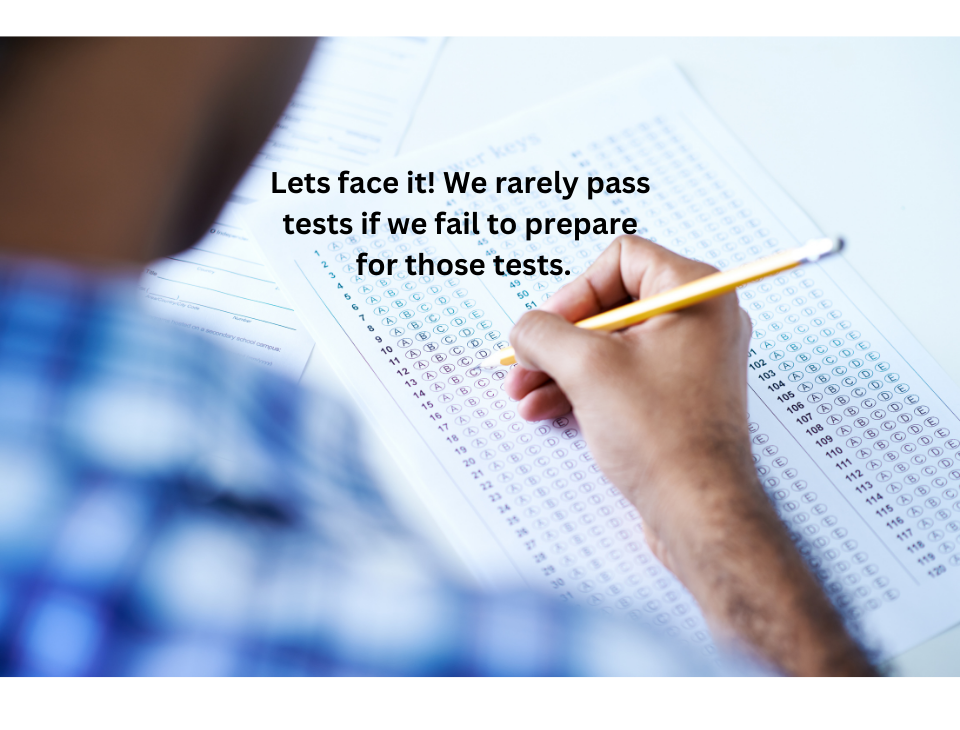
Lets face it! We rarely pass tests if we fail to prepare for those tests. If you are waiting on some big defining moment for you to prove your character, you are going to wait a long time! Most people only face a few of those big moments over a lifetime. If you live 80 years, you may face three or four of those defining moments. That is not when character is made. Character is made in the thousands of day to day choices we make in between the big moments. What makes a young man in his twenties stand up to the celebrity CEO and bring down a company like Theranos? What makes a German Lutheran preacher stand up to tyranny in Nazi Germany? What makes a 20 year old gymnast expose the abuse and corruption inside USA Gymnastics? These are life defining moments. They are the choices that someone makes that will be remembered long after they have left this earth. But what prepared them for that choice? Let’s face it. We rarely pass tests if we fail to prepare for those tests. Waiting for the big moments to exercise our character is as naive as never going to class, never opening a text book, and then showing up for the final exam at the end of the semester. Very few of us will pass that test. The thousands of little choices we make everyday prepare us for the big tests. They may be like homework or a pop quiz. But all those moments of preparation add up and prepare us for the real exam that is coming so we can grow beyond our current level. Some people are perpetually stuck in kindergarten. They don’t do their homework, fail the pop quizzes, and then wonder why they are not moving on to high school level or university level courses and responsibilities. Some may even throw a tantrum or a pity party because they feel the tests are too hard or unfair. Yet the truth is, they failed to prepare themselves for the test. Here are six examples of day to day choices we make and what they could be preparing us for later in life: Courage Pop Quiz: Having a tough conversation with a peer about their attitude. Courage Exam: Stopping a boss from falsely reporting financial information. Humility Pop Quiz: Admitting a mistake to the person you love the most. Humility Exam: Accepting responsibility for your team’s failure to meet a production deadline. Integrity Pop Quiz: Following through on an inconvenient commitment you made. Integrity Test: Telling the CEO the truth about cost overruns in your department. Selflessness Pop Quiz: Listening to the problems of a friend. Selflessness Exam: Putting yourself in a difficult situation for the good of the team. Duty Pop Quiz: Cleaning the dishes in the sink that your roommate left behind. Duty Exam: Stepping into a leadership void when everyone else hesitates. Positivity Pop Quiz: Helping your friend see the blessings in her life. Positivity Exam: Turning around the morale of a low performing team. We have to prepare ourselves for the small day to day homework assignments, that will prepare us for the pop quizzes, that will in turn prepare us for the big exams that come so infrequently. It is the intentional preparation that makes for success in the big tests in life. Becoming a Leader of Character requires us to prepare ourselves and the people we are called to lead, for the bigger exams. The best way to do that is to see everyday as a pop quiz for your character. Questions: What pop quizzes have you struggled with recently? How will you prepare yourself for the next pop quiz coming your way? Here is a quick assessment that will take you 5 minutes to figure it out. Nobody will ever see your results but you. Warning: If you are not going to be honest with yourself this is a worthless assessment. To take the assessment use the QR code above or go to www.MYCHARACTERTEST.com
VLOG – Hope is a Lousy Leadership Strategy
Hope is a great thing to have, but it is a lousy leadership strategy. You can’t just hope your people or children make wise decisions, you have to prepare them for those decisions. And writing policies and making rules is not going to be enough. It never has been. In 110 seconds, I will talk about why rules are no substitute for character. Here is a quick assessment that will take you 5 minutes to figure it out. Nobody will ever see your results but you. Warning: If you are not going to be honest with yourself this is a worthless assessment. To take the assessment use the QR code above or go to www.MYCHARACTERTEST.com
The Toughest Personnel Problem – High Competency and Low Character

That dude is a (PITA) Pain in the A ! But I need his production! Every leader runs into the same dilemma at some point in their journey – the high performing employee that has questionable character. These are the most persuasive sales people, smartest loan officers, most tactically sound police officers or fire personnel. When the rubber meets the road, they display a skill level that is hard to beat. The problem lies outside of their ability to do the work. The problem comes down to issues of character. They: Argue with feedback from their boss or their customers. Never admit they are wrong. Grab the spotlight from others. Are only worried about themselves and are not team players. Cut corners to achieve goals. Refuse to mentor new team members. Talk about peers and leadership behind their backs. Are consistently late with administrative tasks. When you look at the Six Habits of Character: Courage, Humility, Integrity, Selflessness, Duty, and Positivity, they are often lacking in multiple areas. A leader can feel like a hostage in these situations. “This dude is a (PITA) Pain in the A_ _! But, I need his production.” But is letting these behaviors continue really the wise thing for a leader to do? Yes that PITA’s skills may be strong, but is his impact on everyone else worth it? He may make the leader’s performance better in the short term, but over time, the PITA’s low character will hold back everyone. The leader wrestling with this thought process may be also wrestling with fear and pride. Taking action may cause the talented PITA to leave. It may cause the leader’s team performance to drop in the short term. But, the team will be glad to see him gone. Usually, someone unexpected steps up and fills that void. As leaders, it is our Duty to not settle for highly competent but low character people on our teams. We need to have the Humility to recognize that the bigger issue is not how this person helps me look good today, but how this person is hurting the team in the long run. Is this an easy decision to make and then to execute? Rarely. There are probably hoops you will have to jump through to get the high performing PITA out of your organization. But, we must realize that doing hard things is part of being a Leader of Character. Keeping a low character PITA around just because they are competent is a short term tactic that almost always causes long term issues. My good friend, Mike Morgan at Colorado’s Division of Fire Prevention and Control says, “We hire the heart and we train the hands.” You can always train up somebody else’s hands and be rid of the PITA’s negative influence. Question: When the PITA finally leaves, isn’t everyone relieved? What is a well known example of a highly competent PITA? Here is a quick assessment that will take you 5 minutes to figure it out. Nobody will ever see your results but you. Warning: If you are not going to be honest with yourself this is a worthless assessment. To take the assessment use the QR code above or go to www.MYCHARACTERTEST.com
VLOG – The Root Cause of Your Character Failures
The deadly combination of fear and pride are the reason for most failures in character. And we all have had times when our character failed us. When you look at what you did and why you did it, 95% of the time the root cause is either fear or pride or a combination of both. In the next 114 seconds, I will make my case to prove my point. Here is a quick assessment that will take you 5 minutes to figure it out. Nobody will ever see your results but you. Warning: If you are not going to be honest with yourself this is a worthless assessment. To take the assessment use the QR code above or go to www.MYCHARACTERTEST.com
Three Options When the S–t Hits the Fan

Venting is a short term release of pressure. Whining is the long term wallowing and spreading of useless despair. What did you do the last time the S—t hit the fan? If we let our emotions make the choices for us in those moments, we look back in hindsight and have regrets. We regret the things we said, the actions we took, and the opportunities we missed. Let’s face it, bad circumstances are part of life. We can’t prevent stuff from hitting our fans. However, why is it that some people seem to recover from these circumstances faster than others? Why do some people get stuck while others find a way through? Attitude is the biggest driver in turning bad circumstances into great opportunities. First, let’s clear the air on two issues. First, a lot of the bad stuff that happens to us, we had a role in it. They weren’t circumstances that were out of our control. We made earlier decisions, or ignored the signs, or failed to prepare and then we paid the price. Second, the moments we will focus on today are the ones that came without warning, without our help, and we had no way to control them Even when we face the circumstances that we truly can’t control, they present us with opportunities. Too many people ignore those opportunities because they are carried away by their emotions: helplessness, frustration, anger, self-pity etc. But in the midst of the emotions there are options. What we do at these moments will determine a lot about our future. Option 1: We Can Step Up In the midst of bad circumstances, the person who emerges better is usually the person who decides to take action. A lot of people sit back and wallow in their misfortune. They call it venting, but it is actually whining. Venting is a short term release of pressure. Whining is the long term wallowing and spreading of useless despair. The person who steps up doesn’t wait for a perfect solution to a bad circumstance. They knock down the first domino in front of them and then move onto the next. They take control of their own actions and handle what is in front of them today. By taking action, they no longer feel helpless. They gain some semblance of control. Option 2: We Can Decide to Grow Though the circumstances were a surprise, how do we get better as a result? If we only focus on the stuff that we feel powerless against, then we will never grow. What should we have seen earlier? What can we do so we are more prepared in the future? Who are the leaders who stepped up this time? They will probably be the ones we can count on the next time something unexpected happens. The fact is, we rarely grow when things are easy. The discomfort we are feeling is a signal for growth. When a tree stops growing, it starts dying. This is our opportunity to keep growing – to keep living. Option 3: We Can Innovate When we begin to take action and make a decision to grow, we start finding new ways to do things. The old ways probably put us in this position in the first place. Therefore, we need to find new ways in order to be better the next time. Innovation is often spurred in the midst of chaos. Some of the most dramatic medical breakthroughs in history occurred as a result of wars or pandemics. Without that chaos, who knows how long it would have taken to find the solutions to those medical problems. In the face of the chaos brought on from uncontrollable circumstances, innovation could be the thing that changes everything for you and for those you lead and love. The same old solutions will not work in this new circumstance. So let’s find a new way and get better. The Bottom Line: When the S—t hits the fan, Leaders of Character step up, decide to grow, and innovate. They, not their emotions, make the choices in these moments. They decide to be different from the people who languish in their helplessness, frustration, anger, and self-pity. When everyone else is setting up self fulfilling prophecies believing they are helpless against the circumstances, the Leader of Character is proving them wrong. Question: When have you seen people step up, decide to grow and/or innovate? When have the opposite behaviors held you or others back? Here is a quick assessment that will take you 5 minutes to figure it out. Nobody will ever see your results but you. Warning: If you are not going to be honest with yourself this is a worthless assessment. To take the assessment use the QR code above or go to www.MYCHARACTERTEST.com
VLOG – Most Leadership Failures are Character Failures
The headlines are all too common. Business, politics, law enforcement, and education all have sad stories about catastrophic failures of leadership. But these people are rarely incompetent. They knew what to do and how to do it! In 124 seconds, I spell out the true reason for their failures and what needs to change. Here is a quick assessment that will take you 5 minutes to figure it out. Nobody will ever see your results but you. Warning: If you are not going to be honest with yourself this is a worthless assessment. To take the assessment use the QR code above or go to www.MYCHARACTERTEST.com
Why Don’t Leaders Ask for Help?
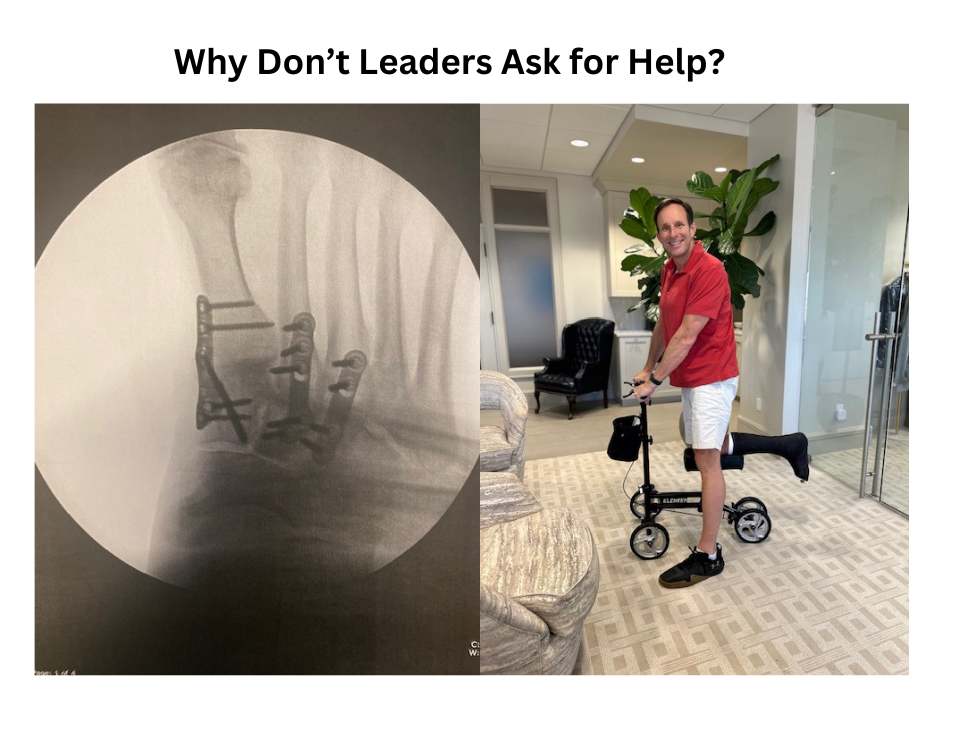
The idea of asking for help does not come naturally for me. I felt helpless. I was in Newark Airport in a wheelchair, and I couldn’t get anyone in an airline uniform to help me. Forty-eight hours earlier I dislocated five joints and fractured three bones in my foot. I was trying to fly home to Texas to get surgery. I was waiting for an attendant to take me through security, but at the moment I needed help getting to the men’s room. I tried to get there on my own. But, I was struggling with a carry-on bag, my computer bag, and a set of crutches. Someone finally did come to help me. But those ten minutes were humbling. I realized that for the next 10-12 weeks, I was going to be dependent on others. As I progress through my rehabilitation, I have tried to do things on my own which I should not do. I have almost fallen over on my crutches getting something from the kitchen. I have spilled drinks. And I have made the people who want to help me frustrated by my stubborn need to be in control. The idea of asking for help is not one that comes naturally to me. What about you? When you are not the expert or are unsure if you have everything you need, what do you do? Do you ask for help? For me, my pride kicks in and I push through on my own. I tell myself I will figure it out. I make more mistakes than necessary and end up creating more work for myself and for others. Why don’t leaders ask for help? Maybe we think it shows some sort of weakness. We may think, “If I don’t know something, people will wonder how I ever got promoted.” Therefore, we “fake it until we make it.” The problem is everyone else already knows we are faking it. We are not building their confidence in us, we are destroying it. In fact, by asking for help, we are actually demonstrating that we have confidence in them! We know we don’t have the solution, but we believe they do. We can’t do it without them. They feel valued. They begin to step into uncertain situations and have the confidence to offer their expertise. Because you have trusted their advice and expertise before, they now feel empowered to offer it proactively. When one has the Humility to ask for help or ask for advice, the team sees that it is okay for them to ask for help as well. The example set by the leader, opens up the rest of the team to take the initiative to learn from each other and grow. The Humility of the leader is contagious. As I write this, I am sitting in my recliner with my foot up in the air. I am reliant on my wife, my friends, and our Becoming a Leader of Character team to do more for me than I had ever allowed them to do. Yes. It is humbling. But, it reminds me how my pride has hindered my growth and my relationships with the people around me. Asking for help is not a sign of weakness, it is the humble declaration that we need others in our lives to make us better. This is just another example of how often I have to relearn old lessons the hard way. Which is humbling as well! Question: How quickly do you turn to someone and ask for help when you are unsure? Who could you empower by being humble enough to say “I need help.”? Here is a quick assessment that will take you 5 minutes to figure it out. Nobody will ever see your results but you. Warning: If you are not going to be honest with yourself this is a worthless assessment. To take the assessment use the QR code above or go to www.MYCHARACTERTEST.com
VLOG – Your Attitude is Contagious. Is Yours Worth Catching?
Did you just have a bad day or wake up on the wrong side of the bed? What’s your response? How does that effect your character and your ability to inspire people? This 96 second video is meant to make us all rethink our bad days. Here is a quick assessment that will take you 5 minutes to figure it out. Nobody will ever see your results but you. Warning: If you are not going to be honest with yourself this is a worthless assessment. To take the assessment use the QR code above or go to www.MYCHARACTERTEST.com
I Am The Hypocrite in the Mirror

Intentionality – Stop winging it! Periodically, I don’t like what I see in the mirror. It really stinks when you are someone who speaks publicly about character and you realize you’ve been a hypocrite about something. That is me. This is my confession to any one who has been to our keynotes and workshops or read our books or these blogs before. I am in the process of making changes that promise to change some things in my life for the better. I often tell people, “You don’t drift your way into excellence in anything.” I’ve truly tried to live that way in most areas of my life. But I have ignored my own advice in one important area of my life – my health. Since December of 2023, I have been involved in a group that has me applying the truths I promote in my leadership classes, to my personal health and wellness. I read about this group in the book The Comfort Crisis (author Michael Easter). The book challenges our society’s desires for comfort and proves the damaging effects the constant pursuit of comfort has on our physical, mental, and emotional capabilities and health. I loved the book! Especially since I always say things like “Your comfort zone is your mediocrity zone!” But in Chapter 8 of The Comfort Crisis, I was introduced to a guy named Trevor Kashey*. He was a childhood prodigy who got a PHD at an age when most of his peers were thinking about going to college. He has an approach to nutrition that is changing lives. That approach has changed mine and my wife’s lives as well. What Dr. Kashey preaches from his unique pulpit built on a combination of science and psychology is intentionality. You need to have a plan YOU can stick to implementing. You can’t just float from one meal to another without a plan and expect to get to your health goals. Before meeting Dr. Kashey, that is exactly what I was doing. I was drifting and wondering why my weight yo-yoed up and down in a 15-20 pound range for the past thirty years. I would buckle down for 3 months, 6 months and sometimes for a year. I’d lose 15-20 pounds, but over time, that weight slowly came back. I did not have a plan that worked for me. I was not intentional. I would blame the scale, my travel, and even my family for my fatigue, health issues, or diet breakdowns. When in fact, the problem is me, the guy who makes the choices about what I put in my mouth each day. I tell leaders, “You can’t just show up at work and survive the day and expect your team to reach its goals. You need a vision! You need a plan! You need to be intentional about achieving that vision and the plan you put in place.” Yet I never really applied that same thing to my nutrition. I truly believe the main thing that will keep me from being active with my wife, crawling on the floor with grandchildren (when they come), and having a full life for as long as possible is my health. And the number one predictor of living a full and healthy life is what I put into my body on a day to day basis. I tell leaders to stop winging it when it comes to being a leader or building a culture. Well my confession to you is that I was ignoring my own advice in my own life. I have created habits through years of unwise choices when it comes to my body. I want to be clear, I am not trying to equate anyone’s physical health and the choices they make to the character issues I talk, write, and speak about. But the habits that determine our health are established in the same way the Six Habits of Character are embedded into our lives. We need to have a plan and consciously choose that plan daily, until those good choices become the habits we need in order to have the healthy bodies and the healthy character we claim to want. Thus endeth my confession. I am a work in progress. But, I am trying to be more intentional about my work. How are you doing with being intentional with the two most important and controllable things in your life – your character and your nutrition? Question: Where do you use intentionality in your life already? Where else could it help you? * Nobody from Trevor Kashey Nutrition approached me about writing this blog. I am just thankful for the wisdom they have shared with me and my wife. https://www.trevorkasheynutrition.com/ Here is a quick assessment that will take you 5 minutes to figure it out. Nobody will ever see your results but you. Warning: If you are not going to be honest with yourself this is a worthless assessment. To take the assessment use the QR code above or go to www.MYCHARACTERTEST.com
VLOG – Duty – What You Ought to Do
Why do some people stop short of what they “ought to do”? Exercising Duty goes beyond just doing our job. It is more than that. Here are my thoughts, in 81 seconds, on our moral obligations as leaders at work and at home. Here is a quick assessment that will take you 5 minutes to figure it out. Nobody will ever see your results but you. Warning: If you are not going to be honest with yourself this is a worthless assessment. To take the assessment use the QR code above or go to www.MYCHARACTERTEST.com
Why Most Ethics Training Sucks

Who is excited about doing ethics training? Nobody. Well that might be strong. The people in legal, professional standards, and training may be looking forward to it. Maybe some people in headquarters who monitor compliance with state or federal guidelines are happy about getting it done. But, in general, people roll their eyes and begrudgingly go to ethics training or login into this year’s online version of last year’s ethics training. Why does ethics training suck? Because nobody is inspired by being told what NOT to do. For one to two hours the message is basically the same across most organizations. We hear things like: Don’t do _____ or you’re going to get in trouble. Don’t do _____ or you could get fired. Don’t do _____ or your department will get in trouble. Don’t do _____ or your department could get fined. Don’t do _____ or you’ll end up in the headlines. Don’t do _____ or you’ll disappoint your mom, kids, or spouse. Don’t be like ______, he/she’s in jail right now. “Woohooo! Sign me up for some more of that! I love being threatened on the job. That makes me show up at work motivated!” What if we approached this important topic in a different way? Instead of saying “Don’t do this!” or “Don’t do that!” What if we said, “This is what we DO. This is who we are and that is why we make good ethical choices.” We should focus on exercising character more than just avoiding punishment. We followed the ideas of Aristotle when we developed our definition of character. Actually, Aristostle used the word “Ethos”, which is where we get the word ethics. It is often translated as Character as well. Andersons’ 12 Words (or less) Definition of Character: “Your habitual way of operating. How you are is who you are.” You are what your habits show you to be. You develop your habits one choice at a time. Each time you make a choice, it makes it easier to make that same choice again. Each time you choose a particular behavior you take another step closer to making that behavior a habit. And your habits, the good ones and the bad ones, form your character. The approach I am suggesting does not eliminate reviewing the laws, rules, or regulations. But just following the law, rules and regulations does not make someone an ethical person. You can be an unethical rule follower. We need to have a higher bar for our character than just staying out of trouble. The once a year, yearly review of all the ways you can get in trouble if you don’t follow the rules has not moved the needle in our society. There is more cheating in schools, colleges and graduate programs than ever. And despite the increased emphasis on ethics policies and training, the headlines show that in businesses, government agencies, and even non-profits, those efforts are obviously not making an impact. About all they have done is protect larger organizations from legal repercussions. If the organization can prove somebody took the class, the organization is covered. It can just be a CYA (Cover Your A**) program. Yet each year, somebody finds new ways to act unethically, and a new law, rule, or regulation has to be drafted. Then we are told, “Hey! Here is something else that will get you in trouble.” This guy made a poor choice, so now we had to write this, and bring you back this year. We will review all the previous rules from last year’s training. Plus the new ones based on the most recent bad choices of people in our industry.” Let’s proactively focus on who people want to be versus reactively focusing on how to not end up in jail just like “Johnny”. Let’s start from the position of emphasizing character. When we exercise the Six Habits of Character – Courage, Humility, Integrity, Selflessness, Duty, and Positivity – we will not only avoid being like “Johnny” we will also become better leaders, spouses, friends and parents. We will become Leaders of Character. Question: Which Habits of Character can play a role in a poor ethical choice? When have you seen somebody fail ethically even when a rule wasn’t broken? Here is a quick assessment that will take you 5 minutes to figure it out. Nobody will ever see your results but you. Warning: If you are not going to be honest with yourself this is a worthless assessment. To take the assessment use the QR code above or go to www.MYCHARACTERTEST.com
VLOG – Maintaining Your Standards Tests Your Integrity
Do you have standards? Do you hold to those standards? Is this an Integrity issue and how is your Integrity at stake when your standards are challenged? In 94 seconds, here are some of my thoughts. Here is a quick assessment that will take you 5 minutes to figure it out. Nobody will ever see your results but you. Warning: If you are not going to be honest with yourself this is a worthless assessment. To take the assessment use the QR code above or go to www.MYCHARACTERTEST.com
Scarred by Your Previous Leader
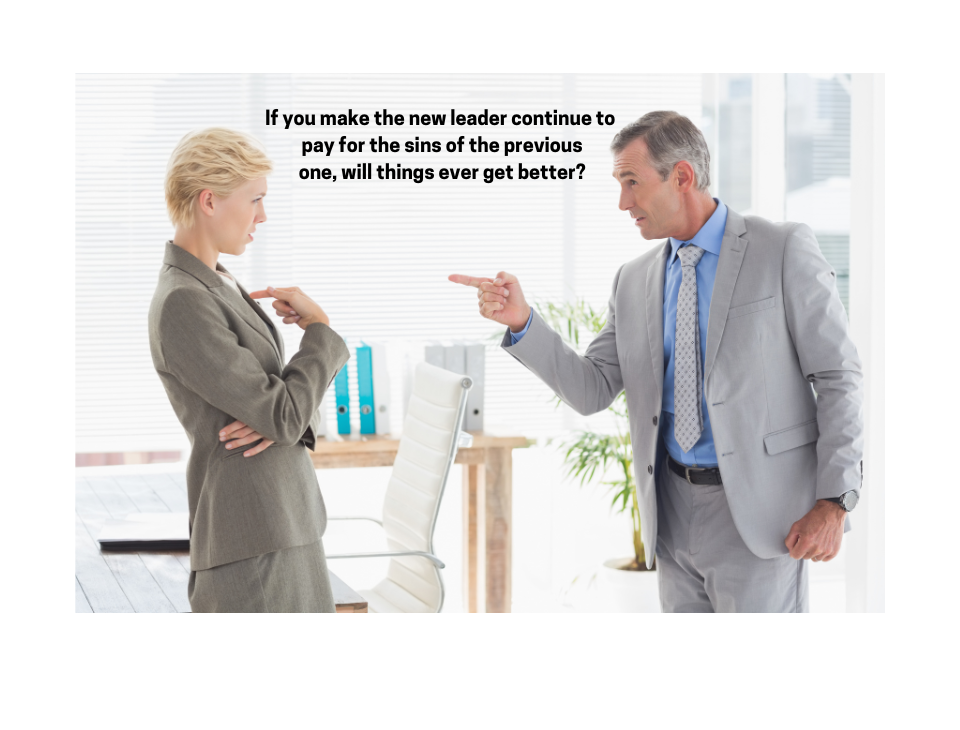
If you make the new leader continue to pay for the sins of the previous one, will things ever get better? Heads up! This is a story about first responders. But it applies to all of us. On more than one occasion in the last twelve months, I have worked with fire and police departments that are recovering from a bad experience with a previous leader. There were wounds that continued to fester inside the leadership team. These were the leaders just below the executive leadership team. The wounds weren’t evident at first. But as we began discussing The Six Habits of Character: Courage, Humility, Integrity, Selflessness, Duty, and Positivity, I could tell people had more to say. As we moved from discussing individual Habits of Character to Organizational Character, the proverbial can of worms burst open. I’ve seen it before and I am sure I will see it again. The wounds left by the past leaders were still open. In the most recent cases, the new leadership team was already in place, but the people in the room had wounds that weren’t healing. In these cases and many others I have faced, it was the wounded party who was not allowing the healing to occur. We all know that if you keep picking at a scab it will never heal. But many of us do that. We look down, remember the day we were injured and then we start scratching. The wound is reopened. Sometimes it even gets infected because the healing process is never allowed to take hold. And many times that is the patient’s fault. This was the case I was facing. The new leadership came in with a positive attitude and a true desire to move the agency forward and rebuild the positive environment of the department. But nobody gave them a chance. The middle leadership was picking at the wounds of the past, and therefore was not buying into the well intentioned plans of the new leadership. Maybe you have been in this situation. Maybe you have been wounded by your previous leader. But, if you make the new leader continue to pay for the sins of the previous one, will things ever get better? Most new leaders don’t walk in with the intention of ruining a culture, writing policies that make everyone mad, and then leaving or retiring. Most leaders start with good intentions. Most leaders start with the passion to leave the department in a better place than they found it. But without the support of the rest of the leadership team, those intentions are just dreams that fade away into the monotony of surviving another work week, month, or year. I am not trying to negate the wounds some people have from the past. I am just challenging all of you to give the new folks a fighting chance! Without your support, they are doomed to fail and your wounds will remain open. That requires the wounded people to exercise: Courage: Acting despite perceived or actual risk. Humility: Believing and acting like “it’s not about me.” Integrity: Doing what is good, right, and proper even at personal cost. Selflessness: Putting the needs of others before my own needs, desires, or convenience. Duty: Taking action based on my assigned tasks and moral obligations. Positivity: Displaying a positive and/or “can do” attitude in all circumstances. To allow the wound to heal we will need to trust the new leader and risk getting burned again. We will need to put aside our feelings because it is the right thing to do for the team, the leader, and everyone else involved. We need to recognize our moral obligation to give the new leader an opportunity to succeed because it will ultimately be better for everyone. And we have to realize that will never happen if we let the circumstances left by the past leader determine our attitude towards the well intentioned plans of the new leader. Wounds leave scars. But scars are a sign of healing. We can look down and see the scar and be reminded of the wound. But it is no longer bleeding, festering, and causing pain. By the end of our career we will all have scars. Those scars are proof we continued to move forward and allowed healing to happen. They are also signs of the moments when we had the opportunity to exercise our character. Question: What old wounds are you still scratching? What could be the positive results of moving forward? Here is a quick assessment that will take you 5 minutes to figure it out. Nobody will ever see your results but you. Warning: If you are not going to be honest with yourself this is a worthless assessment. To take the assessment use the QR code above or go to www.MYCHARACTERTEST.com